‘My Life My Rules’ and other selfish life philosophies

“New Rule, I get to do whatever I like.”  Ellenor Shellstrop, The Good Place

There are a number of ways to view this world which may sound appealing but in reality the lead to pain and suffering. Let’s look at a few.

“I can do whatever I want to do.”

This is totally true, you can do whatever you want, but you reap what you sow. You sow chaos, you reap chaos. You sow selfishness, you reap selfishness. You sow generosity, you reap generosity. There are always consequences for your actions. They may not line up exactly but generally you get back what you give out.

“You can’t tell me what to do.”

I totally agree. As an adult, no one can tell you what to do. You can do anything you like. There is nothing stopping you. But if no one has the chance to speak into your life you miss out on all sorts of wisdom. Also, if you live life without boundaries or restrictions, with nothing off limits, you hurt the people around you and you hurt yourself.

“That sounds like a ‘You’ problem.”

At one level, this appears to create healthy boundaries and at the same time it encourages personal responsibility, but it is born from a lack of empathy and a disconnect from other people’s life and emotions. Essentially it is a way of saying “I don’t care about you and what is happening in your life”. You could say that instead, it would certainly take care of any pesky ‘friendships’ you may have.

“I don’t owe anyone anything”

It sounds like independence, but it is filled with arrogance and self-centredness. It also completely misses the interconnectedness that we have with each other. No one on the planet got where they are without the help of a large amount of people. We owe it to each other to give back to others.

“My life, my rules.”

This one encapsulates a few different one’s together. Again, this almost sounds great and encouraging to hear people living their own life, but being part of a community, any community, requires living by other people’s rules sometimes because of the broader benefit to the wider group. Think of speed limits, or anti-corruption laws, or the general understanding that you whisper when you are in the local library. There are a number of times when it would be to your personal benefit to ignore those rules, but we have a wider responsibility to the people around us. That understanding is the foundation of generosity.

Plus, as Steve Maraboli said,

“Selfish people tend to only be good to themselves…then are surprised when they are alone”

It’s best to not be alone.

Kindness is Costless…isn’t it?

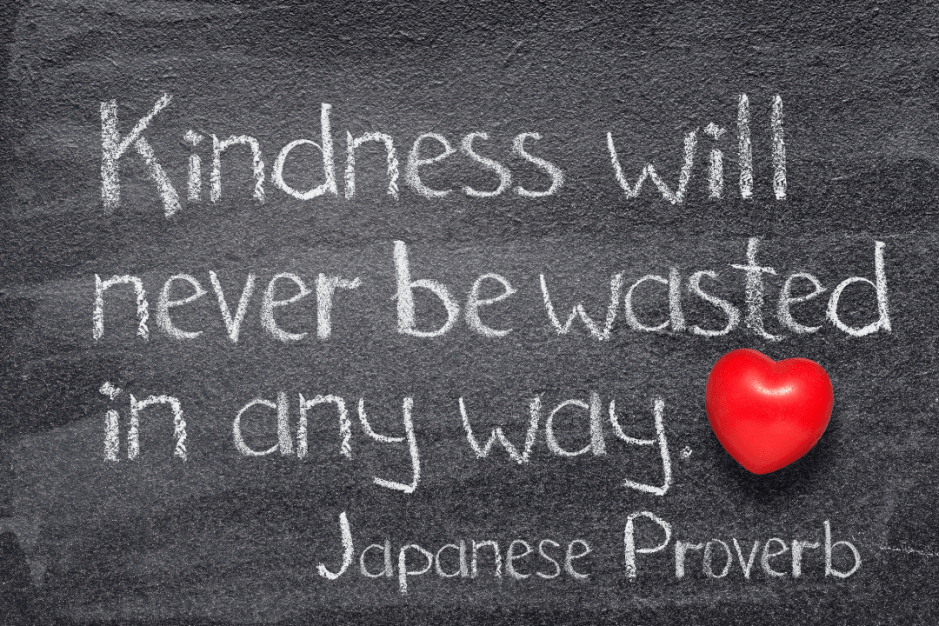
“Kindness is costless but also priceless” Warren Buffett

True kindness does cost you something, but not necessarily money. Perhaps that’s just how Warren Buffet sees the world, through a zero-sum game of whether something costs you money or not.

Because I know that kindness costs time, energy, mental space, the opportunity to do something else and sometimes, yes, even money.

But the impact of a kind act is so much more valuable.

Warren is right about the money with this point, it is priceless.

You cannot calculate the dollar value of a genuine kind act from one person to another because it would fall short.

Some things are not able to be bought and therefore there is no space for kindness and generosity within the financial economy. For those that focus solely on dollars and cents, this makes no sense, or cents, so it isn’t something they get involved in.

In this, Warren Buffet is an anomaly. One of the richest men on the planet still has a philosophy of kindness.

He knows that some things are worth more than money.

Is generosity just for good people?

“Have you met me?” I asked a close friend.

They has just said something weird and seemed worried about sharing something with me, because I might judge them for not having their life altogether.

They had seen me go through some of life’s craziest twists and turns, and at no point could I claim that I had it all together. Yet, they feared me judging them? Holy cow. I have no right to do that – I may not be the worst person on earth, but I am far from 100% good.

But my friend, they are a really good person, even though they just shared about some pretty tough things they were involved in.

Life is messy and challenging and I think that anyone who can even be a little bit good in amongst that it outstanding.

In this dichotomy of mess and bits of good, we find an interesting reality – people can act generously without being totally good. Generosity is an outworking of the good we have within us, somewhere. Even if it is a tiny amount of good.

You don’t have to be considered good to act generously to other people.

Also, generosity grows that tiny bit of good within us and makes it a little bigger.

Top 5 Books of 2025

A precondition for reading good books is not reading bad ones: for life is short.” Philosopher Arthur Schopenhauer

As it turns out, my reading this year was skewed to power and politics. I know, I’m as surprised as you are, but it was a fascinating year of reading, also devastatingly troubling. But I have found one of my all-time new favourite books. You will see below.

TOP 5 NON-FICTION

The Chancellor: The remarkable odyssey of Angela Merkel – Kati Marton

Angela Merkel is a unique and brilliant women, born in a unique time, in a unique place. Some would say just the right time and just the right place. She could have chosen to go into academia and make a significant impact there, instead she chose public service. With an interest and skillset for global affairs, when East Germany opened up it allowed her to continue her journey which eventually led to the role of Chancellor of Germany, and one of the best leaders the world has seen in recent times. Humble to the point of still doing her own shopping at the local supermarket, and private to the point that her staff never saw inside her small home. This book is an incredible insight into who she is, how she thinks and the legacy she left. It’s an unofficial biography of course, because Angela would never sell her story, but still is a very full telling of her story nonetheless.

The Fifth Risk – Michael Lewis

Classic Michael Lewis – running through the biggest risks to America and diving deeper into the fifth one, being the risk of the failure of complex government functions due to incompetence/ignorance and poor management.

Michael spent time with people who worked in some of the most unknown and misunderstood elements of the essential government operations, his conversations with those people shine a very scary light on what happens when the transition into a new government is not handled well, or in some cases, doesn’t happen at all.

Lost Connections: Uncovering the real causes of depression – and the unexpected solutions – Johann Hari

As only Johann Hari can, through his journalistic approach he takes a deep look at depression through first hand experiences as well as in depth conversation with experts across the board. Not taking the general medical advice on face value, he asks some challenging questions which are helpful to anyone who is struggling with depression, or know someone who is. A quick overview: medical interventions can be helpful in the depression journey, but they are not the only thing that can help – there is more to be done.

***TOP BOOK OF 2025*** Corruptible: Who gets power and how it changes us – Brian Klaas

Brian Klass answers the age-old question, does power corrupt or do corrupt people seek power? One that I have been trying to work out for a while but have never come to a satisfactory answer, until reading this book. Brian notes that those who stay in power for a long time are generally attuned to do what needs to be done to stay there, meaning that most have flexible morals as those who would not corrupt themselves for the sake of position and power have already opted out. Who is left over is a diminished field of leaders.

At the same time, the systems of accountability in place in power structures also have an impact how people behave.

If you combine those two elements together, we find ourselves with the world we live in. Perhaps we might want to change how we think about what makes a good leader.

Careless People – Sarah Wynn-Williams

Maybe it was just a year of freaking myself out or letting myself get disappointed with the people we let have some authority over us, but this book added to my sense of bewilderment. Sarah was at Facebook from early days and journeyed with Mark Zuckerberg and Sheryl Samberg through the growth period of Facebook and how they attempted to deal with political powers in order to keep that growth going, no matter the cost.

I wasn’t a huge fan of Facebook before reading this, now, wow. Reading this after finishing Corruptible, certainly helped me understand how this kind of thing happens but it didn’t make me feel any better about the shady people who say they are for making the world a better place but are only chasing growth and profit.

TOP 5 FICTION

Boy Swallows Universe – Trent Dalton

I am sure many have read this already, but Trent Dalton can write a story. I loved reading this book. Not just a story about a family living in Brisbane in the 80’s, it’s deals with organised crime, poverty, magic and kids growing up. The Netflix series did a great job of capturing all of that on the screen.

Everything Lost, Everything Found – Matthew Hooton

Brand new book alert!

Matthew Hooton lives in Adelaide and this book was one of the stories that gripped the most this year. From the rubber-tree plantations in the Brazilian Amazon to the heart of Michigan’s rust belt, the story follows Jack through his life of family tragedy, age and loss. I was truly sad when I finished this book because it was over, but I am very happy to be able to read it again.

The Overstory – Richard Powers

I had no idea what this was when I picked it up. It was a random podcast recommendation. I read the first section and thought it was a book of short stories. The first one, if it was a just a short story, was the best one I have ever read. But, the stories interconnect over time as the Overstory interacts with the main characters and the trees, although it could be said that the trees are the main characters. (That may not make any sense to you, my wife didn’t get it either when I tried describing it to her). Although I didn’t thoroughly enjoy how it ended, it was a very good read.

The Stranger in the Lifeboat – Mitch Albom

From the author of Tuesday’s with Morrie, Mitch Albom has shown himself to be an excellent fiction writer as well. (Other people may know that already, I am just discovering it). After a boating accident, survivors end up on a lifeboat, with a stranger that just seemed to appear. Through the challenge of survival in the middle of the ocean, the survivors seek to learn about the stranger but end up learning more about themselves, and death. Many of them die. Don’t let that put you off, it is a great book.

Steelheart – Bandon Sanderson

Apparently I read Young Adult fiction now. This is the first in Brandon Sanderson’s series about the Reckoners. I read the whole series this year, that’s how good this book was.

It’s a superhero thing, but not how you would imagine.

You can’t be trusted…

“I’ve always gone for the ‘bad boy’ in my relationships, and it has never worked out. I want to find a healthy relationship and settle down”.

“Good for her!” I thought. Self-awareness is the key to helping us create the life that we want.

I rarely watch reality tv. I have caught glimpses over the years, but I never thought that anything about it was actually real, until one day I happened upon a bachelorette type franchise where a well-known female was the object of many a male’s affection. Not groundbreaking by any stretch.

What did stand out was this insight she had about herself.

Fast forward to the end of the series and the final two males that she could choose from represented her two options in life. Choose the new, unknown, probably healthy relationship with a nice guy who cared for her, or the same relationship she has had over and over, which she said she didn’t want.

She chose the second option, the ‘bad boy’ she said she didn’t want, and a few months later it all fell apart, like it always did.

I couldn’t believe it, she had happiness and contentment right in front of her and she threw it aside to chase after something that seemed fun but in the end was damaging. Why would she do that?

But when you think about it, we all do that. We all have some idea about what is good for us, what is healthy, what will probably make us happy, when faced with a choice between those things and what looks fun in the moment, how many times do we choose the thing that will hurt us in the long term? Why can’t we just make good, healthy decisions?

It’s one thing to know what is good for us, what we need, and what will create the best scenario for us down the track, it’s another thing to do it.

Generosity is like that. We could give some money away, or some time, or do something thoughtful for someone else, or we could buy another pair of shoes, or start the next episode of whatever we are streaming at the moment. I know which of those things will make me happier long term, but often I choose the other things.

What on earth do we do? Be generous to yourself and know that this isn’t how it always has to be. You can make a change, by starting small. Take $5, 5 minutes or 5 messages and use them to act generously towards others. Then go back to your shoes and shows. If you do this consistently, over time you will require less shoes and shows and enjoy more generosity and more of life.

Who knows, you may even find yourself making more good, healthy decisions in other areas of your life too.

“Say ‘Thank you’ to Nana.”

I am sure that you have been on the receiving end or been the one saying that phrase at some stage in your life. Teaching our young people to be grateful for the gifts that people give us is a foundational part of being a human. Gratitude is right. Being ungrateful is ugly.

A forced ‘thank you’ is technically still a thank you. It’s the same as a forced apology. Making our kids say the words is the simplest way to get them to sound like they are doing the right thing, but if it’s out of force and not a genuine response does it really mean what we think it does? Sure, it may make us look like great parents of polite and grateful children on the surface, but true gratitude or appropriate remorse is deeper than that.

Teaching a little person to be genuinely grateful or genuinely sorry takes more time and effort than just getting them to repeat the words. It’s the process of encouraging them to connect with how they are feeling and then attempt to connect with how another person is feeling. There is no simple way to do this, and it takes time and is connected to brain and emotional development.

Saying the right words is a start but make sure you create enough space to allow kids to sit, feel and then choose a way to respond to a generous act or a mistake that has been made.

Even a little bit…

Over the last decade I have discovered the power of taking small, consistent actions. I have created little habits that have served me well. Whether it is exercise, reading or dental hygiene, my small, daily actions have built up over time to help me create the type of life that I want.

It will not surprise you though, that some parts of life are still a struggle. If discovered that I am yet to master every element of the human experience, not matter how many tiny habits I put into place.

Sometimes I become overwhelmed at the gap that I see between where I am and where I want to be. Especially when it comes to the relationship that I have with those that I am closest to, or the way that I turn up every day. I am yet to become the type of person that jumps out of bed in the morning and exudes joy for the new day.

It is disheartening to see the good things that I could bring to those around me if I had a better attitude but not be able to do it. Why bother then? Why not slip into grumpiness and save the energy from trying if I’m just going to fail anyway?

I’m reminded of a conversation I had with Psychologist, Leanne Tran on the Generosity Podcast, when she said that, as parents, “we only need to get it right 30% of the time for our kids to become securely attached”. That’s 3 out of 10. What would be considered a failure in all areas of academia, and most other areas of life (outside of some sport which is interesting), is enough for our kids to flourish.

“Even a little bit of truth and love goes a long way” – Father Richard Rohr

This quote from Richard Rohr carries a huge amount of weight. Even if you can’t do it every time…even if you can’t do it most of the time, if you can do it right now then “even a little bit of truth and love goes a long way”.

Never underestimate the power of one positive action.

Your Dark Side

Some questions you are never prepared for and this was one of those. I had just been talking and joking with a friend about their incredibly persuasive abilities, which could be quite powerful and devastating if used for evil instead of good. “That is your dark side.” I said.

We laughed. Then he flipped it on me, “What’s your dark side?”

“Damn it, what a jerk!” I thought.

But I sat with it for a minute and answered, “I can be pretty judgmental”. It hurt to admit because I pride myself on treating all people the same, no matter who they are, because I would hope that they do the same to me.

I am naturally curious and that generally gives me a pretty good read on people, fairly quickly, and so I think I get a good understanding of part of who they are and what motivates them. When I’m at my best, I have a very generous sense of their journey and their person. When I’m not at my best I can find myself writing people off because of who I perceive they are. I hate that part of me, but it’s my dark side, it makes sense that I don’t love it.

I have found that when I drift in to being super judgmental, I have stopped being curious about that person, I think I fully understand who they are with no possibility that there is something else that I could learn about them, or that they couldn’t surprise me.

As Les Parrot said, “Curiosity is the on ramp to empathy and empathy changes everything”

It’s impossible to be curious and judgmental at the same time.

So, I keep aiming for curiosity. 

Why I hate most TV shows

There is no story without a problem. You need conflict. If a story doesn’t have conflict, it’s not a story, it’s an anecdote and it’s boring.

The majority of conflict in TV shows is based on deception. On avoiding a hard conversation. On hiding something from someone else so they don’t get upset, and then the next 18 minutes is dedicated to covering your tracks so you don’t get found out in a lie.

Each 20-minute tv show has an A, B and C storyline. That’s potentially three different stories of deception that happen every episode. For a standard 10-episode series, that is 30 potential conflicts from deception and lies. Don’t get me started on seasons with 20 or more episodes in them. And often these are family-based sitcoms. It’s “okay” though because everything gets found out by the end, it will be funny and then resolved within half an hour.

What is that teaching us, or more importantly, what is that teaching our kids? That you can lie, try to cover it up and that’s how relationships work?

It misses the issue of consequences, many of which are unintended, and what happens in relationships when we are unable to be truthful with those that we do daily life with.

Lies and deception are anti-generosity. They are selfish. They break relationships. The cover up afterwards serves only you. We like to think that we are saving others from a difficult situation or a painful truth, but it’s always about saving ourselves from it.

Generosity in conflict is loving honesty. Sure, it’s harder to do but it puts other people at the heart of the issue, instead of my desire to avoid of a difficult conversation.

So, I find myself avoiding sit-coms now. I’m not looking for unnecessary drama.

A Very Rich Person

When I was 19, I had a midlife crisis. Well, not really but it certainly felt like an existential calamity of sorts.

I remember looking ahead at what my life would be, filled with work, and just not wanting any part of it. I didn’t want to go through life miserably participating in the rat race – sitting in an office 9 to 5, 5 days a week, 48 weeks of the year**. So, I decided to find a way to retire. Yep, at 19. But having no resources put away to comfortably live in my retirement, I soon discovered it was necessary to find a job.

What helped me become amenable to working life was discovering some wisdom in Ecclesiastes in the Old Testament. “A person can do nothing better than to eat and drink and find satisfaction in their own toil. This too, I see, is from the Hand of God.” Believe it or not that lead me to the conclusion that it is good to work and that it was possible to find satisfaction from it.

Many people do that and have created wealth for them and their family. I have heard so much talk about the wealth transfer from this current generation of parents/grandparents to the next. They call it the greatest intergenerational wealth transfer in history. Billions of dollars will change hands in the next 10 years, or 20 years or however long people live for. (It sounds a little crass, I apologise, but it is the reality.)

The big question is how should people arrange their wealth when they pass away? Should they leave it all to their children regardless of how much they have? That makes sense, as parents we want our kids to have everything they need to have a great life. But what make a great life?

Warren Buffet is quoted as saying, “A very rich person should leave his kids enough to do anything, but not enough to do nothing.” There is a great amount of wisdom to that. Time and again most people who win the lottery end up unhappier than they were beforehand. For many who will receive some of the intergenerational wealth transfer, it will be like winning the lottery. They will never have to work again, but to what end?

From my experience I see that there is a danger in working too much and at the same time, there is a danger in working too little. Leave your kids enough money so they still have to work, because that is good for them.

If you have more than that, then give the rest away.

**I am fully aware of the irony that, out of the countries in the world, Australia has some of the best work conditions, including shorter office hours and longer annual leave than many other places. By try telling that to 19-year-old Kieran. He knew what he wanted and it was not work.