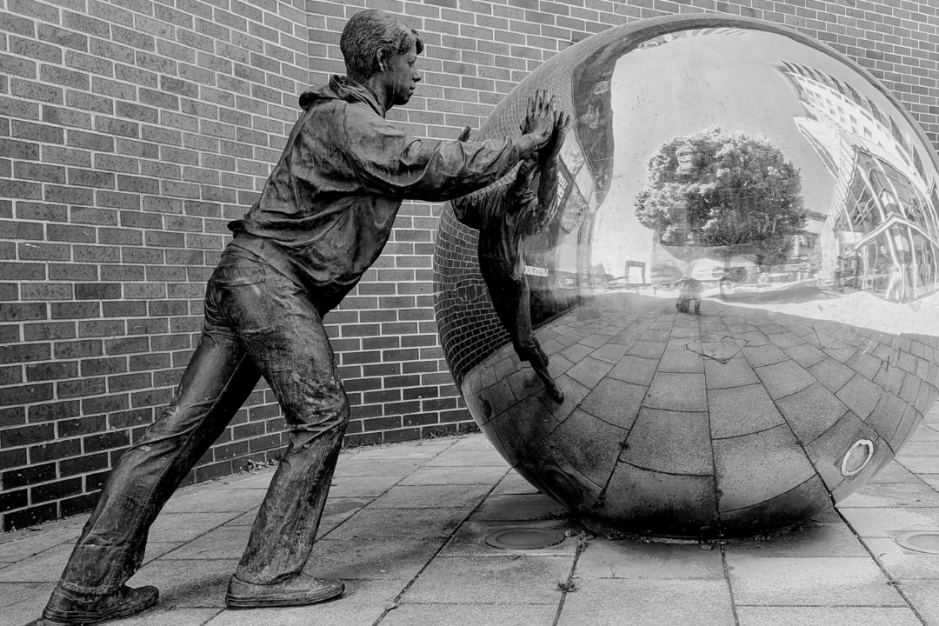
Pushover

She came running inside in tears.

He went running to his home, also in tears.

My 6-year-old daughter was able to give her side of the story, and others who were outside to witness the incident gave their side.

Thank goodness we have cameras out the front where I can re-watch and get the real story.

He had jumped and knocked her over, not through any malice. She was upset and gave him a push back.

How does one handle such a parenting moment?

My message to her was, “I will not be angry with you for standing up for yourself. You can still play together and be friends, and at the same time you can communicate what is okay and what is not. We will work on using your words more.”

It probably wasn’t perfect parenting, but I was trying to give my daughter confidence to stand up for herself and create healthy boundaries. Because healthy boundaries are vital for a generous life. You get to choose what is okay in a relationship and still have the capacity to be loving and generous to someone.

Much of the physical violence in our world is used by those who don’t have the words to communicate what they are feeling. It can be childish behaviour, even in adults. I am hoping to help my kids get the skills they need to communicate what they are feeling in the moment without physically lashing out.

Unexpressed Gratitude is Selfish

I catch myself in moments of gratitude. Usually I am alone, and a thought hits me,
“Boy, I am so grateful for…”

Usually it is about my wife, but often it is also about my kids. They are all so great, and it feels good to be reminded of that. I then begin to wish I wasn’t alone in that moment so I could share that with them.

“When I see them next time, I will tell them how I feel about them.”

Then I walk in the door to my home and normal life kicks in with the importance of getting people fed, bathed, read to and in bed at an appropriate time.

My grateful thoughts have disappeared and the desire to share them with my family is also gone.

I guess this is how we end up not expressing ourselves to those closest to us.

I know, I’m a cliché.

I think about it often, it’s my version of ‘if a tree falls in the woods and no one is around to hear it…’. If gratitude is unexpressed, is it really gratitude?

I’m not sure if it is. I think that if I feel grateful to someone for who they are, especially someone close to me, and I don’t express it, that is selfish on my part. Everyone deserves to have gratitude expressed to them, about them. Keeping that from people is unfair.

Every night at our dinner table, we share 3 things that we are grateful for in that day. It has become a list of things, which is great. Perhaps I can add “1 person that I am grateful to”, as a means to express my gratitude to those around me, and become a little less selfish.

“Say ‘Thank you’ to Nana.”

I am sure that you have been on the receiving end or been the one saying that phrase at some stage in your life. Teaching our young people to be grateful for the gifts that people give us is a foundational part of being a human. Gratitude is right. Being ungrateful is ugly.

A forced ‘thank you’ is technically still a thank you. It’s the same as a forced apology. Making our kids say the words is the simplest way to get them to sound like they are doing the right thing, but if it’s out of force and not a genuine response does it really mean what we think it does? Sure, it may make us look like great parents of polite and grateful children on the surface, but true gratitude or appropriate remorse is deeper than that.

Teaching a little person to be genuinely grateful or genuinely sorry takes more time and effort than just getting them to repeat the words. It’s the process of encouraging them to connect with how they are feeling and then attempt to connect with how another person is feeling. There is no simple way to do this, and it takes time and is connected to brain and emotional development.

Saying the right words is a start but make sure you create enough space to allow kids to sit, feel and then choose a way to respond to a generous act or a mistake that has been made.

Words Matter

What we say matters. How we say it also matters. There is something powerful about the words we use and how we choose to use them. What we speak over our children has a significant impact on their lives. What we speak over ourselves does also (which can sometimes be an echo of the words that were spoken over us by a parent or care giver).

How we respond to someone else’s words is entirely up to us. We choose to take offence or not, we choose to react or not.

I have often said that a great act of generosity is assuming the best of someone, no matter how their words or actions might appear to us. I find it is also one of the hardest acts of generosity to participate in.

To physically harm someone because they have offended us is wrong. Most would agree on that straight up. But our viewing preferences would suggest otherwise…

90% of the top grossing Hollywood films each year over the last decade are violence based (although I don’t think “Frozen” is entirely in the clear). Either a war, or something is being avenged or some sort of ‘man’ is fighting an evil oppressor to become the victor…with physical violence.

The world was offended when Will Smith slapped Chris Rock in the face at the Oscars. Then we all sat down, grabbed our popcorn and waited for The Batman to beat up the Riddler.

It’s not so easy to rid ourselves of violence.