Pushover

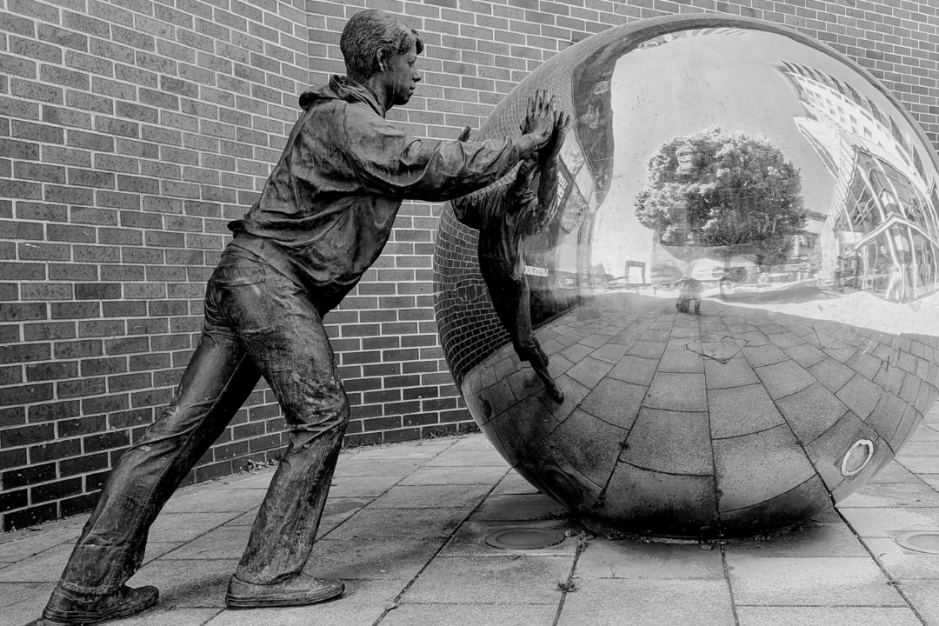
She came running inside in tears.

He went running to his home, also in tears.

My 6-year-old daughter was able to give her side of the story, and others who were outside to witness the incident gave their side.

Thank goodness we have cameras out the front where I can re-watch and get the real story.

He had jumped and knocked her over, not through any malice. She was upset and gave him a push back.

How does one handle such a parenting moment?

My message to her was, “I will not be angry with you for standing up for yourself. You can still play together and be friends, and at the same time you can communicate what is okay and what is not. We will work on using your words more.”

It probably wasn’t perfect parenting, but I was trying to give my daughter confidence to stand up for herself and create healthy boundaries. Because healthy boundaries are vital for a generous life. You get to choose what is okay in a relationship and still have the capacity to be loving and generous to someone.

Much of the physical violence in our world is used by those who don’t have the words to communicate what they are feeling. It can be childish behaviour, even in adults. I am hoping to help my kids get the skills they need to communicate what they are feeling in the moment without physically lashing out.

Why should I water someone else’s garden?

I don’t garden. My grass is fake. My plants are indestructible. Watering happens automatically.

The most I do is pull out weeds and sweep up leaves. So I don’t know the joy of toiling in the soil and watching something I have cultivated grow into a beautiful plant or a food source that could be eaten. The idea of growth in a garden is beautiful and I know that some people love it, but I just don’t understand the draw. Perhaps when I get older it will become a thing for me, but I’m not holding my breath.

What I do understand is seeing things grow in other people. As they learn and develop in their skillsets, resilience and courage. Be they children or other individuals.

I coached my son’s cricket team last season. It was my first foray into the coaching world of kids sports. Was I good at it? Not really, but the kids did develop and improve from the start of the season to the end. Watching them go through that journey, seeing them enjoy that, and knowing that I had a tiny part to play in it, brought me joy.

I’m not sure who it was that said, “When you water someone else’s garden, your own begins to bloom.” But I think I know a little bit about what they were trying to say.

Unexpressed Gratitude is Selfish

I catch myself in moments of gratitude. Usually I am alone, and a thought hits me,
“Boy, I am so grateful for…”

Usually it is about my wife, but often it is also about my kids. They are all so great, and it feels good to be reminded of that. I then begin to wish I wasn’t alone in that moment so I could share that with them.

“When I see them next time, I will tell them how I feel about them.”

Then I walk in the door to my home and normal life kicks in with the importance of getting people fed, bathed, read to and in bed at an appropriate time.

My grateful thoughts have disappeared and the desire to share them with my family is also gone.

I guess this is how we end up not expressing ourselves to those closest to us.

I know, I’m a cliché.

I think about it often, it’s my version of ‘if a tree falls in the woods and no one is around to hear it…’. If gratitude is unexpressed, is it really gratitude?

I’m not sure if it is. I think that if I feel grateful to someone for who they are, especially someone close to me, and I don’t express it, that is selfish on my part. Everyone deserves to have gratitude expressed to them, about them. Keeping that from people is unfair.

Every night at our dinner table, we share 3 things that we are grateful for in that day. It has become a list of things, which is great. Perhaps I can add “1 person that I am grateful to”, as a means to express my gratitude to those around me, and become a little less selfish.

What’s Missing?

“What’s missing?” The question creates a certain panic in me, even now.

You probably remember the classic game where you are presented with a tray of items covered with a small towel, you are shown the items for a few seconds which is your time to try to remember as many items as you can – stapler, rubber band, paperclip, toy car, watch, pencil sharpener. Then the towel is replaced and you need to write down as many items as you can remember.

Where it became ‘next level’ intense was when some items were removed, you are shown what is left, and you need to recall what is no longer there. This seemed to come really easily to some people, but I always struggled to see what wasn’t there.

Perhaps it is because I have a below average short-term memory, although I like to think that it is because I am content with what I have that I don’t feel the need to look for what’s missing (it’s probably the first one though). Maybe that’s the real difference between the two versions of the game — one trains you to notice what’s gone, the other to notice what’s still there.

Lao Tzu said:

“Be content with what you have; rejoice in the way things are. When you realize there is nothing lacking, the whole world belongs to you.”

Focusing on what is already there in life can be difficult. We get used to things, to waking up in the same bed, seeing the same people, eating the same food, and we can easily forget that we have a bed, people in our life who love us and food to eat. Rather than being ordinary things, they are in fact, extraordinary. Things we can rejoice in and be grateful for.

Perhaps that’s what Lao Tzu means when he said that when we realise there is nothing lacking that ‘the whole world belongs to you’. Out of a realisation that we have enough, anything becomes possible, we have the whole world at our feet, and we can afford to be generous with what we already have.

Fire or Light?

I used to run from difficult emotions. Discomfort, or anxiety, or sadness. I would avoid them all. For some reason I thought that if I sat in them and experienced what they were, I would be trapped and never get out. I didn’t want that. I wanted to be happy.

It took me a while and some challenging relationships to discover that this is no way to live. I found myself in a place where I wanted to face those emotions.

The first counsellor I saw told me that if you sit with a challenging emotion like the ones I was trying to avoid, they generally pass in around 45 minutes. I have no idea if that is true or not, but having an end time on it gave me the confidence to try it and I can confirm that I am a little better at sitting with those emotions now.

But it took a tough choice to begin that journey. I was caught in a place where I was in emotional turmoil, and I knew that if I didn’t do something it was likely I would end up in that place again somewhere down the road. I certainly didn’t want that, so I did the work.

As is often the case, when life gets hard, when it’s time to change, we generally only act because we feel the fire, or we see the light.

Or as an addiction specialist put it, “No one gets sober until being drunk is more painful than facing the thing you are running from”.

I’ve seen changes in others as they have intentionally become generous because they realised that staying stingy is more painful than giving something away. They felt the pain of relationships lost, or of the hold that money has over them, or the wrongs in the world that they were in a position to fix.

Whether it is because you feel the fire of what not giving will do, or you see the light of what is possible through your giving, generosity is much less painful than not being generous.

“What could I possibly do to change that?”

I have heard that question many times over the years as people look down the barrel of global or national events that have dramatically influenced our lives.

“Honestly, nothing.” I respond.

Then we sit in the despair that follows.

But I can’t stay there, because despair keeps you paralysed and I am a big believer in doing little things each day that build up over time. It’s those small acts which, done diligently and away from the limelight, end up making a big difference. They won’t end a war today. They won’t fix the environment today. They won’t even ensure that my kids will eat all their dinner tonight. But maybe tomorrow something might shift a little. Then a little more the next day. And the day after that.

Nic Cave said, “Even our smallest actions have potential for great change, positively or negatively…You are anything but impotent, you are, in fact, exquisitely and frighteningly dynamic…and…you have an obligation to stand up and take responsibility for that potential. It is your most ordinary and urgent duty.”

We don’t need to sit in despair at the enormity of the challenges that lay ahead. We have an obligation and a responsibility to act, to do what we can with what is in our control. There is purpose in that. It is also, innately generous.

You Should Auction That

The suggestion came in the middle of a special charity event. We had a signed book, featuring the amazing life story of the organisation’s founder, which I had planned to give away at the end of the night.

“You should auction the book.”

On the face of it, it seemed like a good idea. Get people to bid and create more of a buzz at the event, and raise a bucket load of money for the charity. It’s a win-win, right?

Here’s the thing though, events are terrible for fundraising.

Before you disagree outright, because you have attended one where hundreds of thousands of dollars are raised, hear me out.

They are terrible for three reasons:

  1. The big gala events that tout large amounts of attendees and funds raised, cost almost as much as they raise. At best, they cost half of what they bring in. A 50% fundraising ratio on an activity is not great.
  2. The money given at events is extremely transactional. It consists of the cost that people are willing to pay to be part of the experience and the cost that people are willing to pay to look like they are generous. Both are still generosity, but it is unlikely that those who attend and give will grow a deeper relationship with the organisation they are supporting. Often they are unaware of what the organisation does, or even who they are.
  3. For those that really do care about the organisation they are supporting, they would give anyway, event or not. What looks like a wonderful way to connect with supporters turns out to be an expensive way to ask someone to give who would do it in response to a face to face coffee, or phone call.

Of course there are other things that come from events, like awareness of the organisation and the way the people feel about it – events can create endless good vibes. But based on pure fundraising, they are terrible. They promote transactions, not generosity. Only quality relationships foster the type of long-term generosity that can really benefit charities.

We gave the book away as planned at the event and the recipient loved it – probably more than they would have if they ‘won’ it in an auction.

The Invisible Things

“It is only with the heart that one can see rightly; what is essential is invisible to the eye.” Antoine de Saint-Exupéry – The Little Prince

If the essential things are invisible, does that mean that the things that are visible are unimportant? Or less important? That’s a tough sell today.

If true, it puts a great deal of life into a clearer perspective. Much of how we live our lives and express ourselves, by this measure, would be deemed unimportant.

The key question is what, then, is important?

I keep coming back to people. Not those who see us but those we truly see. The ones we interact with on a daily basis, that we care about, that we feed in to, that we love and nurture and journey with.

Then it is the people that we have loose connections with, how we treat those who make our coffee, or serve us lunch, or those trying to park in the parking space next to us.

Then it is the wider world around us. The people we will never meet who are impacted by how we live, the animals that call this planet their home too, and the planet that sustains our life, both of which we are inter-connected to.

These are the important things, the invisible things, the generous things. How we relate to them and our attitude towards them cannot be seen because it comes from within each of us.

The rest of life, the external stuff that people do see, is unimportant in comparison.

The Fruit of Being Generous

There are so many benefits to being generous.

Not just for the people receiving it, but for the person giving it too. And that’s okay. You’re allowed to experience good things as a result of choosing to be generous.

The catch is that generosity can’t be driven only by what you get back. The moment it becomes transactional, it stops being generosity and starts becoming something different, more of a calculation.

But when generosity is genuine, it begins to bear fruit.

Not always immediately. Not always in obvious ways. But over time, it becomes noticeable.

It shows up in your attitude. A lighter way of seeing people. Less cynicism. More patience than you used to have.

It shows up in your lifestyle. Less focused on holding tightly, more open-handed in how you live and relate to what you have.

And it shows up in your finances too. Not necessarily more or less money, but a different relationship with it. Less fear. Less grip. More clarity about what it’s for.

The strange thing about generosity is that it grows both outward and inward at the same time.

You give something away.

And somehow, you grow fruit for yourself.

I Thought I Was Wrong Once…

You’ve probably met someone who says: “I thought I was wrong once… but I was mistaken.”

Usually followed by laughter. It’s a little bit funny but occasionally you meet people who aren’t entirely joking when they say it.

They genuinely struggle to imagine that they could be wrong about something. It can happen to all of us at one time or another.

We like being right. We like winning arguments. We like certainty.
We like the feeling of standing on solid ground while someone else changes their mind.

But the reality is that we are all wrong about something. Failing to admit that or even to entertain the idea that it is possible is more about self-preservation than finding the truth.

Conflict happens all the time, and that’s not a bad thing, if it is done well. Generosity matters a great deal in our daily conflict.

Because generous conflict leaves room for the possibility that we may have missed something. Or misunderstood something. Or simply got it wrong.

Ungenerous conflict needs victory.

Generous conflict values the relationship more than the scoreboard.

That doesn’t mean pretending truth does not matter. It just means humility matters too.

Being able to say:
“You were right.”
Or even:
“You might be right.”
…is a deeply generous thing.

And if you happen to be right this time, rubbing it in rarely helps anyone.

Grace is important on both sides of the argument.