
The Better Offer

“Thanks, but I got a better offer.”

I’m not sure I’ve heard too many people say that out loud, but certainly that is what they have meant when they let me know that they were unable to attend an event or gathering. Sometimes it is not communicated with words at all, just through them not turning up.

It can feel hard to commit to an event weeks in advance because who knows what else might come up in the meantime?

Sometimes your better offer is listening to your anxiety and staying home.

Sometimes your better offer is choosing one friend over another.

Sometimes your better offer is choosing something that serves you in that moment over what you have already committed to.

There is nothing inherently wrong with any of those choices, but they should be intentional, not habitual.

An underrated act of generosity is simply turning up to something you said you’d go to. Even if you might not feel like it in the moment.

It shows the person that invited that you care. That you respect them. That you recognise the effort it takes to organising something, and that it matters when people come.

And if you can’t make it, letting someone know matters too.

Because people want to be valued and that is often just as important as being there.

How Weakness Becomes Strength

Your greatest strength comes from your greatest struggle.

For me, that strength is curiosity. It’s helped me get to know and understand people well. I’m not the best in the world at it, but I’m pretty good—and it’s served both me and the people around me.

This strength is born from a place of lack—from a deep-seated belief that I didn’t have much to offer in conversations. So I learned to fill silence with questions that draw others out.

Initially I just enjoyed the feeling of relief to not have the pressure of carrying a conversation, but over time I realised that getting to know people is fascinating and a gift that they give to me. Everyone has a story, something interesting going on in their world that we can learn from and be encouraged by.

I’m grateful for those insecure (and incorrect) beliefs, because they led me to develop a strength I can use for good. What I once saw as a weakness has quietly become one of the most valuable parts of who I am.

It didn’t arrive as confidence or clarity. It arrived as compensation—an attempt to avoid discomfort, to fill silence, to protect myself from judgment. But somewhere along the way, that coping mechanism became curiosity. And that curiosity became connection.

The irony is that the belief I was trying to escape—that I didn’t have much to offer—ended up shaping something that helps me draw the best out of others. Not because I fixed myself, but because I followed where that insecurity led long enough to discover its value.

And maybe that’s the point.

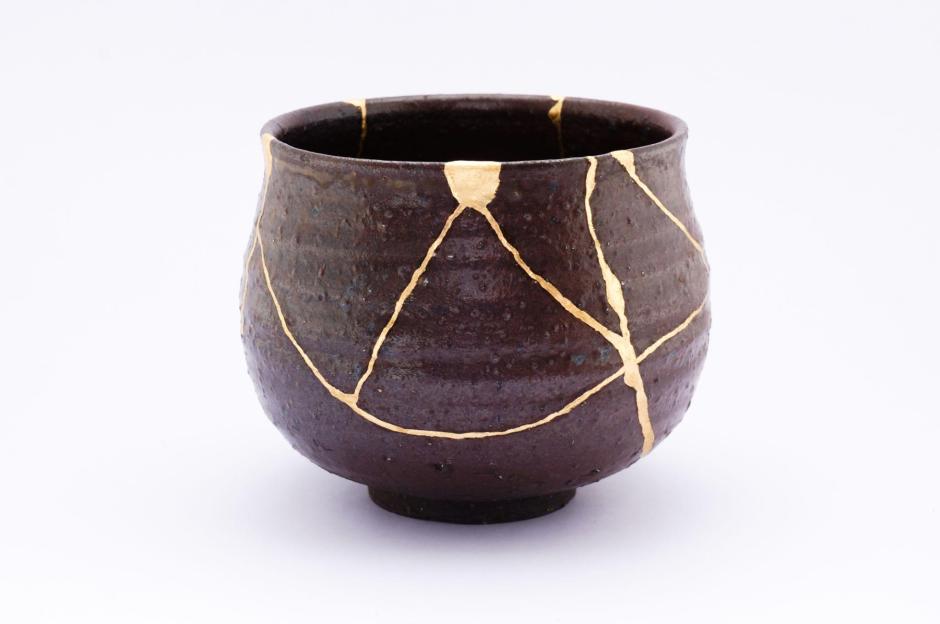
We don’t just grow by eliminating our weaknesses. Sometimes we grow by walking through them long enough that they transform into something useful, even beautiful.

I don’t always need to have the perfect thing to say – and I’m comfortable with that. It keeps me curious, engaged, and open, creating space for other people’s stories to come alive.

And for that, I’m genuinely grateful.

Assume the Best: The Secret to Clearer Communication

You know the saying, “Never make an assumption—it makes an ‘ass’ out of ‘u’ and ‘mption’.” Or something like that.

Truly understanding what someone is saying, rather than what you think they are saying, takes time and effort. There’s no denying it—it’s hard work—but the payoff is huge: fewer misunderstandings and a safer space for open communication.

As James Clear puts it, “Not taking things personally can be a form of generosity. You give people the space to say things imperfectly.”

In my experience, the only consistently safe assumption is to assume the best intentions of the person you’re communicating with. Assume they are trying to help, share something positive, or are maybe having a rough moment and their words aren’t really about you. Even if you’re wrong, starting from that mindset gives the relationship room to grow, recover, or shift to a healthier space.

Assuming the worst, on the other hand, is much harder to work with—and you’ll often be wrong more than you’re right.

You’ve Been Owned.

There is something about completely owning someone. To be the victor in a challenge or sporting event feels great and is an amazing boost to the ego. You can look down your nose at those you have overcome and know that you are better than them. You are the winner and they are the loser.

Winner…

Loser…

That’s what it is to ‘own’ someone. It’s young person lingo to describe you as a winner and someone else a loser. They are trampled underfoot and you are the victor dancing on their grave.

I guess it’s not too much of an issue in the context of a game, but I am seeing the culture of ‘owning’ someone become common place in political engagement and social media. The goal no longer appears to be to create dialogue, uncover each opinion and seek to change someone’s mind. Instead the goal looks like finding the most cutting one liner that is both clever and true – a zinger perhaps, one that is so amazing that it removes the need for any further conversation. The person delivering the line then walks away in full knowledge that the other side was ‘owned’ whilst onlookers can only think ‘Well, there’s nothing more to be said. I am well and truly convinced by that pithy statement ausguy_645 said’.

Unfortunately, or perhaps fortunately, that’s not how communication works. What we end up seeing instead is dozens of people jump in with their one liner in an attempt to cut down someone else with a different opinion. They all speak at the same time and use whatever language necessary to be heard over the others and it does not have the desired impact of silencing anyone. It only creates more angst and anger, and more one liners. Finally, the only way to be heard is to say the most outrageous, malicious statement as loud and as violently as you can so that the conversation stops, therefore winning the argument and ‘owning’ the other side.

Here’s the thing. It’s lazy. It’s bad communication. There is no generosity there. Anyone can say something cutting and seemingly interesting in 280 characters. Anyone can drop a comment on a post and bring in to question the credibility of someone else. Sure, some people do it better than others, but the real work comes from the second 280 characters, and the 280 characters after that. And the curiosity about someone else’s opinion. And the suggested way forward after that. That’s where the skill lay.

That’s generosity. It comes along side someone and invites them into a thoughtful dialogue, and if the invitation is refused, generosity walks away without malice and frustration.

In the Absence of Data…

I used to love writing stories when I was little. Tales about forest dwelling people and stories of weird animals, and bizarre worlds. I think I was quite a creative little guy. But I grew out of that, or so I thought. I discovered recently that I am still strongly involved in creating stories – about people mostly, and their motives and thinking.

Studies suggest that we spend up to 80% or our time each day in some form of communication. Only a small part of that is via speaking. Most of our communication is non-verbal and even when we do communicate verbally we can’t possibly say everything that is going on in our mind. So, for the majority of the time, people around us don’t actually have any idea what we are thinking or feeling.

Brene Brown, the well-known researcher and speaker, says that ‘in the absence of data, we always make up stories’. Meaning that if we don’t know what someone is thinking or feeling about us, we create a story around that – we make up what they might be thinking or feeling. Most of the time what we make up is much worse than reality. But until we get the real story confirmed, we live in a make believe world where our made up version is non-fiction.

One of the greatest acts of generosity to ourselves and those around us is choosing to assume the best. Notice when we are making up stories about what others are thinking and feeling, and seek out the data. Seek to find out what the truth of the matter is. If we must make up a story because we don’t have the data, let’s make up positive ones.