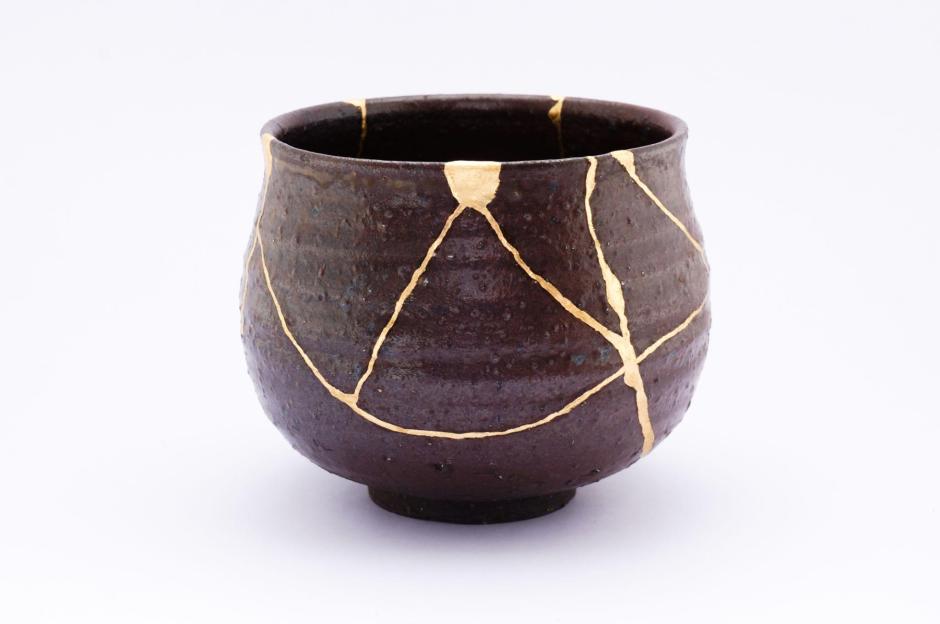

How Weakness Becomes Strength

Your greatest strength comes from your greatest struggle.

For me, that strength is curiosity. It’s helped me get to know and understand people well. I’m not the best in the world at it, but I’m pretty good—and it’s served both me and the people around me.

This strength is born from a place of lack—from a deep-seated belief that I didn’t have much to offer in conversations. So I learned to fill silence with questions that draw others out.

Initially I just enjoyed the feeling of relief to not have the pressure of carrying a conversation, but over time I realised that getting to know people is fascinating and a gift that they give to me. Everyone has a story, something interesting going on in their world that we can learn from and be encouraged by.

I’m grateful for those insecure (and incorrect) beliefs, because they led me to develop a strength I can use for good. What I once saw as a weakness has quietly become one of the most valuable parts of who I am.

It didn’t arrive as confidence or clarity. It arrived as compensation—an attempt to avoid discomfort, to fill silence, to protect myself from judgment. But somewhere along the way, that coping mechanism became curiosity. And that curiosity became connection.

The irony is that the belief I was trying to escape—that I didn’t have much to offer—ended up shaping something that helps me draw the best out of others. Not because I fixed myself, but because I followed where that insecurity led long enough to discover its value.

And maybe that’s the point.

We don’t just grow by eliminating our weaknesses. Sometimes we grow by walking through them long enough that they transform into something useful, even beautiful.

I don’t always need to have the perfect thing to say – and I’m comfortable with that. It keeps me curious, engaged, and open, creating space for other people’s stories to come alive.

And for that, I’m genuinely grateful.

Think Helping Others Is a Waste of Time? Think Again

What’s the best excuse you’ve ever heard for being late?

“I stopped to help someone.”

It’s one of the few reasons no one argues with.

What about,

…I helped a guy push his broken-down car off the road.
…I gave a lift to a friend.
…I waited with a little girl until she found her mum.
…I helped a stranger with directions to the train station.
…I came across a car accident—no one was hurt, but I stayed with one of the drivers until their family arrived.

No one would call any of these a waste of time—even if they made you late. We instinctively recognise them for what they are: good, generous things to do.

In fact, people have lied about doing things like this just to justify being late. I’m not suggesting you do that—but it says something important. Deep down, we all agree: helping others is a good use of our time, even when it disrupts our plans.

That said, if this happens to you all the time, it’s probably best not to talk about it too much. Even good deeds can wear thin if they consistently inconvenience the same people.

It’s interesting, though—we think very differently about giving away our time compared to giving away our money.

We tend to guard our money, but spend our time freely.
And yet, we have far less time than we do money, although we waste both.

If we spent money the way we spend time, how would that impact us?

Maybe the better question is this:

What would change if we treated our time as something worth giving, rather than something we’re always trying to protect?

Because the minutes you “lose” helping someone else are rarely wasted.

They’re often the ones that matter most.

Be Kind to Yourself—Without Lowering Your Standards

Why Self-Improvement Can Become Exhausting

I love personal growth.

Books, podcasts, videos—anything that helps me improve, I’m in. There’s something energising about learning how to think better, live better, and uncover the blind spots holding me back.

But here’s the honest truth I had to face:

That mindset can be exhausting.

Not just for me—but for the people around me too.

When you’re constantly analysing your behaviour, looking for flaws, and trying to optimise every part of your life, it can feel like nothing is ever good enough. And if I’m honest, sometimes I bring that intensity into my relationships.

Over time, I realised something important:

  • Growth without self-generosity leads to burnout.
  • Self-generosity without accountability leads to stagnation.

So the real challenge is finding the balance.

The Trap: “Self-Generosity” vs. Letting Yourself Off the Hook

For a long time, I told myself I was being “kind” or “understanding” toward myself.

In reality?

  • Skipping commitments
  • Making excuses
  • Lowering my standards

…and calling it self-care.

That’s not self-generosity. That’s mislabelled comfort.

True self-generosity means:

  • Being compassionate without lying to yourself
  • Being understanding without abandoning your standards
  • Giving yourself grace while still moving forward

To help me stay grounded, I’ve adopted three simple mindset anchors.

1. “We Are All a Work in Progress”

This one keeps me humble.

  • I don’t know everyone else’s journey
  • I don’t know their struggles
  • I don’t know where they’ll end up

It’s easy to judge people who don’t seem to be improving—but growth isn’t always visible.

And honestly? It applies to me just as much.

I’m still figuring things out. Still improving. Still making mistakes.

And that’s okay.

2. “I’m Better Than I Was Yesterday (But Not as Good as I’ll Be Tomorrow)”

This is my antidote to frustration.

When I fall into old habits or negative thinking patterns, it’s easy to spiral into:

  • “Why am I still like this?”
  • “I should be past this by now”

This mindset shifts the focus from perfection to progress.

If I’m reading, learning, moving my body, and taking small steps forward—then I’m growing.

Progress might be slow—but it’s still progress.

3. “In This Moment, I Am Enough”

This is the one that brings me back to the present.

No matter how much I prepare—or don’t—there are moments where it’s too late to change the past.

Instead of beating myself up, I can choose to:

  • Own who I am
  • Show up fully
  • Do the best I can with what I have

Right now—that’s enough.

The Balance That Actually Works

Being generous to yourself doesn’t mean lowering the bar.

It means holding yourself to a high standard while treating yourself like someone worth supporting—not punishing.

You grow faster with encouragement than with criticism.

Final Thought

Self-growth is a lifelong process.

You won’t always get it right. You’ll repeat patterns. You’ll fall short sometimes.

But if you combine honesty, discipline, and self-compassion, you create something powerful:

Sustainable growth.

What About You?

What are the phrases, beliefs, or reminders that help you stay balanced?

The Power of Integrity: How Keeping Your Word Boosts Workplace Trust

One of the values that I align my life with is integrity – and by my definition it means ‘doing what I say I’m going to do’.

I think it is dramatically underestimated as a strength, and I have witnessed that across my career in different sectors.

We underestimate what it means to others when we put our hand up, or have something thrust upon us and commit ourselves to it. Especially in the workplace.

Some have said, “Isn’t that just doing your job? Why is that so special?”  which is a great question. It probably shouldn’t be considered a special effort, but it is because not everyone does it.

As James Clear said, “Delivering your work on time can be a form of generosity. You make life easier for everyone downstream.”

Yep, it is just doing your job. It is just doing what you said you were going to do. It is just living with integrity. But the positive impact it has on other people is significant, not only by making their job easier as they don’t have to chase you for the stuff they are waiting on so they can do it, but for the trust it builds within your organisation.

It’s a little thing. But it’s a big act of generosity.

Your Growth is a Gift

Have you ever thought about what people are missing out on because you are not growing? What impact is it having on those around you when you are stuck doing the same things you have always done, knowing the same things you always knew, being the same person you always were? It may not sound like a big deal and maybe personal growth is not your ‘thing’, but it’s not about you. It’s about the people that you love that are in your life, and then then people that they love that are in their lives. We owe it them to be the best version of ourselves so that we, in turn, can help them be the best versions of themselves…and so on.

Here’s a harsh truth: If you think you are currently the best you can possibly be, you’re not. (Ouch). There is always more. There are things that you don’t know yet that will change the way you turn up when you learn them. There are things that you don’t know how to do yet which will be groundbreaking in your life and in those around you; groundbreaking in the sense that it will break new ground so you can build something new on it.

There is always more to learn. Always more to discover. Always more to understand. Not so that you can get to the finish line of learning, but so you can improve and make everything you touch just that little bit better.

How many people can reap the benefits of your growth?

How To be Generous to Yourself (without letting yourself off the hook)

I love personal growth. I love consuming books, podcasts and videos about growth. I find it exhilarating. But I realised a little while ago, I must be exhausting to live with. I am always searching for the reasons why I do the things I do, how I can do life better, and how I can find the blind-spots that I have. Nobody wants to live with that, and to be honest, sometimes I am exhausted by it too. So I am slowly learning about what being generous to yourself means. I have been reluctant because previously I have been very good at letting myself off the hook for something and calling it ‘self-generosity’, but it was really just laziness and a lack of integrity.

Now, I have three sayings that I use which help keep things in check.

We are all a work in progress

This is helpful for me and for when I am dealing with others. Sometimes I can get frustrated with people who don’t seem to be trying to improve and this saying is a great reminder that I don’t know other people’s journey, and I certainly don’t know where they will end up. It helps keep me in check too, as I realise that I am a long way from where I want to be.

I am better than I was yesterday (but not as good as a I will be tomorrow)

To stop me slipping into the depths of despair and frustration when I make the same mistakes or fall into the same victim racket in my mind, I think of how far I have come and I can have confidence in my trajectory of growth. If I can keep doing to small things each day; reading, learning, keeping fit, then I know I am moving forward. Progress is slow, but it is still progress.

In this moment, I am enough

With all that said and done, I can know that right here, right now, I am everything that I need to be for this moment. I can’t do anything about any work or preparation that hasn’t been done because it is too late to change it, so I can own who I am and what I am doing.

What are your best sayings?