
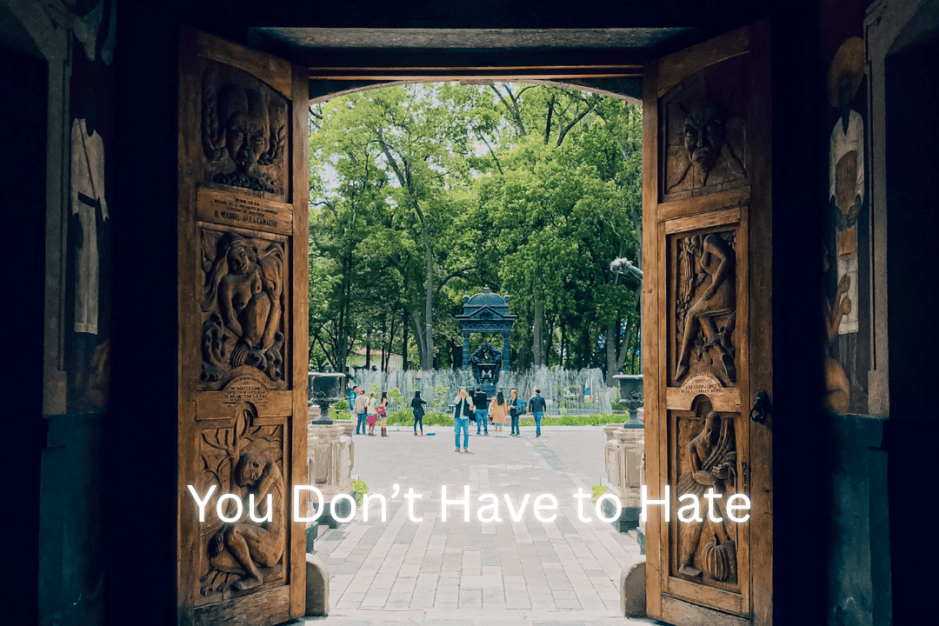
You don’t have to…

You don’t have to hate.

We all get to choose how we respond to other people. We all can respond with kindness, or generosity, or with grace. Alternatively, we can choose to respond with anger, bitterness and hate.

We weren’t born with hate in our hearts and minds. It is a learned behaviour and we can choose to unlearn it.

After the hateful Bondi attack in December 2025 when two gunmen opened fire on a Hanukkah celebration, Liberal MP Julian Leeser said on the ABC Daily Podcast, “What starts with hateful words doesn’t end with hateful words.” Whatever your thoughts on his politics, I think on this point we can all agree. If hateful words are your starting point, then it is very difficult to de-escalate from there. You really only leave yourself one way to go. It’s not a guarantee that hateful words will always turn to violence but you can be sure that it is a much longer journey from kindness to violence than from hateful words to violence.

Hate and violence are a choice. You don’t have to choose it.

If you have to say or do something, leave yourself somewhere to go. Err on the side of kindness. Start from generosity.

Why I hate most TV shows

There is no story without a problem. You need conflict. If a story doesn’t have conflict, it’s not a story, it’s an anecdote and it’s boring.

The majority of conflict in TV shows is based on deception. On avoiding a hard conversation. On hiding something from someone else so they don’t get upset, and then the next 18 minutes is dedicated to covering your tracks so you don’t get found out in a lie.

Each 20-minute tv show has an A, B and C storyline. That’s potentially three different stories of deception that happen every episode. For a standard 10-episode series, that is 30 potential conflicts from deception and lies. Don’t get me started on seasons with 20 or more episodes in them. And often these are family-based sitcoms. It’s “okay” though because everything gets found out by the end, it will be funny and then resolved within half an hour.

What is that teaching us, or more importantly, what is that teaching our kids? That you can lie, try to cover it up and that’s how relationships work?

It misses the issue of consequences, many of which are unintended, and what happens in relationships when we are unable to be truthful with those that we do daily life with.

Lies and deception are anti-generosity. They are selfish. They break relationships. The cover up afterwards serves only you. We like to think that we are saving others from a difficult situation or a painful truth, but it’s always about saving ourselves from it.

Generosity in conflict is loving honesty. Sure, it’s harder to do but it puts other people at the heart of the issue, instead of my desire to avoid of a difficult conversation.

So, I find myself avoiding sit-coms now. I’m not looking for unnecessary drama.