The Journey Must be Good

“I just need to get to the end of this week.”

How many times have I said that?

How many times have you?

The need to get through the week, or this month, or this year, until payday, this debt has gone or this season has changed, can be strong because no one enjoys being in a difficult or uncomfortable position. We just want it to go away and until that happens it is hard to focus on or enjoy other things.

 So, we wait for the good times to come, impatiently. The things which we think create good times are the new things we collect, be they big ticket items or everyday things.

But once we have the new things they rarely hold our attention or bring the joy that we thought they might have.

As Pliny the Younger said, “An object in possession seldom retains the same charm that it had in pursuit.”

You’re telling me that if life is uncomfortable or challenging now, the things that I am looking forward to in the future won’t help? Thanks Pliny, I feel much better now.

What is left for us is the journey from now until then. We get to choose the path we take, who we take that path with and how we can enjoy that path together.

Also, I think there is a way to find joy and purpose without going after things, but that is more a philosophical/spiritual journey.

Hate begets hate…

It’s the kind of leadership I respond to and think is strong and courageous. I don’t see it in too many people anymore. But Martin Luther King Jnr. had it in spades.

His quote continues to rattle around my head.

“Hate begets hate…”

From hate, more hate is birthed. It grows and overwhelms every person it touches.

“…violence begets violence…”

From violence, more violence is birthed. It grows and overwhelms every person it touches.

Hate filled violence is a scourge on our world. We think it’s strength. We think it’s righteous. We think hurting someone who hurt us is the way it is supposed to be. A justified action. But it only creates more hatred and violence at the ones who have been affected by it that will bubble up and take down whomever they think is responsible for their hurt.

We can track wars back to small acts that ‘required’ responses which then, in turn, required responses and grew into millions fighting and dying for something someone else started.

Somewhere, someone has to put a stop to it. To look past the wrong that has been done to them, and to express grace and forgiveness, and not retaliate with a ‘justifiable’ response. Someone has to say ‘enough’.

I can think of one man that did that. Wrongly accused and sentenced to death. Innocent and yet still violently murdered. But even as it happened he urged love and forgiveness for those who committed the violence.

“Father forgive them, they don’t know what they are doing”. Jesus.

They didn’t know that violence wouldn’t provide them the peace they are after. Hatred wouldn’t solve the inner turmoil and hurt they were feeling. Only love can do that.

“We must meet the forces of hate with the power of love”.

What does love look like in the face of hate?

Mostly, it’s a refusal to treat others the way you have been treated. But more than not treating someone badly, it is a proactive treating others how you would like to be treated.

If you want to be loved, then love.

It you want to not be on the end of a violent act, don’t act violently towards others.

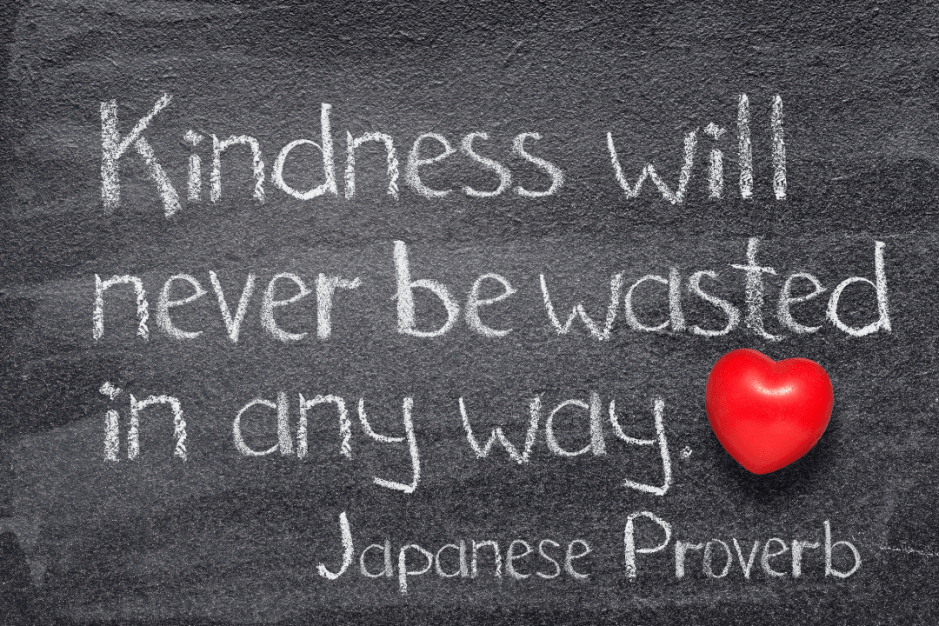
If you want to be the recipient of kindness, then be kind.

If you want to be the recipient of generosity, then be generous.

Or, to appease my desire to not sound too self-centred:

If you want your family to be loved by others, then love.

If you want your family to not be on the end of violent acts, then don’t act violently towards others.

If you want your family to be the recipients of kindness, then be kind.

If you want your family to be the recipients of generosity, then be generous.

Sure, there is never a guarantee that you what you put out into the world will come back directly to you or your family, but it is much better to err on the side of love, non-violence, kindness and generosity.

If I ever get accused of being too much of something, I hope that it’s because I was too much of those things.

I also note that I use the word ‘hate’ too often. It is not lost on me that, even whilst sharing thoughts on generosity, I still manage to add to the hate…I’m working on that.

‘My Life My Rules’ and other selfish life philosophies

“New Rule, I get to do whatever I like.”  Ellenor Shellstrop, The Good Place

There are a number of ways to view this world which may sound appealing but in reality the lead to pain and suffering. Let’s look at a few.

“I can do whatever I want to do.”

This is totally true, you can do whatever you want, but you reap what you sow. You sow chaos, you reap chaos. You sow selfishness, you reap selfishness. You sow generosity, you reap generosity. There are always consequences for your actions. They may not line up exactly but generally you get back what you give out.

“You can’t tell me what to do.”

I totally agree. As an adult, no one can tell you what to do. You can do anything you like. There is nothing stopping you. But if no one has the chance to speak into your life you miss out on all sorts of wisdom. Also, if you live life without boundaries or restrictions, with nothing off limits, you hurt the people around you and you hurt yourself.

“That sounds like a ‘You’ problem.”

At one level, this appears to create healthy boundaries and at the same time it encourages personal responsibility, but it is born from a lack of empathy and a disconnect from other people’s life and emotions. Essentially it is a way of saying “I don’t care about you and what is happening in your life”. You could say that instead, it would certainly take care of any pesky ‘friendships’ you may have.

“I don’t owe anyone anything”

It sounds like independence, but it is filled with arrogance and self-centredness. It also completely misses the interconnectedness that we have with each other. No one on the planet got where they are without the help of a large amount of people. We owe it to each other to give back to others.

“My life, my rules.”

This one encapsulates a few different one’s together. Again, this almost sounds great and encouraging to hear people living their own life, but being part of a community, any community, requires living by other people’s rules sometimes because of the broader benefit to the wider group. Think of speed limits, or anti-corruption laws, or the general understanding that you whisper when you are in the local library. There are a number of times when it would be to your personal benefit to ignore those rules, but we have a wider responsibility to the people around us. That understanding is the foundation of generosity.

Plus, as Steve Maraboli said,

“Selfish people tend to only be good to themselves…then are surprised when they are alone”

It’s best to not be alone.

Kindness is Costless…isn’t it?

“Kindness is costless but also priceless” Warren Buffett

True kindness does cost you something, but not necessarily money. Perhaps that’s just how Warren Buffet sees the world, through a zero-sum game of whether something costs you money or not.

Because I know that kindness costs time, energy, mental space, the opportunity to do something else and sometimes, yes, even money.

But the impact of a kind act is so much more valuable.

Warren is right about the money with this point, it is priceless.

You cannot calculate the dollar value of a genuine kind act from one person to another because it would fall short.

Some things are not able to be bought and therefore there is no space for kindness and generosity within the financial economy. For those that focus solely on dollars and cents, this makes no sense, or cents, so it isn’t something they get involved in.

In this, Warren Buffet is an anomaly. One of the richest men on the planet still has a philosophy of kindness.

He knows that some things are worth more than money.

Is generosity just for good people?

“Have you met me?” I asked a close friend.

They has just said something weird and seemed worried about sharing something with me, because I might judge them for not having their life altogether.

They had seen me go through some of life’s craziest twists and turns, and at no point could I claim that I had it all together. Yet, they feared me judging them? Holy cow. I have no right to do that – I may not be the worst person on earth, but I am far from 100% good.

But my friend, they are a really good person, even though they just shared about some pretty tough things they were involved in.

Life is messy and challenging and I think that anyone who can even be a little bit good in amongst that it outstanding.

In this dichotomy of mess and bits of good, we find an interesting reality – people can act generously without being totally good. Generosity is an outworking of the good we have within us, somewhere. Even if it is a tiny amount of good.

You don’t have to be considered good to act generously to other people.

Also, generosity grows that tiny bit of good within us and makes it a little bigger.

You can’t be trusted…

“I’ve always gone for the ‘bad boy’ in my relationships, and it has never worked out. I want to find a healthy relationship and settle down”.

“Good for her!” I thought. Self-awareness is the key to helping us create the life that we want.

I rarely watch reality tv. I have caught glimpses over the years, but I never thought that anything about it was actually real, until one day I happened upon a bachelorette type franchise where a well-known female was the object of many a male’s affection. Not groundbreaking by any stretch.

What did stand out was this insight she had about herself.

Fast forward to the end of the series and the final two males that she could choose from represented her two options in life. Choose the new, unknown, probably healthy relationship with a nice guy who cared for her, or the same relationship she has had over and over, which she said she didn’t want.

She chose the second option, the ‘bad boy’ she said she didn’t want, and a few months later it all fell apart, like it always did.

I couldn’t believe it, she had happiness and contentment right in front of her and she threw it aside to chase after something that seemed fun but in the end was damaging. Why would she do that?

But when you think about it, we all do that. We all have some idea about what is good for us, what is healthy, what will probably make us happy, when faced with a choice between those things and what looks fun in the moment, how many times do we choose the thing that will hurt us in the long term? Why can’t we just make good, healthy decisions?

It’s one thing to know what is good for us, what we need, and what will create the best scenario for us down the track, it’s another thing to do it.

Generosity is like that. We could give some money away, or some time, or do something thoughtful for someone else, or we could buy another pair of shoes, or start the next episode of whatever we are streaming at the moment. I know which of those things will make me happier long term, but often I choose the other things.

What on earth do we do? Be generous to yourself and know that this isn’t how it always has to be. You can make a change, by starting small. Take $5, 5 minutes or 5 messages and use them to act generously towards others. Then go back to your shoes and shows. If you do this consistently, over time you will require less shoes and shows and enjoy more generosity and more of life.

Who knows, you may even find yourself making more good, healthy decisions in other areas of your life too.

“Say ‘Thank you’ to Nana.”

I am sure that you have been on the receiving end or been the one saying that phrase at some stage in your life. Teaching our young people to be grateful for the gifts that people give us is a foundational part of being a human. Gratitude is right. Being ungrateful is ugly.

A forced ‘thank you’ is technically still a thank you. It’s the same as a forced apology. Making our kids say the words is the simplest way to get them to sound like they are doing the right thing, but if it’s out of force and not a genuine response does it really mean what we think it does? Sure, it may make us look like great parents of polite and grateful children on the surface, but true gratitude or appropriate remorse is deeper than that.

Teaching a little person to be genuinely grateful or genuinely sorry takes more time and effort than just getting them to repeat the words. It’s the process of encouraging them to connect with how they are feeling and then attempt to connect with how another person is feeling. There is no simple way to do this, and it takes time and is connected to brain and emotional development.

Saying the right words is a start but make sure you create enough space to allow kids to sit, feel and then choose a way to respond to a generous act or a mistake that has been made.

Even a little bit…

Over the last decade I have discovered the power of taking small, consistent actions. I have created little habits that have served me well. Whether it is exercise, reading or dental hygiene, my small, daily actions have built up over time to help me create the type of life that I want.

It will not surprise you though, that some parts of life are still a struggle. If discovered that I am yet to master every element of the human experience, not matter how many tiny habits I put into place.

Sometimes I become overwhelmed at the gap that I see between where I am and where I want to be. Especially when it comes to the relationship that I have with those that I am closest to, or the way that I turn up every day. I am yet to become the type of person that jumps out of bed in the morning and exudes joy for the new day.

It is disheartening to see the good things that I could bring to those around me if I had a better attitude but not be able to do it. Why bother then? Why not slip into grumpiness and save the energy from trying if I’m just going to fail anyway?

I’m reminded of a conversation I had with Psychologist, Leanne Tran on the Generosity Podcast, when she said that, as parents, “we only need to get it right 30% of the time for our kids to become securely attached”. That’s 3 out of 10. What would be considered a failure in all areas of academia, and most other areas of life (outside of some sport which is interesting), is enough for our kids to flourish.

“Even a little bit of truth and love goes a long way” – Father Richard Rohr

This quote from Richard Rohr carries a huge amount of weight. Even if you can’t do it every time…even if you can’t do it most of the time, if you can do it right now then “even a little bit of truth and love goes a long way”.

Never underestimate the power of one positive action.

Your Dark Side

Some questions you are never prepared for and this was one of those. I had just been talking and joking with a friend about their incredibly persuasive abilities, which could be quite powerful and devastating if used for evil instead of good. “That is your dark side.” I said.

We laughed. Then he flipped it on me, “What’s your dark side?”

“Damn it, what a jerk!” I thought.

But I sat with it for a minute and answered, “I can be pretty judgmental”. It hurt to admit because I pride myself on treating all people the same, no matter who they are, because I would hope that they do the same to me.

I am naturally curious and that generally gives me a pretty good read on people, fairly quickly, and so I think I get a good understanding of part of who they are and what motivates them. When I’m at my best, I have a very generous sense of their journey and their person. When I’m not at my best I can find myself writing people off because of who I perceive they are. I hate that part of me, but it’s my dark side, it makes sense that I don’t love it.

I have found that when I drift in to being super judgmental, I have stopped being curious about that person, I think I fully understand who they are with no possibility that there is something else that I could learn about them, or that they couldn’t surprise me.

As Les Parrot said, “Curiosity is the on ramp to empathy and empathy changes everything”

It’s impossible to be curious and judgmental at the same time.

So, I keep aiming for curiosity. 

A Very Rich Person

When I was 19, I had a midlife crisis. Well, not really but it certainly felt like an existential calamity of sorts.

I remember looking ahead at what my life would be, filled with work, and just not wanting any part of it. I didn’t want to go through life miserably participating in the rat race – sitting in an office 9 to 5, 5 days a week, 48 weeks of the year**. So, I decided to find a way to retire. Yep, at 19. But having no resources put away to comfortably live in my retirement, I soon discovered it was necessary to find a job.

What helped me become amenable to working life was discovering some wisdom in Ecclesiastes in the Old Testament. “A person can do nothing better than to eat and drink and find satisfaction in their own toil. This too, I see, is from the Hand of God.” Believe it or not that lead me to the conclusion that it is good to work and that it was possible to find satisfaction from it.

Many people do that and have created wealth for them and their family. I have heard so much talk about the wealth transfer from this current generation of parents/grandparents to the next. They call it the greatest intergenerational wealth transfer in history. Billions of dollars will change hands in the next 10 years, or 20 years or however long people live for. (It sounds a little crass, I apologise, but it is the reality.)

The big question is how should people arrange their wealth when they pass away? Should they leave it all to their children regardless of how much they have? That makes sense, as parents we want our kids to have everything they need to have a great life. But what makes a great life?

Warren Buffet is quoted as saying, “A very rich person should leave his kids enough to do anything, but not enough to do nothing.” There is a great amount of wisdom to that. Time and again most people who win the lottery end up unhappier than they were beforehand. For many who will receive some of the intergenerational wealth transfer, it will be like winning the lottery. They will never have to work again, but to what end?

From my experience I see that there is a danger in working too much and at the same time, there is a danger in working too little. Leave your kids enough money so they still have to work, because that is good for them.

If you have more than that, then give the rest away.

**I am fully aware of the irony that, out of the countries in the world, Australia has some of the best work conditions, including shorter office hours and longer annual leave than many other places. By try telling that to 19-year-old Kieran. He knew what he wanted and it was not work.