Success Will Follow

Give first and success will follow.

Although, it depends on what your idea of success is. If success means ending up a stingy old person, making no positive impact on the world, then giving is most definitely not for you.

But, if your idea of success is having a loving family, being a generous person, sharing your life with those that you care about, having a life of growth and learning, then that will require something of you first.

I have become more aware over the years that a generous act is the catalyst for most of the good things in life. Some of those good things are guaranteed, like the positive emotional and psychological effects that generous acts have, and some of them are not guaranteed at all.

For example, there is no guarantee that if you are a generous person that you will have a happy, loving family life. But I can guarantee you definitely won’t have a happy, loving family life if you are not generous. It’s a risk to be generous and hope that good things come, but the consequences of not being generous are heavy.

The irony is that being generous solely for the sake of reaping the benefits takes something away from the generous act, but it doesn’t completely cancel it out. So, even if you can only muster a generous act because of what good it will bring you, keep doing that. Over time, being generous will change you and you will begin to seek the rewards less and less.

So, give first and then see what comes.

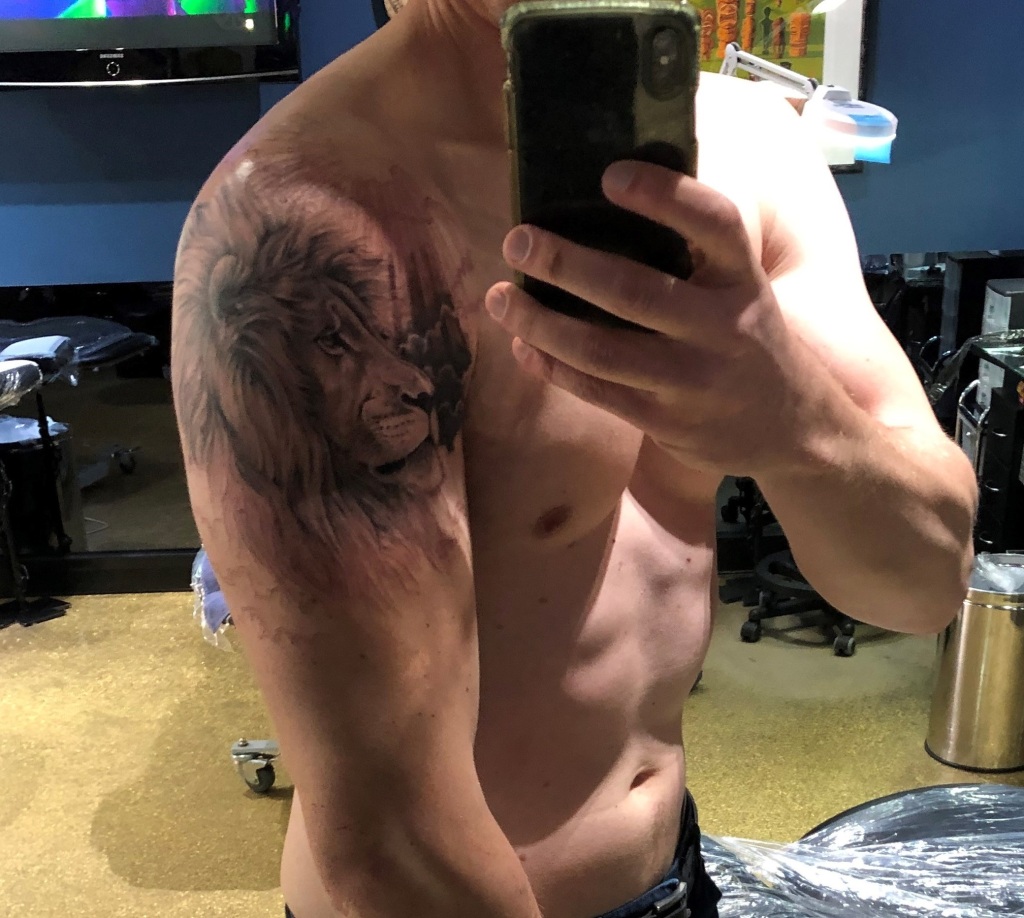
How to get a tattoo

It had been something that I had wanted for decades but was too afraid of the permanent reality of it. What would it look like when I was 80?

After realising that 80 is never a guarantee for anyone, I thought I would make the most of my life now and get inked.

But how does one go from being someone who has no tattoos (a clean skin) to someone who does? It may not be a big thing for some, but for me it was massive. It was a change in identity and a change in how I would think about myself. I had to become the type of person who had a tattoo.

So, I decided to take it one step at a time.

First I decided where on my body to get it.

Then I chose what the tattoo would be.

Then I chose a tattoo artist.

Then I reached out to the artist.

Then I met with the artist to talk about the tattoo.

Then I booked my first appointment.

Then I went to the first appointment.

All of these things are something that a person who had a tattoo would do, but to this point I didn’t have one yet. I could still choose not to do it and it would be a more educated choice than if I had sat on my hands and let my fear make the decision for me.

I ended up choosing to go ahead, and I am really thankful that I did. I am really pleased with the outcome and the meaning behind what I have chosen.

Now, for you, you may not be interested in getting a tattoo, but it is likely there is something that fear is keeping you from. Possibly something that you want to do, or think you want to do, and fear is making the decision for you. What small steps can you take that will help you become the type of person who does the thing that you want to do? There are a steps you can take even before you commit to doing it – maybe it’s a job that you want to go for but you’re afraid that it’s not the right one, or that you won’t know how to do it. Maybe there’s something in your life that you would like to change, but it seems like it’s too big to do anything about. Maybe your finances are in a bit of a mess.

As always, I will bring it back to generosity as well – maybe you would like to become more generous.

Think about what someone would do if they were the type of person who had that job, or made that change, or managed their finances well, or were incredibly generous. Then take some small steps towards that.

Beginning that journey will help you in your process, I guarantee it.

Why are people awful?

Anxiety and low self esteem is why people are awful.” Tim Minchin

I have said it many times before, that people behave in a way that makes sense to them. There is always a reason why they do the things that they do, even if that reason is hidden from them.

When someone behaves in a way which has a negative effect on others, when they are being awful, 99 times out of 100, it because of anxiety and low self esteem. When we are able to recognise that, it makes our lives easier because then we know that their behaviour has nothing to do with me and who I am, it is just what they are going through right now that is causing it. To switch it around, when I am treating someone else badly, it has nothing to do with them and who they are, it is just what I am going through at that moment.

Anxiety and low self-esteem have a lot to answer for.

That being said, now that we know what causes awful behaviour, we now get to choose how we behave. We always get to choose our response, as challenging as it may be in the moment. As an adult, that is our choice. We can choose to treat people well, or badly and we are responsible for the outcomes of our behaviour. Regardless of if there is anxiety and low self-esteem at play, there are always consequences for what we do and we should be held accountable for our actions.

So, I am to choose to be generous to those who are treating others badly, and to myself when I fall short of how I want to treat other people.

But generosity also holds people to account and allows consequences for their actions to play out. Generosity encourages people to do better.

Numbers are just numbers, very few mean anything.

Bigger does not necessarily mean better. More does not always mean more. Especially if you are measuring something that is not worthwhile keeping track of. How many eye-balls you get on something is a pointless measurement if the right people aren’t seeing it.

How many people consume content is useless if the content is unhelpful or no positive outcome occurs or no action is taken.

Content does not exist for content’s sake, there should be a purpose behind the creation. And, in my mind, that purpose is on a sliding scale:

  • Lowest quality purpose: People need to see this so that I am well known
  • Middle quality purpose: People need to see this so that my organisation/company is well known
  • High quality purpose: People need to see this so that they can get the benefit of what we are offering
  • Best quality purpose: People need to see this because it will make the world a better place

All of the above are quality purposes, and whilst I have a specific partiality for the best quality purpose, it is possible to achieve them all at the same time.

Measuring outreach and connection with people en masse creates a false economy if there is no quality purpose that comes of it. Don’t measure the number of people that see your content, measure the number of people that are impacted by it. It is harder to gauge, but worth more than just the total number.

Character Matters

“How you do anything is how you do everything.” Unknown

I have been struggling with the rise and fall of leaders in our world, and trying to identify which leaders I think are worth emulating. There are those that seem to have a large following, who talk a big game and appear to move heaven and earth to get what they want. But I dislike them greatly – which got me thinking, “Am I crazy? Am I missing something? Maybe what I think is a great leader is wrong?”

Then it hit me, in two words what I had trouble articulating for such a long time.

Character matters.

How you do things matters. How you treat people in your day to day interactions matters.

Character is who you are when no one is looking. Character shows up in how you behave when things are not going your way, or according to your plan.

If character matters, then that would mean the Machiavellian way, geting things done using whatever means possible, even if that requires destroying other people in the process, is not okay.

There is a way to lead without trampling others under foot. There is a form or leadership that genuinely would want to let go of power if it was for the benefit of those it is leading. That is the kind of leader I would follow and seek to emulate. There are only of handful of examples of this sort of leadership that come to mind…

People & Things – Advice for people

People are multidimensional. Some have suggested that there are many ‘selves’ which live in our brains, so who we are in any given moment is dependent on which ‘self’ is at the wheel. Try talking to a toddler when they are hungry, or tired or in desperate need of the toilet. You will get three different responses, probably three different types of anger. Same person though, but very different to the person they are when they are having a great time jumping on the trampoline.

Adults are just more complex, larger versions of toddlers.

Therefore, you can’t take a single action that someone performs and generalise who they are as a person. You might have caught them at a bad moment, a rough day, a moment of weakness, or a difficult season. Also, people can be capable of extraordinary acts of kindness and love in one moment, and then be a jerk to someone else the next. Some of the most vile people that have ever lived could still have moments when they were a loving parent.

“Stuff can be two things” Jake Peralta

We can be both loving and a jerk.

The person that you live with, or know very well, or are having a disagreement at work/on the internet with, is more than just the things that they say and do.

In saying that, Aristotle is credited with this quote, ‘You are what you repeatedly do. Excellence is not an act but a habit.’

Who we are as a person is deeper than the things that we do, but what we consistently do, shapes our person.

Excellence and love and kindness and generosity are a habit. So is being a jerk. So create the habits which will allow you to become the type of person that you want to be.

People and Things – Advice for Kids

When my older children were little and I would leave them in someone else’s care, be that a grandparent, an uncle or aunty, or some other trusted person, I would give them these instructions:

Treat people nicely.

Treat things nicely.

I was really worried about how they would behave, and how that would reflect badly on me. It turns out that I needn’t have worried because they are pretty awesome human beings, and also, parenting out of fear that your kids may make you look bad is a pretty toxic place to parent from.

Regardless, the two principals remain solid instructions that I now share with my younger kids.

Treat people nicely.

Treat things nicely.

I think it encapsulates the whole realm of instructions for how to behave in the presence of other people.

I understand the complexities of it all, though. Because if someone is hurting them, or putting them in danger, I really don’t want their response to be nice. I want their response to be more like running away. That is part of a deeper lesson of protecting yourself.

But generally, the message I have for my kids is to be kind to other people and to things. It shows respect, generosity and a sense of self-worth, and it shows other people that this is how they would like to be treated in return.

3 years from now…

“3 Years from now you will be 3 years older.” James Clear


Time will always do what it does. It rolls on regardless of how you think about it, or how you feel, or how you spend it. You can’t stop it but you can choose what you do with it.

So, in 3 years would you like to be more generous? Start now. Start small. Create a daily , weekly or monthly generosity action.

Maybe give $5 a month to a charity. In three years that will be $180 and then you will be the type of person that gives regularly to charity.

Maybe $5 isn’t enough, maybe $50 is more your style, that would take it $1,800.

Maybe it’s $500 a month making it $18,000.

The amount doesn’t really matter.

It’s the flywheel effect. Small things begin to build momentum and over time it creates so much that things seem to be moving all by themselves. But you can track it back to a single choice and a small action that was repeated again and again.

From little things, big things grow.

What can you do in the next week to create a more generous ‘you’ in 3 years?

Too many books?

My kids sleep with, what seems to be, hundreds of toys in their bed. There are stuffed toys, toy cars, small animals, lego men and piles of books. I’m not even sure that any part of their body touches the mattress there is so much junk.

I honestly don’t know how it came to this – I am reasonably ordered in life. The bed is for sleeping. The toys and books go in the playroom. But, apparently, my children have a more fluid understanding of how things work in our home.

The books, whilst super annoying when they fall under the bed and cause a frantic search when it’s library day at school, I am more okay with because books are important. It is important to read to your child. I think every parent knows that, and there are studies that have found that young children whose parents read to them daily have better school experiences. There are other studies that have shown that homes which have books in them are more likely to have better educational outcomes, even if they aren’t read.

So, my kids, by sleeping on books, should end up being geniuses. That’s my working theory.

Education is important, and we all want the best for our kids.

Whenever I meet the women that Opportunity International Australia work with, their motivation for using a small loan to build a business and work their way out of poverty is so that they can give their children a better life. They, first and foremost, want their children to go to school and get an education, because they know that this will be a huge benefit for the kids in the future. Even if they haven’t been able to go to school themselves.

For women like Bhikhiben in India, who desperately wanted to go to school when she was younger, but had to make an impossible and devastating choice after her mother died. As the oldest of five siblings, she quit school to help raise them.

No child should have to choose between going to school or looking after their family. But that was the reality for Bhikhiben.

Even though she only has a few years of education, she has taken a small loan to build her own business to create an income which has allowed her kids can go to school, get enough food to eat, to pay the loan back as they work their way out of poverty.

Once the loan is repaid, it gets recycled on to the next mother, so she can do the same thing. With 98% off all loans repaid and recycled, that is a lot of families that are putting their kids in school.

Bhikhiben was robbed of her chance to get an education, but that has fuelled her desire to make sure her children get one. This is how generational change is created.

You can donate here to help women like Bhikhiben lift their families out of poverty.

To those who are still giving…

Again, we find ourselves in a crisis (there’s always a crisis). Sure, inflation seems to be slowing down, but talk of the cost-of-living crisis is strong in the community and there is no doubt that some are really struggling to make ends meet each week.

Here’s what I know, more people are giving less, and less people are giving more. Some are giving to charities at their normal levels, and more on top of that because they are able to, and some are giving less than they normally would as they juggle financial priorities. But those who are still giving have made it a habit, one which they don’t say goodbye to when finances get tight. They still give but give less because it’s easier to increase and continue than it is to start something that you have stopped.

So, no matter how tough things are for you right now, make sure you find a way to maintain your generosity to those around you. It will make you feel better about yourself and it will make a huge difference to the organisation that you are giving to.

To those who are still giving, we thank you.