Look How Far You Have Come!

Riding a bike is easy, once you know how. When you know how, it’s almost impossible to remember what it was like to not be able to ride a bike. It’s something that you never forget how to do, it’s like, well, riding a bike.

It’s not until someone points out to you that there was a time that you didn’t know how, that you can stop and see just how far you have come.

It’s the same with anything in life. Each day we learn and grow and it’s not until someone creates a space for us to stop and reflect on where we have come from and what we have achieved that we begin to understand how far we really have come. I’m not the same person I was 30 years ago, or 20 years ago, or 10, or 5. I’m not the same person I was 12 months ago. My hope is that my life will always be like that as I continue to grow and learn.

If it’s true for me, it’s true for you and for our world. In relation to some of the big issues in our world we have come such a long way. Take poverty for example: since 1990 over 1 billion people have moved out of extreme poverty, a larger percentage of girls are in school, about 50,000 less children under the age of 5 are dying every single day because of hunger and easily curable diseases. We have made some incredible progress.

The journey is far from over though, with much work to do (jump on board and help us out!), but we have great reason to hope and to take time to stop and say, look how far we have come.

What Does it Mean to Be Australian?

I don’t know. I seriously don’t know anymore.

I used to think we were a laidback country that gave everyone a fair go, supported the underdog, and were amazing at cricket that we watched on Channel 9.

It turns out that most of these things are not true, or are less true than they used to be. Aussie cricket and the channel swap fiasco aside, it certainly feels that as a country, we are not as laidback as we once were. In fact, we are becoming increasingly un-laidback, or stressed and anxious. I feel it myself, most days as I go about my general life, I sense that there is a communal angst. If you don’t believe me, head to Google and type in “Australian Outrage” and scroll through the results. Sure there are some links that are things that we should be genuinely outraged by but they are side by side with stories on sport, comedians saying un-funny things, and other subjective opinions.

Perhaps the problem is do to with the word “Outrage”. Maybe it is getting overused, or maybe we can make some changes to it to give differing levels of angst. Perhaps we can try (in order of severity):

Outannoyance

Outdisappointment

Outslightlyput

Outsocialmediaworthyanger

Outtempertantrum

Outfurioustodaybutnotcaringtomorrow

Outraging

Outofcontrol

OutAngryAnderson

But, if finding new words doesn’t solve the problem, then perhaps we can change some actions. Our journey from laidback into outrage requires that we find an enemy, someone that is truly against us and everything we do. Honestly, most of our “enemies” don’t live up to that definition and we have to fudge over those parts that we have in common to make it all the way to outrage. To overcome that and find our way back to being laidback requires an act of generosity. A conscious effort of listening to hear rather than listening to judge and condemn. It needs a wisdom that says “Agree to disagree”, meaning that we don’t have to agree with everything a person says or does to share a country of residence with them. It’s a knowledge that understands that we have more in common with people than we have differences and chooses to focus on the common ground. It is a life not borne out of fear. That is what generosity looks like and that is how we claim back our laidback mantle. Generosity overcomes outrage.

Happy Australia Day!

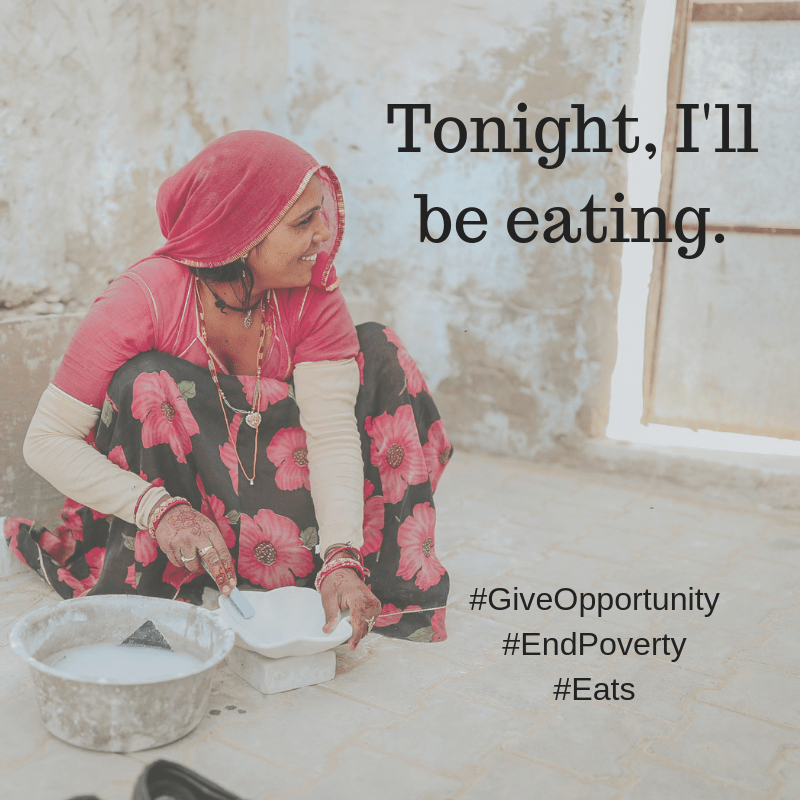
Tonight, I’ll Be Eating.

What happens when the extraordinary becomes normal?

Human history is littered with examples of people who have come into a large increase in income, won the lottery or had their life dramatically changed beyond what they could hope for, only to become so accustomed to this new life that it becomes normal. They then forget what life used to be like and take their extraordinary circumstances for granted.

Australia is a prime example of this en masse. The way we consume food has changed so significantly over the last 40 years that it beggar’s belief. Preparing family meals looks very different now, if it happens at all. Not only has the increase in the prominence of super markets changed how we access food, but the introduction of fast food restaurants has impacted how and where we consume it. Not to mention the ease in which we can access freshly prepared meals from a range of providers delivered to our door through the use of an app on our phone. We don’t even have to move off the lounge to organise dinner. Amazing – what a journey of food consumption.

As we become more and more accustomed to this new reality it is easy to forget that hunger is still the biggest killer on the planet. Whilst we can have food delivered at the tap of a smart phone, 10% of the global population are suffering from chronic hunger and for them the extraordinary is not about choice or ease of access but of finding a meal for their family. So next time your delivery takes a few extra minutes or the line at the fast food restaurant is slow stop and reflect on how things have changed, but also how things are for those living in poverty. Perhaps every time you eat out or order in, set aside some money to donate to making our world a better place.

In the Absence of Data…

I used to love writing stories when I was little. Tales about forest dwelling people and stories of weird animals, and bizarre worlds. I think I was quite a creative little guy. But I grew out of that, or so I thought. I discovered recently that I am still strongly involved in creating stories – about people mostly, and their motives and thinking.

Studies suggest that we spend up to 80% or our time each day in some form of communication. Only a small part of that is via speaking. Most of our communication is non-verbal and even when we do communicate verbally we can’t possibly say everything that is going on in our mind. So, for the majority of the time, people around us don’t actually have any idea what we are thinking or feeling.

Brene Brown, the well-known researcher and speaker, says that ‘in the absence of data, we always make up stories’. Meaning that if we don’t know what someone is thinking or feeling about us, we create a story around that – we make up what they might be thinking or feeling. Most of the time what we make up is much worse than reality. But until we get the real story confirmed, we live in a make believe world where our made up version is non-fiction.

One of the greatest acts of generosity to ourselves and those around us is choosing to assume the best. Notice when we are making up stories about what others are thinking and feeling, and seek out the data. Seek to find out what the truth of the matter is. If we must make up a story because we don’t have the data, let’s make up positive ones.

Fa-la-la-la-la La-la-la-la-ing

I am not a Christmassy type of person. I don’t mind this time of year, the decorations are okay, although they don’t put me in a joyful mood like they do for some people, the food is good although it doesn’t excite me a great deal, and the carols I can leave – I certainly don’t get too involved in any fa-la-la-la-la la-la-la-la-ing.

What does excite me at this time of year is the idea of giving. We have a special season where we think about what others would like to receive. Now, that can be stressful, but we can also look at it as a great opportunity to put a smile on the face of someone we care about. The reason it is stressful, perhaps, is that if we don’t spend much time throughout the year thinking about what others would like, it is very difficult to switch that part of our brain on in December.

Often I hear people talking about becoming the best version of themselves, something that I am striving for also and I think that we go a long way to being the best version of ourselves when we are giving. When we are generous to others and giving back.

So, use this Christmas time to be the best version of you. Be generous to those around you, give great, well thought out gifts to friends, family and people you don’t know – like a chicken, for example.

Philanthropist

Philanthropy is a strange word. It can be hard to say…

Philanthropy, Philanthropist, Philanthropic…

It also carries with it connotations of meaning which may not be accurate.

When we hear the word Philanthropist in can conjure up images of older (normally white) men who have made their millions and have now decided to give a tiny portion back. Most people don’t connect with that imagery, which is fair enough because it is not a true indication of what philanthropy is.

The true understanding of the term is that it is someone who has a strong desire to promote the welfare of others – usually through a generous donation of money to good causes.

Philanthropy has no gender, no specific cause and no specific amount tied to it; it looks very different to what we once thought. There is a growing movement of individuals, giving circles, companies and families that are making significant changes in our world, for the better. They are the new face of philanthropy making the idea so much more accessible.

Really, if you care about people, the environment or our world and give some money to charity, to see the closest philanthropist who is making a difference in the world take a look in the mirror. You are most likely one already.

Scrooge Effect

One of the most well known characters in literature is Ebenezer Scrooge. You know the one, the miserly old man who places all his value and effort into the riches he earns and doesn’t care for the people around him. Until one Christmas eve he is visited by the ghosts of past, present and future. It’s the final one, which forces him to face the fear of the unknown and to think of what life would look like for others after he died which changes his attitude. A thought provoking fiction and a standard movie to watch at Christmas.

There is such a thing as the Ebenezer Scrooge Effect, which has seen many people change their attitudes towards money and relationships as they get older and think about their mortality. The reality of death can be an incredibly positive thing.

People who have been miserly and greedy have become generous and thoughtful, and as a result their quality of life improves as does the quality of life of those around them.

The good news is that we don’t have to wait until a certain age to start being generous, we don’t have to wait until we are at death’s door  – we can save time and a lot of heartache and begin now, changing the way we think and behave.

It starts with small actions, giving some time, some kind words, some money to an organisation that you like. Doing these things consistently will create the generous quality of life that we are called to.

Jealous

I have a secret for you.

I have jealousy issues.

You may have felt like this too. I can only describe it as a pang. This feeling deep within when you hear of someone doing well, creating success in what they are doing, getting credit for great things they are doing, being recognised for how great they are at stuff.

On the outside you may hear yourself say, ‘Good for them. I always knew they had it in them. I am very excited for them’, but on the inside there is this little voice that whispers, ‘I wish that was me’.

It’s confronting to notice that side of yourself.

Jealousy is completely self-centred. It ruins creativity, positivity, relationships, it sucks joy out of any moment and it kills generosity.

Jealousy is the opposite of generosity.

I think the best way to overcome a negative attribute is to aim to become the positive attribute. Instead of trying to stop myself acting out of jealousy, I will focus on what generosity looks like and become that.

Generosity is other-centred, provides space for creativity, acceptance, builds a positive environment and is the foundation of all quality relationships. It provides joy and snuffs out jealousy.

Generosity is a true attribute of the heart of God. He generously pours out His love for us, His mercies are new every day.

Why We Feel Guilty When We Splurge

Have you ever gone shopping and splurged a little bit, arriving back home with more items than you had originally planned, which brings about feelings of guilt and shame, even though it is your money and you can spend it however you want?

Ever been there?

It turns out you are not alone. It’s a global phenomenon. The feeling of guilt after a splurge comes because we feel like we are stealing from other important parts of our budget. Like the mortgage, or rent or food. But, studies tell us, if we set aside money in our budget specifically to splurge then the guilt disappears. Just like that, because that money is there to be spent however you want and it gives you the freedom to do that.

It’s the same with generosity and giving. Sometimes we feel guilt when we give because there are other important things that require our finance and it can feel like we are stealing from those parts when we are generous.

If we set aside money to give away, become intentional about being generous, that will overcome any guilt we may feel and make it easier for us to make a positive difference in the world.

Be generous on purpose.

Get the Kids

I don’t know if it happens at a specific time in life, or if it becomes a consistent interruption in thinking, but the desire to leave a lasting impact on our world is a strong motivation for many people. Some would call it a legacy.

Legacy is a heavy word with connotations of a long term, far off benefit for some unknown people. But in reality it doesn’t have to be like that.

We can all leave a legacy starting right now, through two easy steps.

Firstly, we can give money generously to causes that we care about. Our donations have long lasting impacts and will benefit our world from the moment we give.

Secondly, we can include our kids in the process of giving and generosity. We can start by having conversations with them about the organisations we support, show them the stories of lives being changed because of our giving, and invite them to participate through giving some of their pocket money, or birthday money and letting them suggest some organisations that we can give to.

These simple actions and conversations with our children will not only impact our world, but also our family for generations to come. Creating a culture of generosity with our kids will bring about gratitude and positivity within the family unit.