
Chicken Salt

Generosity is like the chicken salt that adds flavour and richness to our lives and communities. It’s all about giving, caring, and showing kindness to others.

When we’re generous, we tap into our empathetic side. The place where we can understand and relate to the struggles and needs of others. By being generous, we show that we’re not just focused on ourselves, but we genuinely care about making a positive difference in someone else’s life.

One of the best things about generosity is that it creates a domino effect. When we receive generosity, it’s only natural to want to pass it on, like a chain reaction of kindness that spreads throughout society.

Also, it brings us joy. Science tells us that giving makes us happier. When we help others and see the impact of our actions, it fills our hearts with a warm, fuzzy feeling. It gives us a sense of purpose and fulfillment, knowing that we’ve made someone’s day a little bit brighter.

Whether it’s a small act of kindness or a grand gesture, every bit counts. You can sprinkle generosity like chicken salt, making the world a better (and tastier) place, one act of kindness at a time.

Being generous when you can’t afford it

Being generous is not always about money. Even when you can’t afford to be financially generous, there are still ways to act generously.

Here are some ways to be generous when you can’t afford to:

  1. Give your time: Volunteer your skills, knowledge, or time to organisations or people in your life who can benefit from your assistance. Your expertise and support can be life changing.
  2. Be there for others: Lending a listening ear and provide comfort and encouragement. Sometimes, a conversation or a short text can make a world of difference.
  3. Share your knowledge: Teach others what you know. Sharing your expertise can empower others and help them grow.
  4. Practice kindness: Small acts of kindness, can brighten someone’s day and foster a sense of connection and compassion.
  5. Give gratitude: Express appreciation for the people and things you have in your life. Gratitude is the foundation of well-being and quality relationships.

Generosity is a mindset and a way of being. It doesn’t matter how much money you have, if you can act generously, you can make a meaningful difference in the lives of others.

Get your hopes up!

Play it down, don’t get your hopes up. Don’t get too excited because if it ends up not happening, then you won’t feel let down and you haven’t lost anything.” Conventional Wisdom

But is that true? Are we missing something by not getting our hopes up? Are we not living the full experience of life if we don’t get excited about what could happen? What benefit could we bring if we spend some time imagining what could happen and allowing ourselves to feel what that could be like?

I like the idea of being an optimist. I want to be that. I want my kids to be that. To look at life through the lens of possibility rather than having a filter of restrictions and barriers.

I also like the idea of wisdom. It’s something that I strive for because wisdom is aligned with making good choices and living a good life.

Are they diametrically opposed? Can one be optimistic and wise at the same time?

Conventional wisdom is not generally optimistic. Conventional wisdom keeps us safe, protects us from being taken advantage of, from foolish decisions, from getting our hopes up only to see them dashed against the rocks.

But, if we can approach the world, always asking, what is possible, then anything can happen.

I have been to so many business networking events in my life. As an introvert, this has been a bit of an emotional minefield, and I often found myself deciding not to attend something that I had committed to, just before it was time to go to it. After a while of feeling like a bit of a failure, I made a conscious decision to go, no matter how I felt. This became an easy decision once I changed how I thought about success. For me, 90% of success is just turning up. If I go, then anything can happen, but if I don’t go, then nothing can happen. The other 10% is talking with two people at the event. More than that is fine, but if connect with two people and find out about them then that’s a win. I now go to networking events with asking the question, what is possible?

I want to be the type of person that gets their hopes up. I know that will lead to disappointment sometimes, but it could also lead to amazing things, that I could never dream of, like the world being a little bit more generous.

Well, that’s terrifying.

It is the most terrifying thing I have ever seen.

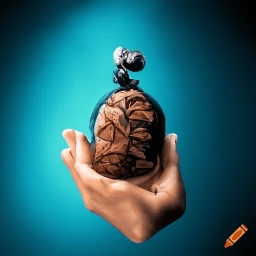
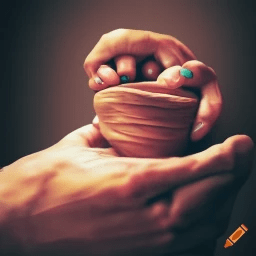
I asked an AI image generator to create an image of a person being generous. The results are terrifying. I’m not even sure what is happening but I feel like I am watching some sort of horror movie.

I don’t know why, but the lack of normal hands is very disconcerting. Creepy in fact. I’m not sure exactly what to take out of it yet. Does this mean that AI just doesn’t get humans and never will? Or does it mean that it doesn’t get us yet, but soon will have everything mastered?

Have a look at the results if you really want to, but I must warn you it isn’t pretty:

I have so many questions, it’s a hand for sure, but holding what exactly? The fingers are a little off and where is the arm?

Another random blob thing being held by, I’m not sure…is that boneless fingers? Just flat skin hands?

This is just, no. No. It’s a little village of fingers living on top of a knuckle-less hand.

More of the weird blobs with distorted fingers, with a person this time. That lip bite is disturbing for some reason.

Finally a normal looking one…wait, are those her only fingers, and are they on fire! What is happening here?!? The nub thumb on the other hand and her disjointed wrist will haunt my dreams.

I could go on, there was more, but you get my point.

One thing is for sure, there are certain parts of the human experience, even if it is only the stuff that happens internally, that I don’t think AI will ever be able to replicate. The experience of joy, or sorrow for example. The feeling that we get when we are generous to others, the impact that has on everyone involved, that is something you can’t farm out to AI.

More valuable than money

“Time is money.”

“Money doesn’t grow on trees.”

“There is no such thing as a free lunch.”

“I don’t get out of bed for less than…”

“What’s your hourly rate?”

All of these phrases you would have heard of. All of them are either untrue or unhelpful.

There is no doubt that money is a significant part of our lives. We genuinely can’t live without it. We spend most of our waking hours working to get it, then spending in, then wondering where it went. I shudder to think about the amount of spreadsheets that are used globally to track it and attempt to predict it, mostly inaccurately.

But there is more to life than money. I am definitely not the first person to say that. What does it mean though? What is this ‘more to life’ that people talk about?

It means that there are other things in life that are a more important filter to help decide how we spend our time, or what we put our money to, or who we want to become.

As James Clear says, “Nobody will ever pay you to go on a date with your spouse or take your kids to the park or grab coffee with your parents.”

Being generous with our money, time and attention will help to shape a life outside of money. It will be well rounded. It will have purpose. It will bring joy.

Generosity is Inefficient

I love efficiency. Especially with time. I love to kill two birds with one stone (metaphorically speaking). Whether that’s by listening to podcasts in the gym, or while driving, or while walking, or if it is by working in a café (which is actually three birds – coffee, work and atmosphere). There are important things, that I love to do, which, if I can do them at the same time as something else, then I feel like I am winning at life.

Cal Newport, author of Deep Work, and many other people, suggest that multitasking doesn’t exist. We might think that we are doing two or more things at once, but in reality, we are switching between tasks and giving nothing our full attention. That might be fine for listening to podcasts whilst working out, but for creative work, or work that requires some deep thought then we are not giving it our best. It feels efficient, but it is the opposite of that.

In my efficiency drive, I miss things in the periphery. I miss down time. I miss the stress behind the slack message from my colleague. I miss the sub-text behind what my child just said. I miss the gap that is growing between me and my wife. I miss how I am feeling.

It takes some “inefficiency” to begin to catch what I am missing. It takes some space, which requires consciously not doing a task, or listening to a thing, or worrying about an upcoming commitment.

This kind of inefficiency is generous – to those around us and to ourselves. The generosity of presence.

Kindness Regret

The only time I have ever had regrets about kindness was when I didn’t show it. I have never regretted being too kind to someone, even if it wasn’t received well.

There are plenty of times that I regret not giving the benefit of the doubt or not giving someone another chance or not using kinder words.

I still have this fear of being taken advantage of. I don’t want to be considered a ‘sucker’, or to be duped into an internet scam. Sure, my cynicism has kept me safe so far, but what am I missing out on by thinking that I have to either be cautious or kind? Isn’t it possible to be both?

Kindness isn’t blind. Kindness isn’t weak. Kindness doesn’t have to happen without wisdom or caution. You can be both kind and strong, principled and have boundaries.

Being kind can mean saying no sometimes. It can mean asking challenging questions. It can mean expecting more from someone. But always coming from a place of care and compassion for others.

All that aside, I think that ff someone was to ever criticise me for being too kind, then I think I have won at life.

Which way?

In my opinion he was the greatest Captain the Australian Cricket team has ever seen. Before Steve Waugh stepped into that role, he was part of the Australian tour of India in 1998. They were playing a test match in Kolkata which they lost badly, with one day to spare. Steve used that extra day to visit a clinic for children with leprosy. What he saw changed his perspective and his life, saying that the things he witnessed, he “…couldn’t just dismiss and pretend I didn’t see”.

So moved was he that he helped to raise money for the clinic that he visited, and over time he also created the Steve Waugh Foundation which helps to improve the quality of life for children and young people living with rare diseases.

Losing a game of cricket at an international level is tough, no doubt about it, but not as tough as what some people go through every day. He could have chosen to sit in his hotel room, maybe spend some time by the pool and drown his sorrows, but he chose to focus on other people and it changed everything.

Where we look shapes how we see the world. If we are always looking at those who have more than us then we will always feel a lack. But when we shift our gaze to those who have less then we will feel that we have plenty, which is the birthplace of gratitude, out of which grows generosity.

Which way are you looking?

Not Everything that Counts…

We can measure dollars and cents. Things with a numerical value that add up, subtract, divide and multiply (you know how math works). This is the easiest stuff to measure. We can count it. But does it really count? Does it really matter?

Often the most important things in life cannot be counted or measured. For example, we can’t measure the psychological impact on a mother who has started her own business, is now able to provide an income for her family ensuring her kids can go to school and is paying the loan back which got her started. I can tell you that we know that she is a different person now as she lifts her family out of poverty. We know she is having a positive impact. We just don’t know how to fully measure it. There is no graph that can measure every good thing that happens now, from the daily difference in their family interactions to the long-term impact her children will have in the world now they are getting an education. Measuring loan size and repayment rate just doesn’t seem to do it justice.

Even so, now, she is a better mum, a better business owner, a better member of the community and a better global citizen. She makes our world a better place because someone donated some dollars and cents, and the outcome is worth far more than the initial amount of money.

Raise Kind Billionaires

Before they were world famous, super wealthy, world shaping icons, the world’s richest people were babies, and toddlers, and teenagers. They were shaped by the people closest to them, values were instilled, and beliefs were modelled. How they turned out was heavily influenced by their upbringing.

For example, Bill Gates was always going to give away all his money because that is what he learned from his mother. Whether he became a billionaire or not, generosity was one of his values. Thank God for his mother’s influence (…and maybe his fathers? I don’t know much about that).

You see that small child in front of you, the one in your house that you love so deeply and drives you completely mad that it hurts your head? Or the kid next door? They could be one of the next billionaires in our world. Most likely they will make more money that you. Instil in them the value of generosity now so that it stays with them their whole life, and if they happen to be the richest person in the world they can change it for the better through their giving. Even if they don’t become the richest person in the world, they can still make it a better place through generosity.

Giving in Australia is going up and down. Less people are giving but the ones that are giving, are giving more.

You can shape that culture and it starts with your kids. Teach them about generosity and in doing so, it will make them a kinder person and our world a little bit better.