
How to get a tattoo

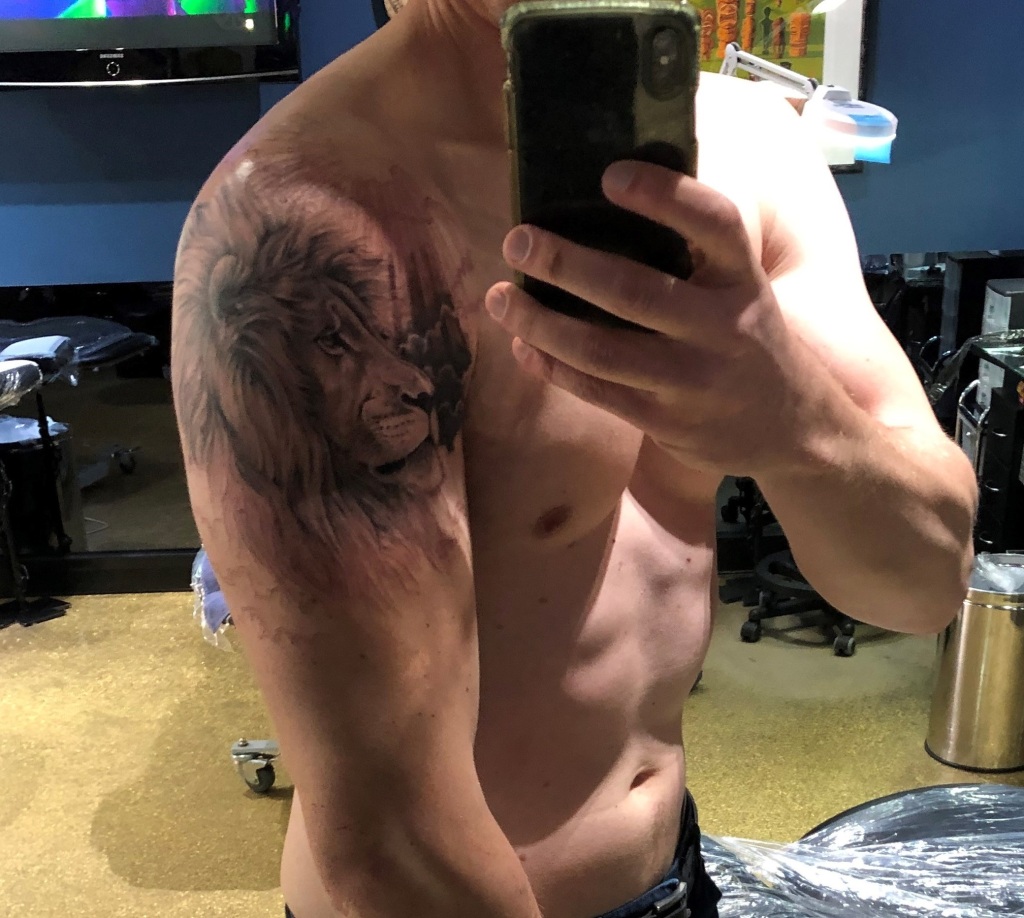
It had been something that I had wanted for decades but was too afraid of the permanent reality of it. What would it look like when I was 80?

After realising that 80 is never a guarantee for anyone, I thought I would make the most of my life now and get inked.

But how does one go from being someone who has no tattoos (a clean skin) to someone who does? It may not be a big thing for some, but for me it was massive. It was a change in identity and a change in how I would think about myself. I had to become the type of person who had a tattoo.

So, I decided to take it one step at a time.

First I decided where on my body to get it.

Then I chose what the tattoo would be.

Then I chose a tattoo artist.

Then I reached out to the artist.

Then I met with the artist to talk about the tattoo.

Then I booked my first appointment.

Then I went to the first appointment.

All of these things are something that a person who had a tattoo would do, but to this point I didn’t have one yet. I could still choose not to do it and it would be a more educated choice than if I had sat on my hands and let my fear make the decision for me.

I ended up choosing to go ahead, and I am really thankful that I did. I am really pleased with the outcome and the meaning behind what I have chosen.

Now, for you, you may not be interested in getting a tattoo, but it is likely there is something that fear is keeping you from. Possibly something that you want to do, or think you want to do, and fear is making the decision for you. What small steps can you take that will help you become the type of person who does the thing that you want to do? There are a steps you can take even before you commit to doing it – maybe it’s a job that you want to go for but you’re afraid that it’s not the right one, or that you won’t know how to do it. Maybe there’s something in your life that you would like to change, but it seems like it’s too big to do anything about. Maybe your finances are in a bit of a mess.

As always, I will bring it back to generosity as well – maybe you would like to become more generous.

Think about what someone would do if they were the type of person who had that job, or made that change, or managed their finances well, or were incredibly generous. Then take some small steps towards that.

Beginning that journey will help you in your process, I guarantee it.

Numbers are just numbers, very few mean anything.

Bigger does not necessarily mean better. More does not always mean more. Especially if you are measuring something that is not worthwhile keeping track of. How many eye-balls you get on something is a pointless measurement if the right people aren’t seeing it.

How many people consume content is useless if the content is unhelpful or no positive outcome occurs or no action is taken.

Content does not exist for content’s sake, there should be a purpose behind the creation. And, in my mind, that purpose is on a sliding scale:

  • Lowest quality purpose: People need to see this so that I am well known
  • Middle quality purpose: People need to see this so that my organisation/company is well known
  • High quality purpose: People need to see this so that they can get the benefit of what we are offering
  • Best quality purpose: People need to see this because it will make the world a better place

All of the above are quality purposes, and whilst I have a specific partiality for the best quality purpose, it is possible to achieve them all at the same time.

Measuring outreach and connection with people en masse creates a false economy if there is no quality purpose that comes of it. Don’t measure the number of people that see your content, measure the number of people that are impacted by it. It is harder to gauge, but worth more than just the total number.

Hurting people hurt people

The hardest thing for me to do is to looking past someone’s outward behaviours to see the motivations of their behaviours. Everyone acts in a way that makes sense to them at some level. For those that commit acts of violence or aggression or seek to tear people down, mostly what motivates those actions is pain, hurt and trauma. Sure, some people are psychopaths, but most people are just in pain. That doesn’t excuse their behaviour, nor should it inoculate them from the consequences of their bahaviour, but it does give insight as the reason why. Once we can see the hurt, pain and trauma, then we can attempt to heal those parts and, hopefully, bring an end to violent acts and aggression, at least in that person.

You see, hurting people hurt people. If you have been hurt in your life (and who hasn’t?), it is likely that you are hurting those people closest to you, without even realising it. It is almost a guarantee, unless…

Unless you have done the work of healing, unless you have access to gratitude, unless you have been generous to yourself.

Being generous to yourself helps you heal from the hurt, hurt people less and gain superpowers to not be as hurt by other hurting people.

Hurt, pain and trauma is a big fat mess, but generosity can be starting point to bring some healing to you and those around you.

Forget You

The more one forgets himself — by giving himself to a cause to serve or another person to love — the more human he is and the more he actualizes himself.” Viktor Frankl.

I hate serving. I hate the idea of being a servant. The word conjures images of people living as slaves and waiting on someone hand and foot because they have no other option. Servitude sucks.

The fact that we have an industry called, ‘the service industry’ irks me. I even used to work in it for a bit (I wasn’t great). To be clear, it’s not the industry that I don’t like, but the name. I bristle at the idea of being in someone else’s control, at their beck and call and having no agency of my own.

But this is not what service is, nor the service industry. One of the main differences is perspective, and shifting my thinking from service being slavery, to a picture of a person working for a greater cause. This creates a different experience. That is the only way that I can comfortably land in a place where I can positively talk about serving another person, as a way of forgetting myself and working towards something bigger. Putting someone else’s needs before mine. (They say that marriage and parenthood offer that sort of experience, but I have seen plenty of married people and parents live out of selfishness, and I have done that many times myself).

When Viktor Frankl talks about being more human when we forget ourselves, he is talking about the emotional experience. When we actively care for someone else, when we are seeking their benefit at the cost of our own, then we are having a greater human experience. Jesus talked about gaining your life only after losing it. There is something special that comes when we give of ourselves, when we sacrifice for others, when we serve. That is the beautiful gift that generosity brings. When we act in a way that puts others in the central part of our life, then we receive the benefit of the generous experience. You can’t stop it, it just happens naturally.

Real slavery does exist in our world, and it is evil. But the kind of service that Viktor Frankl refers to is not that. It is the opposite, it is the freedom to give of yourself to someone else and finding that you gain something amazing in the process.

What’s Next?

“What you are going to do is more important than what you have done.”

I think Harry Truman said that. I’m not sure, but I like it. It gives me the impression of hope, of possibility, and of newness.

It doesn’t say that what you have already done is unimportant, both the good things and the not-so-good things. Because the good things that you have already done are vital, and the not-so-good things that you have done have consequences that often linger. So, what you have done has an impact. But what is more important is what you choose to do now. What will happen in this next moment. Will you choose to engage or withdraw? Will you choose to lift up or tear down? Will you choose to give or take?

If you miss the mark, or choose the wrong option, that’s okay. Each moment gives us another chance, another choice, another possibility.

You have no control over what you have already done. You have absolute control over what you will do next. Own that choice. Take responsibility for it.

When you get to that point, choose generosity. That will bring about the most amount of good for the most amount of people.

Being generous when you can’t afford it

Being generous is not always about money. Even when you can’t afford to be financially generous, there are still ways to act generously.

Here are some ways to be generous when you can’t afford to:

  1. Give your time: Volunteer your skills, knowledge, or time to organisations or people in your life who can benefit from your assistance. Your expertise and support can be life changing.
  2. Be there for others: Lending a listening ear and provide comfort and encouragement. Sometimes, a conversation or a short text can make a world of difference.
  3. Share your knowledge: Teach others what you know. Sharing your expertise can empower others and help them grow.
  4. Practice kindness: Small acts of kindness, can brighten someone’s day and foster a sense of connection and compassion.
  5. Give gratitude: Express appreciation for the people and things you have in your life. Gratitude is the foundation of well-being and quality relationships.

Generosity is a mindset and a way of being. It doesn’t matter how much money you have, if you can act generously, you can make a meaningful difference in the lives of others.

Get your hopes up!

Play it down, don’t get your hopes up. Don’t get too excited because if it ends up not happening, then you won’t feel let down and you haven’t lost anything.” Conventional Wisdom

But is that true? Are we missing something by not getting our hopes up? Are we not living the full experience of life if we don’t get excited about what could happen? What benefit could we bring if we spend some time imagining what could happen and allowing ourselves to feel what that could be like?

I like the idea of being an optimist. I want to be that. I want my kids to be that. To look at life through the lens of possibility rather than having a filter of restrictions and barriers.

I also like the idea of wisdom. It’s something that I strive for because wisdom is aligned with making good choices and living a good life.

Are they diametrically opposed? Can one be optimistic and wise at the same time?

Conventional wisdom is not generally optimistic. Conventional wisdom keeps us safe, protects us from being taken advantage of, from foolish decisions, from getting our hopes up only to see them dashed against the rocks.

But, if we can approach the world, always asking, what is possible, then anything can happen.

I have been to so many business networking events in my life. As an introvert, this has been a bit of an emotional minefield, and I often found myself deciding not to attend something that I had committed to, just before it was time to go to it. After a while of feeling like a bit of a failure, I made a conscious decision to go, no matter how I felt. This became an easy decision once I changed how I thought about success. For me, 90% of success is just turning up. If I go, then anything can happen, but if I don’t go, then nothing can happen. The other 10% is talking with two people at the event. More than that is fine, but if connect with two people and find out about them then that’s a win. I now go to networking events with asking the question, what is possible?

I want to be the type of person that gets their hopes up. I know that will lead to disappointment sometimes, but it could also lead to amazing things, that I could never dream of, like the world being a little bit more generous.

Generosity is Inefficient

I love efficiency. Especially with time. I love to kill two birds with one stone (metaphorically speaking). Whether that’s by listening to podcasts in the gym, or while driving, or while walking, or if it is by working in a café (which is actually three birds – coffee, work and atmosphere). There are important things, that I love to do, which, if I can do them at the same time as something else, then I feel like I am winning at life.

Cal Newport, author of Deep Work, and many other people, suggest that multitasking doesn’t exist. We might think that we are doing two or more things at once, but in reality, we are switching between tasks and giving nothing our full attention. That might be fine for listening to podcasts whilst working out, but for creative work, or work that requires some deep thought then we are not giving it our best. It feels efficient, but it is the opposite of that.

In my efficiency drive, I miss things in the periphery. I miss down time. I miss the stress behind the slack message from my colleague. I miss the sub-text behind what my child just said. I miss the gap that is growing between me and my wife. I miss how I am feeling.

It takes some “inefficiency” to begin to catch what I am missing. It takes some space, which requires consciously not doing a task, or listening to a thing, or worrying about an upcoming commitment.

This kind of inefficiency is generous – to those around us and to ourselves. The generosity of presence.

Not Everything that Counts…

We can measure dollars and cents. Things with a numerical value that add up, subtract, divide and multiply (you know how math works). This is the easiest stuff to measure. We can count it. But does it really count? Does it really matter?

Often the most important things in life cannot be counted or measured. For example, we can’t measure the psychological impact on a mother who has started her own business, is now able to provide an income for her family ensuring her kids can go to school and is paying the loan back which got her started. I can tell you that we know that she is a different person now as she lifts her family out of poverty. We know she is having a positive impact. We just don’t know how to fully measure it. There is no graph that can measure every good thing that happens now, from the daily difference in their family interactions to the long-term impact her children will have in the world now they are getting an education. Measuring loan size and repayment rate just doesn’t seem to do it justice.

Even so, now, she is a better mum, a better business owner, a better member of the community and a better global citizen. She makes our world a better place because someone donated some dollars and cents, and the outcome is worth far more than the initial amount of money.

No matter where you go, there you are…

If you are worrying about money now, thinking that if you can just get through the next few months and everything will be fine, you are wrong.

If you worry today, you will worry tomorrow.

If you put things off today, you will put things off tomorrow.

If you are stingy today, you will be stingy tomorrow.

If you are generous today, you will be generous tomorrow.

It’s not about your circumstances, it’s about how you are responding to them and it’s about who you are when you respond.

Hoping that your circumstances will change tomorrow won’t help you feel better, or more relaxed, or more organised, or more generous today.

Change always starts today, right now.

So, become the type of person who doesn’t get anxious about finances, or who is not worried by the challenges we face in life, or who is organised or who is generous.

How? That’s the funny thing; I think you already know the answer to that.

Usually, the starting point is the answer to this question – what are you avoiding?

It doesn’t matter where you go in life, or what circumstances you find yourself in, ‘you’ will always be there. Become the type of ‘you’ that you want.