But where are the sea lions?

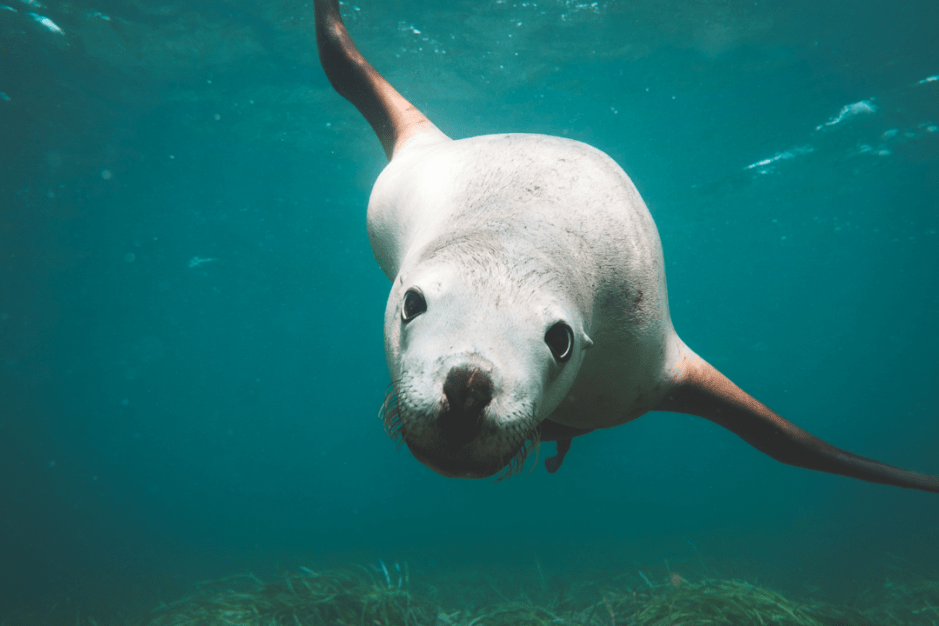
“I made the booking and didn’t know what was going to happen” a Friend told me, when describing a trip she had organised to swim with sea lions in the ocean.

It turned out to be a wonderful day at a beautiful spot, but no sea lions turned up. Undeterred, she said “sometimes the sea lions don’t swim with you.”

The truth of that became embedded in my mind and is something that I come back to regularly. It captures our world perfectly and flies in the face of what we think we can control.

You can do everything within your power; make the booking, turn up at the right time, wear the right gear, have the right mindset, but in the end there are things that are outside of your control that can get in the way. Sometimes sea lions don’t operate on our schedule or according to our wishes.

In response to that we could waste time and energy cursing the sea lions, or our bad luck because we missed out, but generally the only thing that we can do is to accept that sometimes sea lions don’t swim with us.

It is highly likely that in any one area of your life right now, something outside of your control is stopping you from doing something that you want to do, perhaps they are sea lions, perhaps something else – are your cursing or accepting?

Remember, sea lions run on their own schedule.

Your Unhealthy Opinion

“You always own the option of having no opinion.” Marcus Aurelias

“Can you believe this?”

The question startled me from my own thoughts – I don’t remember what I was thinking about because of the interruption, but I do remember that I was enjoying my thoughts. So, I started this interaction from a grumpy place.

“Believe what?” I asked tersely.

“What this politician said. They are only looking after their own interest and don’t care about anyone else. This guy is a real jerk.”

Honestly, I don’t even remember which politician this conversation was about, but I do remember feeling like this other person was trying to draw me into the drama they were experiencing in their own mind.

I’m not a fan of drama, real or perceived. I am also not a fan of someone trying to recruit me to be a party to their drams, real of perceived. I think it is a waste of time and energy.

Now, sometimes I have felt like a jerk for that and maybe like I am being heartless. When that feeling comes up though I am reminded of Marcus Aurelias and his thoughts on opinions (see the above quote).

It’s healthy to care a great deal about some things, if you don’t that’s a problem. But you don’t have to care about everything. You can’t possibly. If you did it’s likely that at some stage you would give too much energy to something you can’t change and not enough energy to something that is truly important.

The beauty is that you get to choose what you care about and have an opinion of. If something is not in your top 3 or 5 or 10 priorities, remember, you don’t need an opinion.

Get Out of Your Head

I sometimes have what I call an ‘out of body experience’ where I almost come to terms with the fact that I can only view the world through my own eyes in this present moment, but at the same time there are billions of other people doing exactly the same thing, and this has been happening my entire life, and I assume for a long time before that (I don’t actually know, I wasn’t there but people I know were). How can I balance the entire weight of human history and everything that has ever been done with the reality that I can only experience this moment by myself in my own head. It’s like the sound of one hand clapping, or a tree falling in the woods etc.

Being inside my head is mostly boring I admit, but at times it can be a chaotic, trippy and enlightening place. The problem is that if I stay that I get so caught up in my own thoughts and feelings that I feed my selfishness and offer no value to those around me.

Maybe you can relate, or maybe for you it’s a different experience of a downward spiral of troubling thoughts, or unhappy feelings, or a land of insecurity. But generally getting stuck in your own head with your own thoughts for too long doesn’t end well.

The greatest weapon we have against selfishness, unhelpful thoughts or feelings or insecurity when we get caught in our own heads, is generosity. There is a reason that on the steps in the 12 Step Groups, is to ask their members to be of service because it helps them get out of their own heads.

When you do something for someone else it is a circuit breaker for your own thoughts and feelings. Being of use to another person stops your downward spiral, even for a moment, and helps you see that there is a whole world of people right in front of you, who you can do something for.

That is of greater value that any ‘out of body’ experience I can create for myself.

The Real Reason for Generosity

There are so many reasons to give. So many positives. So many benefits for everyone involved.

Many of these are on the periphery of the actual act.

When it comes down to it, the main reason why you should give is the difference that it makes in the lives of those who benefit from your generosity.

No matter the motivations for giving, the different ways, or the different reasons, one thing that connects every generous act is the impact the giving has.

I saw it. The courage of a women who just lost her husband through the COVID pandemic, left to raise three children on her own, who took a loan to create a business and a sustainable income. Who found a way forward with her life after going through the depths of tragedy and poverty. The giving from people in Australia made this type of difference possible. Tara inspired me. So did her children.

So, I choose to give to an organisation that works internationally, that is accredited through the Australian Government, that reports back on the impact it is having. You may choose to do it differently, but the reason you give is the same as the reason I do. Something needs to change and I am in a position to help change it.

Where Freedom is Found

Some definitions of freedom suggest that it means you can do whatever you want. That sounds great but it’s not true.

British-born Zen master Houn Jiyu-Kennett’s goal in her teaching style wasn’t to lighten the burden of the student, but to make it so heavy that he or she would put it down.

You simply can’t do everything. You can certainly try but something will pay the price.

Our time, energy and resources are finite and when we say ‘yes’ to something, it means saying ‘no’ to something else.

Saying ‘yes’ to more Netflix means saying no to exercise, conversation, practicing guitar, reading to your kids, gardening.

Saying ‘yes’ to sleeping in again means saying no to starting the day early, getting a run in, eating a leisurely breakfast, playing with your kids before school, gardening*.

It’s not just about the potentially unhealthy things we say yes to, it’s also about all the unnecessary things we say yes to. The extra committee you join, the extra responsibility at work, the volunteer role as coach for your kids sporting team – all good things, but what are they costing?

Freedom is found in the simple things. Freedom is found in the quiet moments. Freedom is found in saying ‘no’.

As an act of generosity to yourself, say no to something…

*I actually don’t garden, but I assume that it is a good thing to do. People seem to like it.

The Sun Doesn’t Care

One time when I was playing Australian Rules Football, I broke my leg so badly that it required two and half hours or surgery, a metal rod, a skin graft and nine days in hospital.

When I was on the brink of heading home after this ordeal, a doctor appeared in my hospital room to check over my wound before being released. I had never seen this doctor before (and didn’t see him again after this brief interaction). He loudly announced that he didn’t like the look of things and was “worried about infection”, so I wasn’t going home that day. Another night in hospital was required.

In the grand scheme of things, one night in hospital is nothing, and I don’t even remember what that extra night felt like now, but at the time it was the worst thing in the world. I just wanted to be home and it seemed to be so far from my reach in that moment.

Sometimes we can feel like we are so far from where we want to be. Like we are trapped in a never-ending loop keeping us from living our real life. Stuck trying to complete the boring stuff so we can get to the interesting part, but the boring stuff never ends.

In those moments, in order to not become bogged in the depths of despair, gratitude is our greatest weapon. Ironically, it can also be the hardest thing to find when we are in that space. The most grateful people that I have come across are those that practice it. They find things to be grateful for in any situation and it comes to them naturally after a while.

If you are curious about gratitude and need a place to start, my go to is to be grateful for sunlight. It sounds a bit simple but it is one of the foundations of life, and it doesn’t come with baggage or opinions.  It shines on the deserving and undeserving. The good and the bad. The happy and the sad. It does not discriminate. I am grateful for that.

P.S.

I made it home from hospital. A day late for sure, but it all worked out, even if it didn’t feel like it would.

Quiet Farty

It still makes me laugh now when I think about it. My youngest must have been about 3 years old when the discussion about farting became very funny for her. We didn’t want to avoid the awkward subject, and sometimes things got out of hand when one of the kids was described as ‘Farty McFart-Face’ (maybe by me). There was one instance as were sitting around after bath time when the kids were getting ready for bed and I thought I could smell something. My 3 year old looked at me with a cheeky smile and said, “Quiet farty”.

I couldn’t stop laughing. It was, and I think still is, the funniest thing I have ever heard. Sure, it probably helps if you have the maturity of a 3-year-old too.

Those sorts of moments don’t happen unless you give space, unless you dwell in the quiet of the moment. But they are the moments you will remember. That’s the good stuff.

It might feel like there are so many bad things happening. The stuff that we hear about day to day, the loudest things, are unpleasant, tragic, devastating, sad and overwhelming. What is happening in our world? Where are the good things? Where are the good people?

James Clear says that “good things are always happening quietly”. That’s how it has always been. The good things and the good people aren’t as in your face, but they are there and they are stronger than any of the bad things that happen in our world. But they do require that you give yourself space to notice them, that you dwell in the quiet. Take a step back from the noise and the loudness of the bad to see the good happening all around you.

2025 Theme – Choose

One thing that I have found very easy to do is to feel sorry for myself. It’s almost a natural reflex. When something happens, (and it could be anything), I can find a way for it to seem like a rough experience for me.

Working for an organisation that empowers people to work their way out of poverty, I have firsthand experience in seeing just how challenging life can be for those living in developing countries. This gives me a unique perspective on how good my life is, how easy, how untroubled, how safe. So, how can I possibly feel sorry for myself?

Well, I can still find a way to do just that. The weather is too hot, or too cold. My air-conditioned office is too hot, or too cold. My coffee is too hot, or too cold. I’m so tired today. My kids are too loud. The tv is too loud, or too soft. There is too much to do. There is not enough to do. I’m bored. I’m over stimulated. There’s nothing to watch on my numerous streaming services. I don’t have enough time in the day.

I find myself living in a cognitive dissonance, of knowing that I have a great deal, more than most, to be grateful for, but sulking about how life is hard.

James Clear is one of my favourite authors and this quote is helping me to adjust my thinking for this coming year:

“Different meanings can be assigned to the same events. Look for evidence of how the world is encouraging you, and you will find it. Look for evidence of how the world is burdening you, and you will find it. Choose an explanation that empowers you.”

You find what you look for in life. You get to choose what you look for, and therefore you get to choose what you find.

For me, in 2025 I will choose to look for the encouraging things, for the good things, for the generosity. I will let you know if I find it.

Top 5 Books of 2024

Whilst not an overly voluminous year of reading, I read some amazing books. Some old, some newer, some disappointing, but most of them were worth it.

How to be Perfect – Michael Schur

From the guy that brought you The Good Place, this is an outstanding read if the show got your interest piqued in ethics at all. It is gives an overview of where different philosophical thought has come from, with some background on the show and Michael’s career. I found in very interesting, and only a tiny bit preachy. (If you have seen the show then you may know the topics that he likes to get preachy about).

Whilst I am not able to fully articulate the names and birthplaces of the three main ethical arguments he covers, I have a fair idea and that works well enough for me. (That says more about me memory for the finer details than it does about the quality of the book).

Michael is an excellent and humorous writer.

Tuesday’s with Morrie: An old man, a young man and life’s greatest lesson – Mitch Albom

The best book I have read this year. I have a habit of coming late the party on many great books, but better late than never. Originally published in 1997, the book outlines the last few interactions that Mitch had with Morrie Schwartz who was dying. It is a real look at death, the injustice and undignified nature of it, and how we can find hope in its tragedy.

Definitely one I will read again.

The Bomber Mafia – Malcom Gladwell

In true Gladwell style, this is an excellent story about World War 2, the changing nature of warfare, ego, and the impossible question of how to end a war well – quickly and brutally to save lives or humanely? I should also add the nature of unintended consequences.

I admit that I am kind of getting saturated with content on historical wars, but this is definitely worth your time, as all good historical commentaries should be.

Boomerang: Travels in the New Third World – Michael Lewis

Building on the Big Short (which I haven’t read), this book revisits the impact that the Global Financial Crisis of 2007-08 had on other financial crisis experienced by banks/countries outside of America. From the Greek government debt crisis to the Icelandic financial crisis, Lewis educated me on some of the financial challenges the world faced when I was looking elsewhere.

A fascinating look into our recent financial history narrated in a way that only Michael Lewis can do. 2025 will require more Michael Lewis reading methinks.

In Too Deep – Lee Child and Andrew Child

Probably my quickest read this year as well. I found this book at the Varanasi airport on my first leg of my journey back home, and by the first night in my own bed I had finished it.

The newest in the Jack Reacher series, and whilst not the best one, a pretty darn good read.

Scary book of the year:

Commander and Cheat: How Golf Explains Trump – Rick Reilly

It would be a really amusing read if not for how the US election went last November. Rick is a sportswriter who has garnered a number of stories of those that have played golf with Donald Trump over many decades, and the stories are all the same.

If you believe that how you do anything is how you do everything, it’s quite scary for what the future may hold.

What Drives Healthy Generosity

Generosity comes into existence through action. People give because they are responding to a situation that they cannot stand anymore. They simply must do something to right a particular wrong, or to create a better version of the current reality.

This imperative comes from a place deep within, and many people who give are not able to articulate exactly why they do. They just feel compelled to do so.

But it comes from values.

Someone places value on human life, and when they see something happening in the world, be it poverty, war, famine or other injustices, that rubs up against their value. Usually they see something that reflects an image of themself. It might be children, or women, or parents.

They then give as a response to their values being challenged.

This is an extremely healthy way to give. It comes from a place of purity. And it is usually the starting point of a giving journey, which begins with that almost visceral response and then eventually leads to a place where an individual has a well thought out philosophy of philanthropy with a portfolio of organisations they support for a number of reasons. But at the heart is the imperative that first prompted their generosity. That never leaves.