Gratitude = Riches

Gratitude is riches. Complaint is poverty. – Doris Day

To be rich, to be wealthy, to have something that no one else has, to be in possession of a large number of things. It is the reason we have houses. It is the reason we have bank accounts. It is the reason we have storage units – we are simply unable to carry all the things we own around with us. It is neither practical nor safe.

There’s a story of the Stoic Philosopher, Epictetus, who had an expensive lamp stolen from his house. Upon discovering this theft, he went out and bought a cheaper lamp, saying that “you can only lose what you have”.

Keeping track of your stuff is a full time job. It takes a great deal of energy to make sure things are serviced, in working order, tidy, clean, paid for, swept, made, fed and accounted for. That’s a huge amount of energy when, in the end, time and rust destroy and thieves break in and steal. This kind of richness is fleeting. It could go in a moment.

Gratitude is another kind of riches. A deep richness of acknowledging the good things that are happening all around us, even if, (especially if), we are having challenges with the riches of possessions.

To be grateful creates a strength that cannot be easily toppled. A certainty that, in the midst of a storm, says “I am the luckiest person alive”.

Makes the World Go Round

For all of it’s deficiencies (meaning that it is not the source of happiness and the love of it causes the greatest issues in our world), money is still just a tool that we use. It is a device we accumulate throughout our lives which we distribute as we see fit.

You probably know the saying, money makes the world go round. It is true, but we direct the way in which the world goes. If you don’t like the way the world is going, then use your money to change that.

How we spend, invest and give money has an effect on everyone on the planet.

If you had something that didn’t bring you happiness and, if used poorly, would damage everyone around you, wouldn’t you want to do something positive with it and create the best outcome possible?

Of course you would.

So, spend money wisely.

Invest money ethically.

Give money generously.

Generosity is Inefficient

I love efficiency. Especially with time. I love to kill two birds with one stone (metaphorically speaking). Whether that’s by listening to podcasts in the gym, or while driving, or while walking, or if it is by working in a café (which is actually three birds – coffee, work and atmosphere). There are important things, that I love to do, which, if I can do them at the same time as something else, then I feel like I am winning at life.

Cal Newport, author of Deep Work, and many other people, suggest that multitasking doesn’t exist. We might think that we are doing two or more things at once, but in reality, we are switching between tasks and giving nothing our full attention. That might be fine for listening to podcasts whilst working out, but for creative work, or work that requires some deep thought then we are not giving it our best. It feels efficient, but it is the opposite of that.

In my efficiency drive, I miss things in the periphery. I miss down time. I miss the stress behind the slack message from my colleague. I miss the sub-text behind what my child just said. I miss the gap that is growing between me and my wife. I miss how I am feeling.

It takes some “inefficiency” to begin to catch what I am missing. It takes some space, which requires consciously not doing a task, or listening to a thing, or worrying about an upcoming commitment.

This kind of inefficiency is generous – to those around us and to ourselves. The generosity of presence.

Which way?

In my opinion he was the greatest Captain the Australian Cricket team has ever seen. Before Steve Waugh stepped into that role, he was part of the Australian tour of India in 1998. They were playing a test match in Kolkata which they lost badly, with one day to spare. Steve used that extra day to visit a clinic for children with leprosy. What he saw changed his perspective and his life, saying that the things he witnessed, he “…couldn’t just dismiss and pretend I didn’t see”.

So moved was he that he helped to raise money for the clinic that he visited, and over time he also created the Steve Waugh Foundation which helps to improve the quality of life for children and young people living with rare diseases.

Losing a game of cricket at an international level is tough, no doubt about it, but not as tough as what some people go through every day. He could have chosen to sit in his hotel room, maybe spend some time by the pool and drown his sorrows, but he chose to focus on other people and it changed everything.

Where we look shapes how we see the world. If we are always looking at those who have more than us then we will always feel a lack. But when we shift our gaze to those who have less then we will feel that we have plenty, which is the birthplace of gratitude, out of which grows generosity.

Which way are you looking?

Not Everything that Counts…

We can measure dollars and cents. Things with a numerical value that add up, subtract, divide and multiply (you know how math works). This is the easiest stuff to measure. We can count it. But does it really count? Does it really matter?

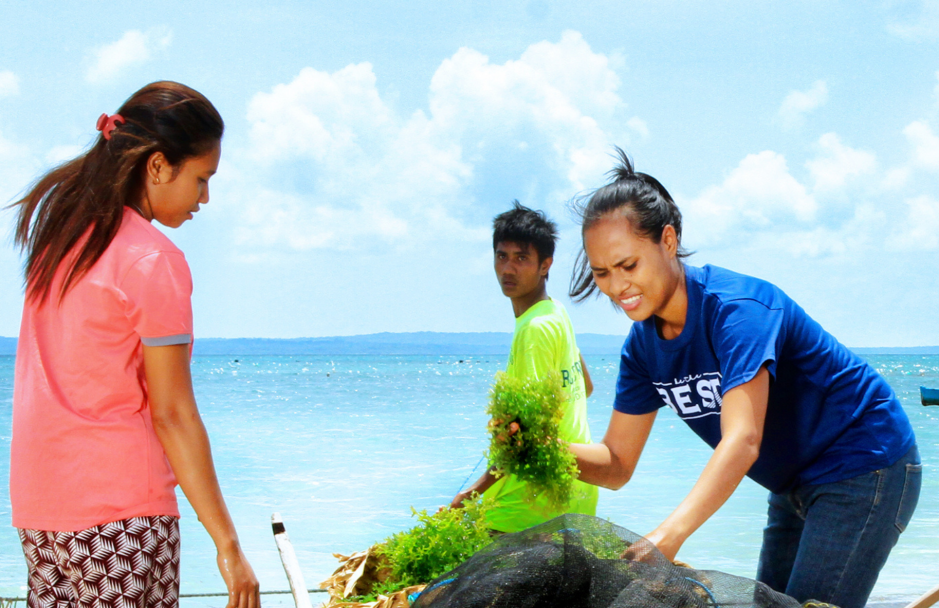
Often the most important things in life cannot be counted or measured. For example, we can’t measure the psychological impact on a mother who has started her own business, is now able to provide an income for her family ensuring her kids can go to school and is paying the loan back which got her started. I can tell you that we know that she is a different person now as she lifts her family out of poverty. We know she is having a positive impact. We just don’t know how to fully measure it. There is no graph that can measure every good thing that happens now, from the daily difference in their family interactions to the long-term impact her children will have in the world now they are getting an education. Measuring loan size and repayment rate just doesn’t seem to do it justice.

Even so, now, she is a better mum, a better business owner, a better member of the community and a better global citizen. She makes our world a better place because someone donated some dollars and cents, and the outcome is worth far more than the initial amount of money.

Raise Kind Billionaires

Before they were world famous, super wealthy, world shaping icons, the world’s richest people were babies, and toddlers, and teenagers. They were shaped by the people closest to them, values were instilled, and beliefs were modelled. How they turned out was heavily influenced by their upbringing.

For example, Bill Gates was always going to give away all his money because that is what he learned from his mother. Whether he became a billionaire or not, generosity was one of his values. Thank God for his mother’s influence (…and maybe his fathers? I don’t know much about that).

You see that small child in front of you, the one in your house that you love so deeply and drives you completely mad that it hurts your head? Or the kid next door? They could be one of the next billionaires in our world. Most likely they will make more money that you. Instil in them the value of generosity now so that it stays with them their whole life, and if they happen to be the richest person in the world they can change it for the better through their giving. Even if they don’t become the richest person in the world, they can still make it a better place through generosity.

Giving in Australia is going up and down. Less people are giving but the ones that are giving, are giving more.

You can shape that culture and it starts with your kids. Teach them about generosity and in doing so, it will make them a kinder person and our world a little bit better.

There is no competition

Ryan Holiday, an author, says that “Authors are not in competition with each other. They are in competition with people not reading.”

He is not busy trying to promote his books at the cost of other authors and their books, bad-mouthing them and discouraging people from buying them. In fact, he owns a bookstore and actively promotes other authors and their work.

In his mind, the more people who read, the better, regardless of the book. I whole heartedly agree.

In the same way, charities are not in competition with other charities. They are in competition with people not giving. So, I don’t try to promote Opportunity International Australia at the cost of other charities, bad-mouthing them and discouraging people from giving to them. There have been times when I’ve notice that Opportunity is not a fit for a particular supporter – their passion does not align with the work that Opportunity does, and I have suggested other organisations they can give to. I also encourage people have a portfolio of organisations that they support through their giving so that their impact can be spread across a few different areas because we are more than just ‘single-issue’ people.

In my mind, the more people who give to charity, the better, regardless of the organisation. I hope you whole heartedly agree.

I Didn’t Win Again?

There’s the old story of a man sitting in front of the tv watching the lotto numbers be read out and exclaiming, ‘Dammit, I didn’t win again!’

The response then comes from his partner, ‘I keep telling you Albert, you have to buy a ticket first!’

The arrogance of someone expecting to win something that they haven’t even entered is funny for the onlooker and sad for those involved.

But at some level we all do that. We can all expect an outcome without putting in the work beforehand. Expecting to get a promotion without putting in the hard work previously. Expecting to lose weight without eating well and exercising. Expecting to win an event without training. Expecting that the world will come calling without spending the time creating and preparing. Expecting to win the respect of others without first showing respect to people.

First, we do the work, then the outcomes happen. Not all outcomes are guaranteed though, but if the work is done first then the likelihood of an expected outcome is much higher.

One outcome that is guaranteed is the outcome of generosity. Once you are generous you feel good, you help the world be a better place and create good things all around you. You don’t even need to buy a ticket, just give some money away.

2023 Theme – With Intent

Usually ‘with intent’ has a negative connotation. For example, ‘with intent to distribute’…(or any of the below…)

It means that there is a purpose behind specific actions that someone takes, and that individual is aware that their actions will most likely cause a certain outcome, making them responsible for that outcome.

What it brings to mind for me is how my 6-year-old son behaves in a way that shows intent to annoy his 3 year old sister. I will often share my disappointment when he upsets her on purpose just to get her to react.

But it works both ways, because intent can be positive, and that is my hope for 2023. To be intentional with my actions – the more specific the better, in areas where my life isn’t going how I would like.

What makes intent positive or negative are the words that come after ‘with intent’. ‘With intent’, to what?  

So, my theme for 2023 is to live ‘with intent’. Intent to:

  • Be generous with specific amounts, organisations and people
  • Learn specific things
  • Improve specific parts of my finances
  • Spend time doing specific things which strengthen my body and mind
  • Spend time with specific people (and to find some more of these specific people)

(I do have these specific things, organisations and people articulated, in case you were wondering. This is just an overview.)

2023 is going to be my year of intent, to live knowing that my actions will most likely cause a certain outcome and that I am responsible for that outcome.

Where could you use some positive intent?

You are an extra

You are an extra in someone else’s movie

Sure, you are the main character in yours but for the majority of the world, you don’t even have a name or a plot line. Maybe you are ‘guy/girl who walks across the screen’, but that’s about it.

It’s important to keep that in mind because it can be so easy to get caught up in our own narrative and think that my story or experience is the only one that matters, and everyone else is playing a supporting role for my benefit. Which is a dangerous place to operate from because getting so wrapped up in ‘me’ and ‘my world’ pushes everyone else and their needs the periphery.

“Why should that matter?” I hear you ask…well, it’s simple. If everyone in the world was all about ‘want’ and ‘take’, we would consume everyone and everything in our paths. But people have value, and how we treat those around us creates the culture for the world we live in. Also, selfishness is not good for us. That goes for individuals, teams, companies, countries and the world.

What is good for us is generosity. Giving to other people, be that time, energy, love, money – whatever you have to offer, will benefit them but also you. Giving is good for you.

So, you are an extra in someone else’s movie. You are not the centre of the universe. It might sound depressing but the good news is that you can be the best extra in someone else’s movie today. Just by being kind, friendly and smiling at someone else, you can create an amazing scene which will impact how the rest of their story plays out.