The Real Reason for Generosity

There are so many reasons to give. So many positives. So many benefits for everyone involved.

Many of these are on the periphery of the actual act.

When it comes down to it, the main reason why you should give is the difference that it makes in the lives of those who benefit from your generosity.

No matter the motivations for giving, the different ways, or the different reasons, one thing that connects every generous act is the impact the giving has.

I saw it. The courage of a women who just lost her husband through the COVID pandemic, left to raise three children on her own, who took a loan to create a business and a sustainable income. Who found a way forward with her life after going through the depths of tragedy and poverty. The giving from people in Australia made this type of difference possible. Tara inspired me. So did her children.

So, I choose to give to an organisation that works internationally, that is accredited through the Australian Government, that reports back on the impact it is having. You may choose to do it differently, but the reason you give is the same as the reason I do. Something needs to change and I am in a position to help change it.

What Drives Healthy Generosity

Generosity comes into existence through action. People give because they are responding to a situation that they cannot stand anymore. They simply must do something to right a particular wrong, or to create a better version of the current reality.

This imperative comes from a place deep within, and many people who give are not able to articulate exactly why they do. They just feel compelled to do so.

But it comes from values.

Someone places value on human life, and when they see something happening in the world, be it poverty, war, famine or other injustices, that rubs up against their value. Usually they see something that reflects an image of themself. It might be children, or women, or parents.

They then give as a response to their values being challenged.

This is an extremely healthy way to give. It comes from a place of purity. And it is usually the starting point of a giving journey, which begins with that almost visceral response and then eventually leads to a place where an individual has a well thought out philosophy of philanthropy with a portfolio of organisations they support for a number of reasons. But at the heart is the imperative that first prompted their generosity. That never leaves.

Talking vs. Doing

I was never a strong trash talker. When playing any sort of sport, I was not able to get in to the head of my opponent by using words. Not if I wanted to play well anyway. I discovered early on that I could either play the game well, or try to put the opposition off, but not both.

I realised that I enjoyed playing the game to best of my ability, so that meant I was pretty quiet on the court/field.

There were a few people who seemed to be able to do it, to play well and get into the head of the other team, but they were the minority.

Then I came across this quote from Ryan Holiday:

“Talking and doing fight for the same resources”

And it made me feel better, although it’s probably not about sport but more important parts of life.

Anyone can talk about a thing. It takes some skill to notice a problem or issue and bring it up, but that isn’t solving anything if that’s where it stops.

It is easy to talk and tough to do.

So that leaves me with the question, am I mostly talking or am I doing? Am I talking a generous game or am I living the generous life?

What can you do?

So many things are outside of our control. The world is a big place and things happen quickly. What can one person do to stem the tide of poverty, or racism, or sexism, or any other -ism you can think of?

Why bother, right?

If Frozen 2 has taught us anything, (aside from the fact that sequels can be better than the original and water has memory) it’s that sometimes all we can do is ‘the next right thing’. Sure, it’s an animated kids movie, but this is a healthy philosophy that I would love my kids to encapsulate as they grow up in this world. Heck, I would be proud to be able to say that this is how I live my life.

When faced with seemingly insurmountable challenges and overwhelming odds, (be they wind, fire, water or earth spirits…look, just watch the movie), you can still do something. The next thing. The next right thing. Over time, the amount of ‘right things’ you do adds up and begins to make a huge difference.

The challenge in these moments is to figure out what the next right thing is. Let me help you with this – I can guarantee that it has something to do with generosity.

How do I know if it’s generosity? (Or manipulation…)

Sometimes what may look great on the surface, or upon initial consideration, turns out to be a little less than we expected. I have met people who appear to be amazing, accomplished, friendly and incredibly successful at first glance, but as I spent time with them, I began to realise that they were not quite what they promoted. In fact, they have played fast and easy with the truth.

Generosity can be just like that. Someone may give you attention, gifts and surprises which are delightful. Over time though, something doesn’t appear right, and you may feel pressured into thinking, or acting or responding in a certain way because “you owe them”.

So, how do you know when someone is genuinely being generous?

In other words, how do I know if someone cares about me or just cares about themselves?

Here a few things to look out for:

If it comes with strings

If you are given a gift of any sort, but it requires something of you in return, that is not generosity. It is a transaction. Which might be okay if everyone in the transaction is fine with it, but don’t confuse it with someone be generous to you. If you are unsure, try saying no to the request that is made (either a verbal request or an unsaid expectation) and see what the response is. If they get upset because you are not giving them what they are owed, then that’s your answer.

If it keeps you in a place of vulnerability

Some gifts seem very generous, and may even be given in good faith, but the consequences of the gift keep the receiver in a place of vulnerability. The Nestle scandal in the 1970’s comes to mind – there was outrage when it came to light that they had provided free formula to new mother’s in hospital in developing countries, which seems incredibly generous. But after the mother’s left hospital they needed to purchase it. Of course, by this time the mother’s breast milk production had been interrupted due to the formula use and they had no other option but to find the money to pay for the formula. A ‘gift’ that seems generous but kept people in a place of vulnerability instead of empowering them.

If it hurts you

Sometimes receiving a gift can cause you damage. For example, if someone gave you one billion dollars.

“How could that hurt me?” you ask.

Large amounts of money can create a huge burden, damaging relationships and families, and build significant costs and taxes to manage.

“I’ll take my chances” you say, well it didn’t work out so well for these guys. A gift for someone who is not ready for it can create huge problems.

Most of the time when you receive a gift, it is lovely but there are times when it turns out not to be generosity at all. Generally, anytime a gift is given that creates a power imbalance, it’s most likely not a generous act.

Good Things

I think we all have an innate sense to hold on to what we have. Loss Aversion is a strong cognitive bias which suggests the pain of losing something is twice as bad as the pleasure of gaining something. So, we hold on.

As you could imagine, this bias makes it very difficult to be generous. Giving something away is at odds with Loss Aversion. It goes against everything that we feel is right.

The result of this, if left unchecked, is that we can become stuck in a place where we don’t want to give anything up, which could be holding us back from taking the next step, from growing. Specifically, when it comes to money, loss aversion can create stinginess, keeping us in a small, dark place where the accumulation of money is the only focus.

To overcome the obstacle of Loss Aversion, it is best to give some money away. When you do that two things happen:

  1. Something shifts within you.

The psychological impact of giving money away allows you to see the world differently. What you thought would be a loss, turns out to be something different. Not only does it feel good to do good, but giving money away shows you that you don’t need as much as you think and it lessens the burden of seeking to accumulate.

2. Something shifts in the world.

Both in the way you see the world and the actual world. All of a sudden, the world appears to you as a place that is redeemable. A place that you can make a difference to and one that is filled with good people trying to do good things.

The world will also be a better place because you have put some money in the hands of those good people trying to do good things.

Overcome loss aversion. Give some money away and see the difference it makes to you and the world.

Success Will Follow

Give first and success will follow.

Although, it depends on what your idea of success is. If success means ending up a stingy old person, making no positive impact on the world, then giving is most definitely not for you.

But, if your idea of success is having a loving family, being a generous person, sharing your life with those that you care about, having a life of growth and learning, then that will require something of you first.

I have become more aware over the years that a generous act is the catalyst for most of the good things in life. Some of those good things are guaranteed, like the positive emotional and psychological effects that generous acts have, and some of them are not guaranteed at all.

For example, there is no guarantee that if you are a generous person that you will have a happy, loving family life. But I can guarantee you definitely won’t have a happy, loving family life if you are not generous. It’s a risk to be generous and hope that good things come, but the consequences of not being generous are heavy.

The irony is that being generous solely for the sake of reaping the benefits takes something away from the generous act, but it doesn’t completely cancel it out. So, even if you can only muster a generous act because of what good it will bring you, keep doing that. Over time, being generous will change you and you will begin to seek the rewards less and less.

So, give first and then see what comes.

How to get a tattoo

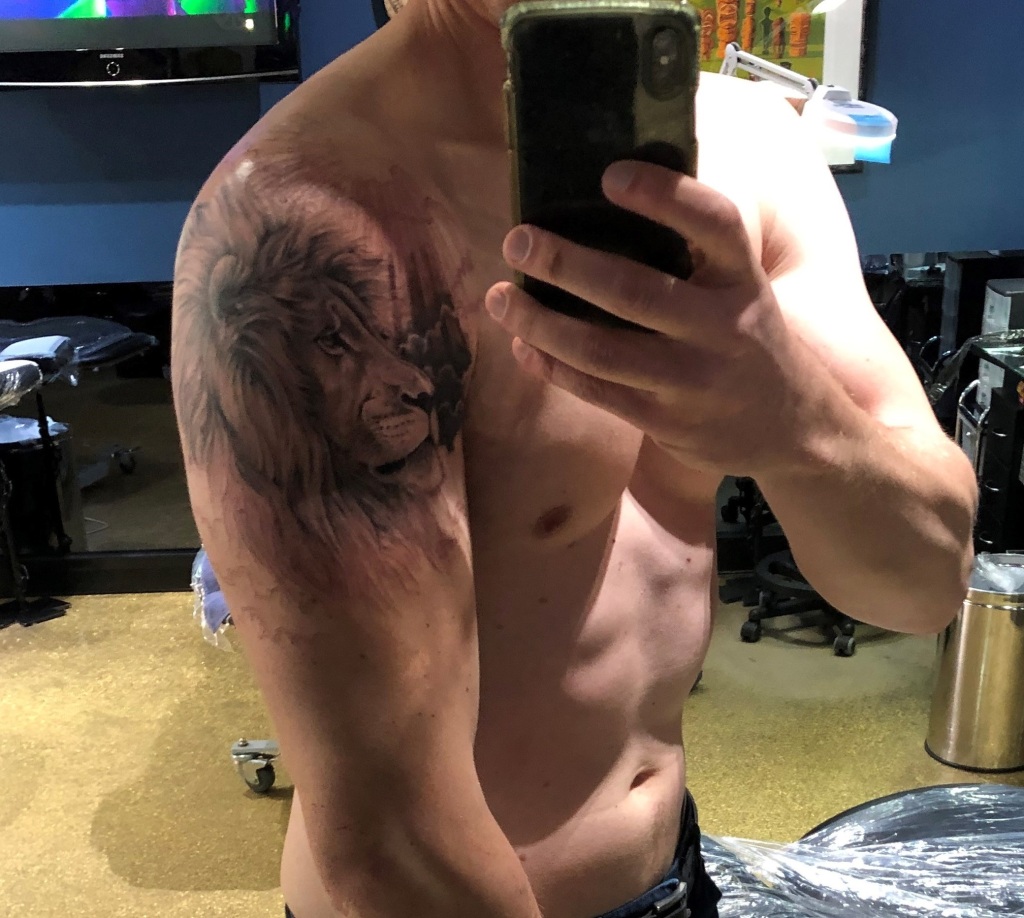
It had been something that I had wanted for decades but was too afraid of the permanent reality of it. What would it look like when I was 80?

After realising that 80 is never a guarantee for anyone, I thought I would make the most of my life now and get inked.

But how does one go from being someone who has no tattoos (a clean skin) to someone who does? It may not be a big thing for some, but for me it was massive. It was a change in identity and a change in how I would think about myself. I had to become the type of person who had a tattoo.

So, I decided to take it one step at a time.

First I decided where on my body to get it.

Then I chose what the tattoo would be.

Then I chose a tattoo artist.

Then I reached out to the artist.

Then I met with the artist to talk about the tattoo.

Then I booked my first appointment.

Then I went to the first appointment.

All of these things are something that a person who had a tattoo would do, but to this point I didn’t have one yet. I could still choose not to do it and it would be a more educated choice than if I had sat on my hands and let my fear make the decision for me.

I ended up choosing to go ahead, and I am really thankful that I did. I am really pleased with the outcome and the meaning behind what I have chosen.

Now, for you, you may not be interested in getting a tattoo, but it is likely there is something that fear is keeping you from. Possibly something that you want to do, or think you want to do, and fear is making the decision for you. What small steps can you take that will help you become the type of person who does the thing that you want to do? There are a steps you can take even before you commit to doing it – maybe it’s a job that you want to go for but you’re afraid that it’s not the right one, or that you won’t know how to do it. Maybe there’s something in your life that you would like to change, but it seems like it’s too big to do anything about. Maybe your finances are in a bit of a mess.

As always, I will bring it back to generosity as well – maybe you would like to become more generous.

Think about what someone would do if they were the type of person who had that job, or made that change, or managed their finances well, or were incredibly generous. Then take some small steps towards that.

Beginning that journey will help you in your process, I guarantee it.

3 years from now…

“3 Years from now you will be 3 years older.” James Clear


Time will always do what it does. It rolls on regardless of how you think about it, or how you feel, or how you spend it. You can’t stop it but you can choose what you do with it.

So, in 3 years would you like to be more generous? Start now. Start small. Create a daily , weekly or monthly generosity action.

Maybe give $5 a month to a charity. In three years that will be $180 and then you will be the type of person that gives regularly to charity.

Maybe $5 isn’t enough, maybe $50 is more your style, that would take it $1,800.

Maybe it’s $500 a month making it $18,000.

The amount doesn’t really matter.

It’s the flywheel effect. Small things begin to build momentum and over time it creates so much that things seem to be moving all by themselves. But you can track it back to a single choice and a small action that was repeated again and again.

From little things, big things grow.

What can you do in the next week to create a more generous ‘you’ in 3 years?

Too many books?

My kids sleep with, what seems to be, hundreds of toys in their bed. There are stuffed toys, toy cars, small animals, lego men and piles of books. I’m not even sure that any part of their body touches the mattress there is so much junk.

I honestly don’t know how it came to this – I am reasonably ordered in life. The bed is for sleeping. The toys and books go in the playroom. But, apparently, my children have a more fluid understanding of how things work in our home.

The books, whilst super annoying when they fall under the bed and cause a frantic search when it’s library day at school, I am more okay with because books are important. It is important to read to your child. I think every parent knows that, and there are studies that have found that young children whose parents read to them daily have better school experiences. There are other studies that have shown that homes which have books in them are more likely to have better educational outcomes, even if they aren’t read.

So, my kids, by sleeping on books, should end up being geniuses. That’s my working theory.

Education is important, and we all want the best for our kids.

Whenever I meet the women that Opportunity International Australia work with, their motivation for using a small loan to build a business and work their way out of poverty is so that they can give their children a better life. They, first and foremost, want their children to go to school and get an education, because they know that this will be a huge benefit for the kids in the future. Even if they haven’t been able to go to school themselves.

For women like Bhikhiben in India, who desperately wanted to go to school when she was younger, but had to make an impossible and devastating choice after her mother died. As the oldest of five siblings, she quit school to help raise them.

No child should have to choose between going to school or looking after their family. But that was the reality for Bhikhiben.

Even though she only has a few years of education, she has taken a small loan to build her own business to create an income which has allowed her kids can go to school, get enough food to eat, to pay the loan back as they work their way out of poverty.

Once the loan is repaid, it gets recycled on to the next mother, so she can do the same thing. With 98% off all loans repaid and recycled, that is a lot of families that are putting their kids in school.

Bhikhiben was robbed of her chance to get an education, but that has fuelled her desire to make sure her children get one. This is how generational change is created.

You can donate here to help women like Bhikhiben lift their families out of poverty.