Hate begets hate…

It’s the kind of leadership I respond to and think is strong and courageous. I don’t see it in too many people anymore. But Martin Luther King Jnr. had it in spades.

His quote continues to rattle around my head.

“Hate begets hate…”

From hate, more hate is birthed. It grows and overwhelms every person it touches.

“…violence begets violence…”

From violence, more violence is birthed. It grows and overwhelms every person it touches.

Hate filled violence is a scourge on our world. We think it’s strength. We think it’s righteous. We think hurting someone who hurt us is the way it is supposed to be. A justified action. But it only creates more hatred and violence at the ones who have been affected by it that will bubble up and take down whomever they think is responsible for their hurt.

We can track wars back to small acts that ‘required’ responses which then, in turn, required responses and grew into millions fighting and dying for something someone else started.

Somewhere, someone has to put a stop to it. To look past the wrong that has been done to them, and to express grace and forgiveness, and not retaliate with a ‘justifiable’ response. Someone has to say ‘enough’.

I can think of one man that did that. Wrongly accused and sentenced to death. Innocent and yet still violently murdered. But even as it happened he urged love and forgiveness for those who committed the violence.

“Father forgive them, they don’t know what they are doing”. Jesus.

They didn’t know that violence wouldn’t provide them the peace they are after. Hatred wouldn’t solve the inner turmoil and hurt they were feeling. Only love can do that.

“We must meet the forces of hate with the power of love”.

What does love look like in the face of hate?

Mostly, it’s a refusal to treat others the way you have been treated. But more than not treating someone badly, it is a proactive treating others how you would like to be treated.

If you want to be loved, then love.

It you want to not be on the end of a violent act, don’t act violently towards others.

If you want to be the recipient of kindness, then be kind.

If you want to be the recipient of generosity, then be generous.

Or, to appease my desire to not sound too self-centred:

If you want your family to be loved by others, then love.

If you want your family to not be on the end of violent acts, then don’t act violently towards others.

If you want your family to be the recipients of kindness, then be kind.

If you want your family to be the recipients of generosity, then be generous.

Sure, there is never a guarantee that you what you put out into the world will come back directly to you or your family, but it is much better to err on the side of love, non-violence, kindness and generosity.

If I ever get accused of being too much of something, I hope that it’s because I was too much of those things.

I also note that I use the word ‘hate’ too often. It is not lost on me that, even whilst sharing thoughts on generosity, I still manage to add to the hate…I’m working on that.
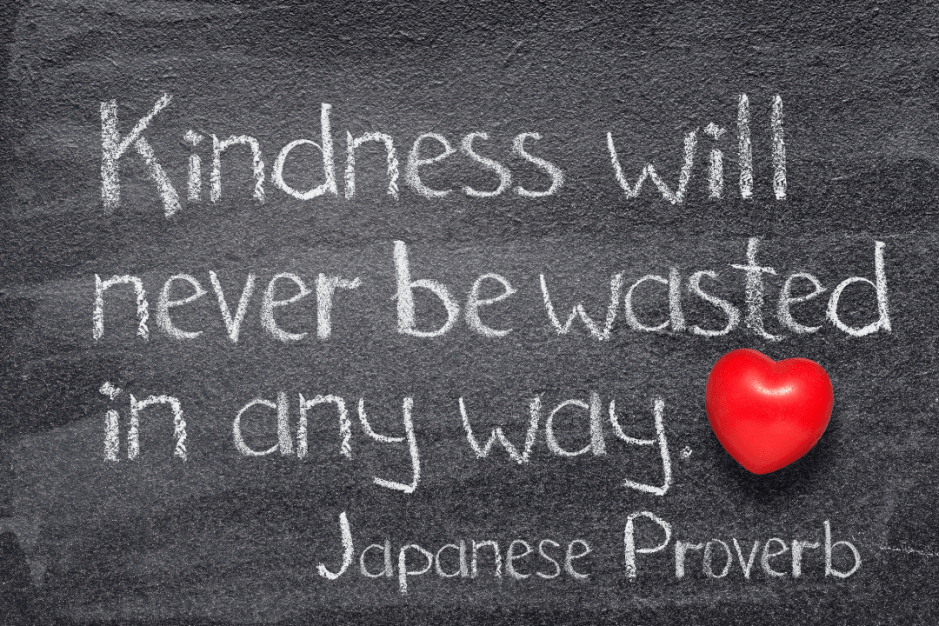

Kindness is Costless…isn’t it?

“Kindness is costless but also priceless” Warren Buffett

True kindness does cost you something, but not necessarily money. Perhaps that’s just how Warren Buffet sees the world, through a zero-sum game of whether something costs you money or not.

Because I know that kindness costs time, energy, mental space, the opportunity to do something else and sometimes, yes, even money.

But the impact of a kind act is so much more valuable.

Warren is right about the money with this point, it is priceless.

You cannot calculate the dollar value of a genuine kind act from one person to another because it would fall short.

Some things are not able to be bought and therefore there is no space for kindness and generosity within the financial economy. For those that focus solely on dollars and cents, this makes no sense, or cents, so it isn’t something they get involved in.

In this, Warren Buffet is an anomaly. One of the richest men on the planet still has a philosophy of kindness.

He knows that some things are worth more than money.

Chicken Salt

Generosity is like the chicken salt that adds flavour and richness to our lives and communities. It’s all about giving, caring, and showing kindness to others.

When we’re generous, we tap into our empathetic side. The place where we can understand and relate to the struggles and needs of others. By being generous, we show that we’re not just focused on ourselves, but we genuinely care about making a positive difference in someone else’s life.

One of the best things about generosity is that it creates a domino effect. When we receive generosity, it’s only natural to want to pass it on, like a chain reaction of kindness that spreads throughout society.

Also, it brings us joy. Science tells us that giving makes us happier. When we help others and see the impact of our actions, it fills our hearts with a warm, fuzzy feeling. It gives us a sense of purpose and fulfillment, knowing that we’ve made someone’s day a little bit brighter.

Whether it’s a small act of kindness or a grand gesture, every bit counts. You can sprinkle generosity like chicken salt, making the world a better (and tastier) place, one act of kindness at a time.

Being generous when you can’t afford it

Being generous is not always about money. Even when you can’t afford to be financially generous, there are still ways to act generously.

Here are some ways to be generous when you can’t afford to:

  1. Give your time: Volunteer your skills, knowledge, or time to organisations or people in your life who can benefit from your assistance. Your expertise and support can be life changing.
  2. Be there for others: Lending a listening ear and provide comfort and encouragement. Sometimes, a conversation or a short text can make a world of difference.
  3. Share your knowledge: Teach others what you know. Sharing your expertise can empower others and help them grow.
  4. Practice kindness: Small acts of kindness, can brighten someone’s day and foster a sense of connection and compassion.
  5. Give gratitude: Express appreciation for the people and things you have in your life. Gratitude is the foundation of well-being and quality relationships.

Generosity is a mindset and a way of being. It doesn’t matter how much money you have, if you can act generously, you can make a meaningful difference in the lives of others.

Kindness Regret

The only time I have ever had regrets about kindness was when I didn’t show it. I have never regretted being too kind to someone, even if it wasn’t received well.

There are plenty of times that I regret not giving the benefit of the doubt or not giving someone another chance or not using kinder words.

I still have this fear of being taken advantage of. I don’t want to be considered a ‘sucker’, or to be duped into an internet scam. Sure, my cynicism has kept me safe so far, but what am I missing out on by thinking that I have to either be cautious or kind? Isn’t it possible to be both?

Kindness isn’t blind. Kindness isn’t weak. Kindness doesn’t have to happen without wisdom or caution. You can be both kind and strong, principled and have boundaries.

Being kind can mean saying no sometimes. It can mean asking challenging questions. It can mean expecting more from someone. But always coming from a place of care and compassion for others.

All that aside, I think that ff someone was to ever criticise me for being too kind, then I think I have won at life.

It’s Hard To Do in Your Own Home

Every year in February there is the Random Acts of Kindness Day, during which we are encouraged to show small acts of kindness to strangers that we encounter, to make kindness the norm. I love this idea and am encouraged by the movement. As with all parts of generosity, the science behind it proves that it is good for everyone involved, so get on it.

The challenge that I am putting to people (mostly me) this year is, alongside your random acts of kindness to total strangers on February 17, find small random kind things that you can do to your own household.

For some reason, when thinking about participating in random acts of kindness I automatically assume that it will be for someone I have never met before because that’s exciting. To imagine their surprise and delight when I gift them with something makes me happy. I find it harder to think of creating the same experience for those in my family. Perhaps I’m just a terrible person, but it seems to be a more challenging project.

Maybe the difference is the expectation. If I do a random thing once a year to someone I don’t know, then on February 18 no one is waiting expectantly to be surprised and delighted. It’s a ‘no pressure’ type of kindness. Kind of like the ‘one night stand’ version.

If I create a kindness experience for my family, those that I see every day, that see me every day and know me the best, if I have a bad day when I am ‘not as kind’, then they can rightfully ask where my kindness went. I’m not sure if I want to face that sort of scrutiny. Which is crazy because I know that if I can be kind at random intervals to them then it will serve my family well and deepen our love for each other.

So here’s to random acts of kindness everywhere but also in my household on February 17, and hopefully more to come after as it becomes the norm.

The Kindness Movement

Be kind whenever possible. It is always possible – Dalai Lama

Our strongest memories growing up are connected to how we felt around people. Think back to your primary school years and I guarantee your main memories are from someone either encouraging you or discouraging you. Building you up or tearing you down.

I can remember one specific teacher calling me stupid, and another encouraging me to be better. The second one, I could sense that he could see more in me than what I was displaying at the time.  They are essentially the only two things that I remember from those years. A discouraging word from one and a generous act from another.

I am amazed by the teacher who encouraged me, because in the years that have passed since, I have noticed that it is so much easier to discourage. We almost have an in-built ability to tear someone down. But to lift someone up? Well that can be so rare that appears super-human. It doesn’t need to be this way though.

There is a movement to bring us back to one of the fundamental elements of being a person. Kindness. I would call in generosity. There is even a Random Acts of Kindness (RAK) week this month. With a RAK day on February 17.

Why? Because we need it. The people around you are crying out for some encouragement, a kind word, a thoughtful gesture, a hand of friendship.

Also, it is so good for us. Being kind and generous makes our life so much better; science tells us this.

RAK day is an amazing idea. Sprinkling kindness and generosity on people as you go about your day is a great habit to form. It’s really simple to, there are RAK suggestions, from planting a tree, to writing positive sticky notes, complimenting someone on their parking skills or sending an encouraging email. It starts with one act on a particular day, but it can make a significant difference to those around us.

I get the sense we could all use some more kindness in our lives.