You Cannot Outrun Unhappiness

You cannot outrun unhappiness. It will get you eventually because as you try to fill your life with things that you think will make you happy, you are feeding unhappiness. Instead, stop and sit with unhappiness. Embrace it. Because there will be days like this. Sad days. Unhappy days. Flat days.

Trying to outrun them is like grasping at oil. It’s an exercise in foolishness. Instead of trying to outrun it, shift your understanding of what happiness is.

Author, James Clear suggests that  “Happiness is simply the absence of desire… Happiness is not about the achievement of pleasure (which is joy or satisfaction), but about the lack of desire. It arrives when you have no urge to feel differently. Happiness is the state you enter when you no longer want to change your state.”

How do you create that state, one which you don’t want to change? How can you be happy with who you are in this moment?

Stephen Covey talks about creating happiness by focusing on contribution not accumulation. What you can give, not what you can get.

Generosity is happiness. It reverses the desire to fill your life with things, to accumulate stuff as a method to avoid the unhappy feeling. It gives you the strength to embrace the unhappy times with the knowledge that I am a generous person, and that is enough. Maybe another word for it is contentment.

How to ‘Success’

Success.

What the heck is it? Is it winning? Being the first to do something? Achievement? Is someone else’s failure the cost of your success? Is it a destination? Does it disappear?

I’ve talked about it before, but it keeps coming back to me, Bob Dylan’s take on happiness and unhappiness being ‘yuppie’ words. Words for people who already have alot in life.

It’s the same with many definitions of success. I have heard people talk about the job, the car, the house, the boat, the influence that they want so that they would be considered a success. These are yuppie words. These are words used by people who are so entitled they don’t even realise where they are.

There is nothing wrong with striving for these things, but if they don’t come and you feel like a failure as a result, then you are drastically lost in life.

About 80% of people worldwide don’t own a car. Does that mean that 80% of people are not achieving success?

There are about 33 million recreational boats in the world. So, at best, 99.5% of people in the world don’t own a boat. Are they all not achieving success?

These measurements are so ‘first world’ that it is painful to watch.

The beauty of success is that each person gets to define it for themselves. No one can tell you what your life must look like to be successful. You get to create your own path and that path is much more than the things you accumulate on the way. It includes things like quality relationships, the positive impact you have on others, what you can create.

I think that any successful life starts with a sense of gratitude. A true understanding of what we already have. If I have a roof over my head, food on my table, a family who loves me and a job with purpose, then that seems pretty successful to me.

Makes the World Go Round

For all of it’s deficiencies (meaning that it is not the source of happiness and the love of it causes the greatest issues in our world), money is still just a tool that we use. It is a device we accumulate throughout our lives which we distribute as we see fit.

You probably know the saying, money makes the world go round. It is true, but we direct the way in which the world goes. If you don’t like the way the world is going, then use your money to change that.

How we spend, invest and give money has an effect on everyone on the planet.

If you had something that didn’t bring you happiness and, if used poorly, would damage everyone around you, wouldn’t you want to do something positive with it and create the best outcome possible?

Of course you would.

So, spend money wisely.

Invest money ethically.

Give money generously.

Chicken Salt

Generosity is like the chicken salt that adds flavour and richness to our lives and communities. It’s all about giving, caring, and showing kindness to others.

When we’re generous, we tap into our empathetic side. The place where we can understand and relate to the struggles and needs of others. By being generous, we show that we’re not just focused on ourselves, but we genuinely care about making a positive difference in someone else’s life.

One of the best things about generosity is that it creates a domino effect. When we receive generosity, it’s only natural to want to pass it on, like a chain reaction of kindness that spreads throughout society.

Also, it brings us joy. Science tells us that giving makes us happier. When we help others and see the impact of our actions, it fills our hearts with a warm, fuzzy feeling. It gives us a sense of purpose and fulfillment, knowing that we’ve made someone’s day a little bit brighter.

Whether it’s a small act of kindness or a grand gesture, every bit counts. You can sprinkle generosity like chicken salt, making the world a better (and tastier) place, one act of kindness at a time.

Get your hopes up!

Play it down, don’t get your hopes up. Don’t get too excited because if it ends up not happening, then you won’t feel let down and you haven’t lost anything.” Conventional Wisdom

But is that true? Are we missing something by not getting our hopes up? Are we not living the full experience of life if we don’t get excited about what could happen? What benefit could we bring if we spend some time imagining what could happen and allowing ourselves to feel what that could be like?

I like the idea of being an optimist. I want to be that. I want my kids to be that. To look at life through the lens of possibility rather than having a filter of restrictions and barriers.

I also like the idea of wisdom. It’s something that I strive for because wisdom is aligned with making good choices and living a good life.

Are they diametrically opposed? Can one be optimistic and wise at the same time?

Conventional wisdom is not generally optimistic. Conventional wisdom keeps us safe, protects us from being taken advantage of, from foolish decisions, from getting our hopes up only to see them dashed against the rocks.

But, if we can approach the world, always asking, what is possible, then anything can happen.

I have been to so many business networking events in my life. As an introvert, this has been a bit of an emotional minefield, and I often found myself deciding not to attend something that I had committed to, just before it was time to go to it. After a while of feeling like a bit of a failure, I made a conscious decision to go, no matter how I felt. This became an easy decision once I changed how I thought about success. For me, 90% of success is just turning up. If I go, then anything can happen, but if I don’t go, then nothing can happen. The other 10% is talking with two people at the event. More than that is fine, but if connect with two people and find out about them then that’s a win. I now go to networking events with asking the question, what is possible?

I want to be the type of person that gets their hopes up. I know that will lead to disappointment sometimes, but it could also lead to amazing things, that I could never dream of, like the world being a little bit more generous.

Kindness Regret

The only time I have ever had regrets about kindness was when I didn’t show it. I have never regretted being too kind to someone, even if it wasn’t received well.

There are plenty of times that I regret not giving the benefit of the doubt or not giving someone another chance or not using kinder words.

I still have this fear of being taken advantage of. I don’t want to be considered a ‘sucker’, or to be duped into an internet scam. Sure, my cynicism has kept me safe so far, but what am I missing out on by thinking that I have to either be cautious or kind? Isn’t it possible to be both?

Kindness isn’t blind. Kindness isn’t weak. Kindness doesn’t have to happen without wisdom or caution. You can be both kind and strong, principled and have boundaries.

Being kind can mean saying no sometimes. It can mean asking challenging questions. It can mean expecting more from someone. But always coming from a place of care and compassion for others.

All that aside, I think that ff someone was to ever criticise me for being too kind, then I think I have won at life.

Which way?

In my opinion he was the greatest Captain the Australian Cricket team has ever seen. Before Steve Waugh stepped into that role, he was part of the Australian tour of India in 1998. They were playing a test match in Kolkata which they lost badly, with one day to spare. Steve used that extra day to visit a clinic for children with leprosy. What he saw changed his perspective and his life, saying that the things he witnessed, he “…couldn’t just dismiss and pretend I didn’t see”.

So moved was he that he helped to raise money for the clinic that he visited, and over time he also created the Steve Waugh Foundation which helps to improve the quality of life for children and young people living with rare diseases.

Losing a game of cricket at an international level is tough, no doubt about it, but not as tough as what some people go through every day. He could have chosen to sit in his hotel room, maybe spend some time by the pool and drown his sorrows, but he chose to focus on other people and it changed everything.

Where we look shapes how we see the world. If we are always looking at those who have more than us then we will always feel a lack. But when we shift our gaze to those who have less then we will feel that we have plenty, which is the birthplace of gratitude, out of which grows generosity.

Which way are you looking?

Not Everything that Counts…

We can measure dollars and cents. Things with a numerical value that add up, subtract, divide and multiply (you know how math works). This is the easiest stuff to measure. We can count it. But does it really count? Does it really matter?

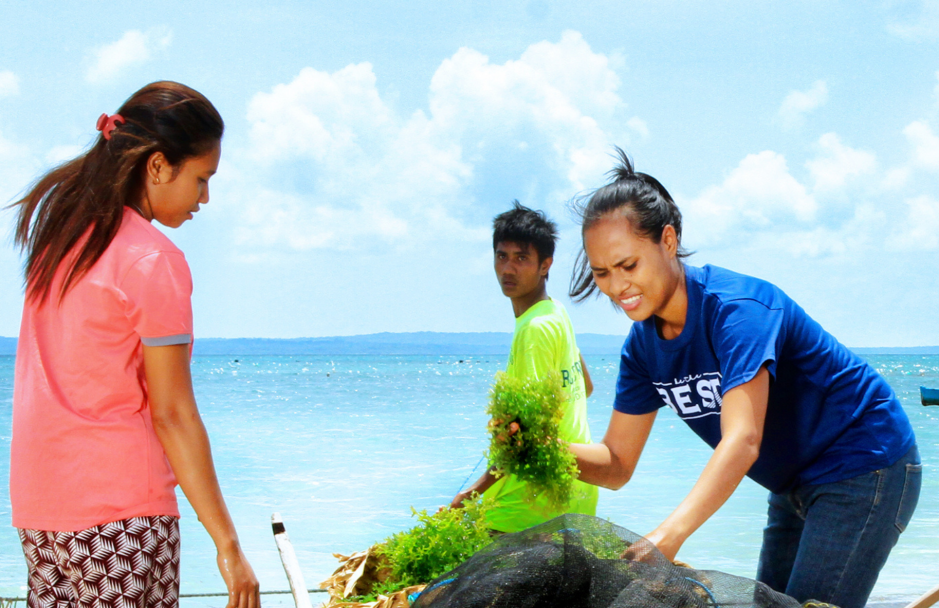
Often the most important things in life cannot be counted or measured. For example, we can’t measure the psychological impact on a mother who has started her own business, is now able to provide an income for her family ensuring her kids can go to school and is paying the loan back which got her started. I can tell you that we know that she is a different person now as she lifts her family out of poverty. We know she is having a positive impact. We just don’t know how to fully measure it. There is no graph that can measure every good thing that happens now, from the daily difference in their family interactions to the long-term impact her children will have in the world now they are getting an education. Measuring loan size and repayment rate just doesn’t seem to do it justice.

Even so, now, she is a better mum, a better business owner, a better member of the community and a better global citizen. She makes our world a better place because someone donated some dollars and cents, and the outcome is worth far more than the initial amount of money.

Raise Kind Billionaires

Before they were world famous, super wealthy, world shaping icons, the world’s richest people were babies, and toddlers, and teenagers. They were shaped by the people closest to them, values were instilled, and beliefs were modelled. How they turned out was heavily influenced by their upbringing.

For example, Bill Gates was always going to give away all his money because that is what he learned from his mother. Whether he became a billionaire or not, generosity was one of his values. Thank God for his mother’s influence (…and maybe his fathers? I don’t know much about that).

You see that small child in front of you, the one in your house that you love so deeply and drives you completely mad that it hurts your head? Or the kid next door? They could be one of the next billionaires in our world. Most likely they will make more money that you. Instil in them the value of generosity now so that it stays with them their whole life, and if they happen to be the richest person in the world they can change it for the better through their giving. Even if they don’t become the richest person in the world, they can still make it a better place through generosity.

Giving in Australia is going up and down. Less people are giving but the ones that are giving, are giving more.

You can shape that culture and it starts with your kids. Teach them about generosity and in doing so, it will make them a kinder person and our world a little bit better.

There is no competition

Ryan Holiday, an author, says that “Authors are not in competition with each other. They are in competition with people not reading.”

He is not busy trying to promote his books at the cost of other authors and their books, bad-mouthing them and discouraging people from buying them. In fact, he owns a bookstore and actively promotes other authors and their work.

In his mind, the more people who read, the better, regardless of the book. I whole heartedly agree.

In the same way, charities are not in competition with other charities. They are in competition with people not giving. So, I don’t try to promote Opportunity International Australia at the cost of other charities, bad-mouthing them and discouraging people from giving to them. There have been times when I’ve notice that Opportunity is not a fit for a particular supporter – their passion does not align with the work that Opportunity does, and I have suggested other organisations they can give to. I also encourage people have a portfolio of organisations that they support through their giving so that their impact can be spread across a few different areas because we are more than just ‘single-issue’ people.

In my mind, the more people who give to charity, the better, regardless of the organisation. I hope you whole heartedly agree.