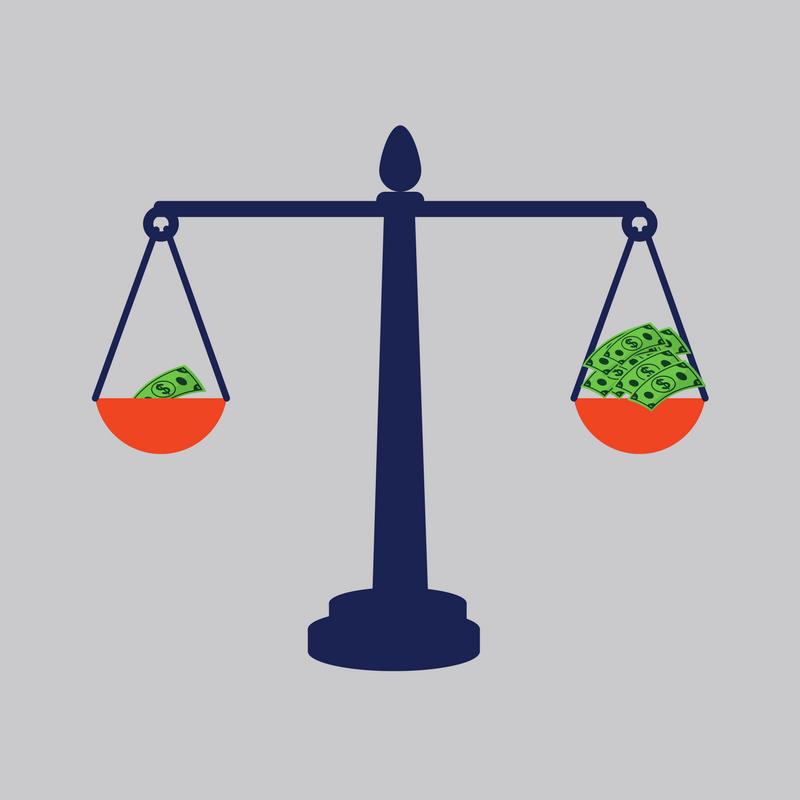

A Very Rich Person

When I was 19, I had a midlife crisis. Well, not really but it certainly felt like an existential calamity of sorts.

I remember looking ahead at what my life would be, filled with work, and just not wanting any part of it. I didn’t want to go through life miserably participating in the rat race – sitting in an office 9 to 5, 5 days a week, 48 weeks of the year**. So, I decided to find a way to retire. Yep, at 19. But having no resources put away to comfortably live in my retirement, I soon discovered it was necessary to find a job.

What helped me become amenable to working life was discovering some wisdom in Ecclesiastes in the Old Testament. “A person can do nothing better than to eat and drink and find satisfaction in their own toil. This too, I see, is from the Hand of God.” Believe it or not that lead me to the conclusion that it is good to work and that it was possible to find satisfaction from it.

Many people do that and have created wealth for them and their family. I have heard so much talk about the wealth transfer from this current generation of parents/grandparents to the next. They call it the greatest intergenerational wealth transfer in history. Billions of dollars will change hands in the next 10 years, or 20 years or however long people live for. (It sounds a little crass, I apologise, but it is the reality.)

The big question is how should people arrange their wealth when they pass away? Should they leave it all to their children regardless of how much they have? That makes sense, as parents we want our kids to have everything they need to have a great life. But what make a great life?

Warren Buffet is quoted as saying, “A very rich person should leave his kids enough to do anything, but not enough to do nothing.” There is a great amount of wisdom to that. Time and again most people who win the lottery end up unhappier than they were beforehand. For many who will receive some of the intergenerational wealth transfer, it will be like winning the lottery. They will never have to work again, but to what end?

From my experience I see that there is a danger in working too much and at the same time, there is a danger in working too little. Leave your kids enough money so they still have to work, because that is good for them.

If you have more than that, then give the rest away.

**I am fully aware of the irony that, out of the countries in the world, Australia has some of the best work conditions, including shorter office hours and longer annual leave than many other places. By try telling that to 19-year-old Kieran. He knew what he wanted and it was not work. 
You don’t know what you want

If you had no financial restrictions and could have anything you wanted in the world, what would you do?

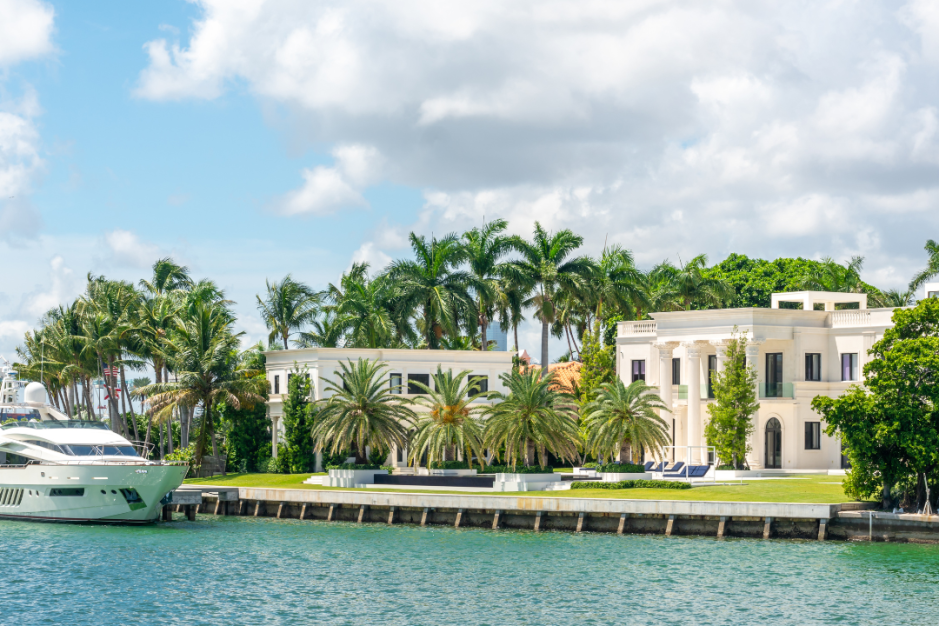
Buy a massive house, maybe a mansion? Cars. Cars for sure. Expensive ones, fast ones, colourful ones, ones that make other people look. Clothes as well. The nicest suits, or dresses, or whatever people wear.

How great would that be, living the dream?

But would it be great?

If you have ever moved from a small home into a larger home, you will know that, whilst it is probably nice to have more space, sometimes you will miss the smaller, more intimate life you left behind.

There are always unintended consequences for the decisions we make.

I have talked about lottery winners before, and Adrian Bayford is another example. After winning almost £150m in 2012 he bought a seven-bedroom luxury mansion with his wife. Now, with his new fiancé, he is moving back to live with his mum in the 4-bedroom house he bought for her. He longs for the simple life, how things were before he was mega rich.

We think we want more and bigger. But what we really want is family and love. You can’t buy those things. When faced with unlimited options, we don’t know what we want, but I can guarantee you that money doesn’t change you, it only makes you more of what you already are.

Or as Notorious B.I.G put it, “Mo money mo problems”.

Spend Elon’s Money

One of my favourite TV show memories was Supermarket Sweep. I was pretty young when watching it, but what I remember is that contestants got a short period of time to run around a supermarket with a trolley, grabbing as much stuff as they could and the winner was the person who had the highest value in their trolley.

I remember getting stressed out just watching it, but the idea of spending someone else’s money to get free stuff seemed like the coolest thing in my mind.

I came across a similar concept recently. Call it the most extreme supermarket sweep ever. A website where you have 30 seconds to spend as much as possible on selected items, in an attempt to use up all the allocated money. The twist is that the total figure is the net worth of Elon Musk. $166 Billion of it. Check it out here – https://www.leasingoptions.co.uk/spend-elons-money/index.html

It stresses me out as I run out of time trying to buy all the stuff with all the money. One time I spent over $17 Billion which is quite impressive in 30 seconds, but that was mostly because I bought 345 Falcon 9 Launches at $50 million a piece, which still left Elon with over $145 Billion. I think if I had longer than half a minute I could make more of a dent in the phenomenal net worth that he has, but I doubt I could spend it all in my lifetime.

What could you possibly do with that much money? What is the point of that much wealth?

We know that happiness does not increase after you earn a certain level of income, in Australia that’s about $175,000pa (we are one of the most expensive countries in the world for happiness). Without earning another cent, Elon could be happy for 948,571 years.

Don’t get me started on Jeff Bezos.

Those Billionaires will have some questions to answer about what they have done with what they have been given.

Then I turn around.

And I look at everyone in the world who earns less than I do.

All 97% of them.

Looking at me, thinking that about what I could possibly do with all that money. What is the point of so much wealth? And that I will have some questions to answer about what I have done with what I have been given.

Guilty

We all have motivations that drive our behaviour, whether they be to feel good, or because of love, or a sense of responsibility and sometimes it comes from guilt.

Guilt can be a strong motivator and I have come across a number of people who will give generously to churches or charities to appease a sense of guilt they feel about one thing or another. Sometimes that guilt comes purely from within them, and other times the organisations they give to have sought to create a sense of guilt for them, so that they will give.

Whilst guilt can motivate us to do good things, it is not a quality long term motivating factor. After a while, people will generally tire of feeling guilty, like they are trapped in to doing something, and cease to engage in their generous acts.

A stronger motivation, and a somewhat healthier one, is a sense of responsibility. This is a more positive, proactive response that doesn’t require someone to feel bad about there current situation. Instead it provides a way for a person to use their current situation for the benefit of others. To act out of freedom.

As Australians, we are one of the wealthiest countries on earth, we could feel guilty about that and offer our generosity as some sort of payment to overcome the guilt, or we can see our place in the world as a gift, which carries with it a responsibility to help others who are not as financially blessed as we are.

How Do You Stack Up?

We all love a good comparison. Whether we are comparing our car to the person next to us at the lights, or our homes when we visit our friends, or how well our kids behave. Our life can be one long journey of measurement against the things and people around us. As we all probably know, comparison can actually be quite dangerous and destructive.

But there is a website that you should check out – it compares every person in the world according to how much they earn. globalrichlist.com

All you need to do is put in your annual income and it will give you a ranking, to the person, according to your wealth on a global scale. It is a very interesting insight and quite profound.

The average income of a full time employee in Australia is almost $82,000, and according to the website the average Australian sits in the top 0.3% of the world. That means if the world was in a line starting at the richest person all the way back to the poorest person, the average Australian would have 99.7% of the global population standing behind them in that line.

That is incredible to me and it shows me that, whilst Australia is certainly not perfect, we are in such a strong position to create positive change with our wealth and influence that comes along with wealth.

Where do you rank in the line? What positive changes are you going to create through your wealth and influence?