If Carbs can be complex, why can’t I?

Simple carbohydrates can be broken down quickly by the body and used as energy, leading to a spike in energy levels.

Complex carbohydrates take longer for the body to break down and used as energy and are released gradually. Both can be useful.

Simple Carbs can be found in processed and refined sugars.

Complex carbs can be found in fruit and milk products.

That’s the layman’s definition of complex carbs, you know, the explanation that I can understand.

So, if carbohydrates can be complex, why can’t I?

People are more complex than carbohydrates, dramatically so. So why do we continue to fit people into categories, or groups, or profiles?

I can be both shallow and deep, both serious and funny, both charming and offensive, both loving and a jerk, and everything else in between. Certainly I try to spend most of my time in the more positive areas of character but I’m not great all the time. Sometimes I make mistakes, I say the wrong thing, I am thoughtless in my actions, I am selfish. If you have any remnants of self awareness as you are reading this you will know that you are the same, which makes it more important that we provide grace to those around us and recognise that people, like carbohydrates, can be complex.

Let’s not write someone off because they said or did the wrong thing once – give them grace and boundaries, and invite them to try again.

People Aren’t Dumb

“People aren’t dumb. The world is hard.” Richard Thaler

Managing your finances is hard. Planning for retirement is hard. Holding down a job is hard. Balancing priorities between family and work is hard.

It’s easy to think that people who struggle in one or more areas of life are dumb, but there is so much assumed knowledge as you become an adult. If someone doesn’t take you aside and teach you about everyday things like Medicare, private health insurance, car insurance, the importance of superannuation, then it’s possible you may never know how to manage them.

Add to that, sometimes, just getting through the day is a challenge, let alone trying to keep it all together, feeding all the people in the house, paying all the bills and planning ahead. It takes a lot to be a person.

What if we thought the best of each other. What if we put judgement aside and gave the people in our lives some slack. They aren’t dumb, they aren’t awful, the world is hard and they are just different from us.

It’s that sort of generous outlook as we think about other people that gives us the space to accept people for who they are, and where they are right now. We all want everyone to try and get better as a person (I know I want that for me and those around me), but some people wont change. Who they are today is who they will be. That’s okay.

We all manage the tension of loving people for who they are and at the same time hoping for something more for them. But the world is hard. Let’s love people (and ourselves) in this moment and let tomorrow take care of tomorrow.

People and Things – Advice for Kids

When my older children were little and I would leave them in someone else’s care, be that a grandparent, an uncle or aunty, or some other trusted person, I would give them these instructions:

Treat people nicely.

Treat things nicely.

I was really worried about how they would behave, and how that would reflect badly on me. It turns out that I needn’t have worried because they are pretty awesome human beings, and also, parenting out of fear that your kids may make you look bad is a pretty toxic place to parent from.

Regardless, the two principals remain solid instructions that I now share with my younger kids.

Treat people nicely.

Treat things nicely.

I think it encapsulates the whole realm of instructions for how to behave in the presence of other people.

I understand the complexities of it all, though. Because if someone is hurting them, or putting them in danger, I really don’t want their response to be nice. I want their response to be more like running away. That is part of a deeper lesson of protecting yourself.

But generally, the message I have for my kids is to be kind to other people and to things. It shows respect, generosity and a sense of self-worth, and it shows other people that this is how they would like to be treated in return.

Lack of Purpose is a First World Problem

50 years ago there was no such thing as finding your purpose. You found a job, you worked at that job and you provided for your family. If you were lucky enough you would stay at the company your entire career until you retired.

Now, every second person is having an existential crisis, asking themselves the question, ‘Is this what I really want to be doing?’ (I’m allowed to say this, I have been one of these people.)  

Lack of purpose is a first world problem. How lucky we are to have this issue. For millions, maybe billions, of people today, they don’t get to have that thought because their main priority is survival.

Still, I wish we could all have that existential crisis because it would allow us all to truly find something in life that truly connects us with our purpose. Although we are thinking about it all wrong. The questions I hear people asking are, ‘What do I want to do?’, or ‘What can I achieve?’, or ‘How do I find my particular thing?’.

What we really should be asking is ‘How can I help other people?’, or ‘Where can I serve today?’, or ‘What can I do that will bring the most value to others?’.

That will help you find your purpose, because your purpose is about other people.

Or, as Pablo Picasso puts it,

“The meaning of life is to find your gift. The purpose of life is to give it away.”

The Best and The Worst

It is commonly thought that an emergency situation brings out the best and the worst in people.

The worst seems to be obvious, when people take advantage or abuse someone who has lost everything. Examples of this include people looting homes after a fire or a flood has caused damage and evacuations. Or those who seek government assistance available to people who suffered loss, even though they didn’t suffer loss. They try to cheat the system, taking resources away from people who actually need it. Taking advantage of others fits into ‘the worst of people’.

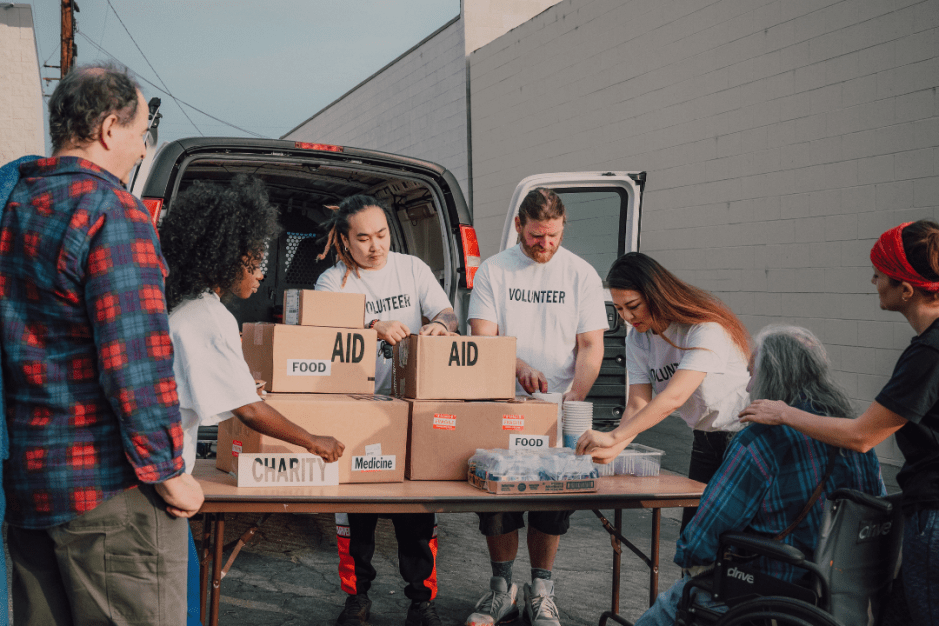
So, on the other hand, the ‘best’ is when we see people coming together, being generous, supporting each other, taking care of those who have lost something or someone. Examples of this include when a community brings spare clothes, bedding and other necessities to help those who have lost everything, giving space in their homes, giving money to help, helping rebuild. We have seen this time and time again in Australia when fires or floods have torn people and places apart. It is one of the most inspirational things to see. It also happens far more than the ‘worst’ examples. Helping others fits into ‘the best of people’.

So, why wait for an emergency to take place to be the ‘best’. We can do this every day through our actions and words to those around us. We all know what the best is, let’s remember to do it.

You are really, really small

Looking through the tiny window on the plane, two thoughts came to mind. It was nice to be back in the air again, travelling around our amazing country. Also, people are small from up here. (It had been a while since I last flew – sometimes I forget things).

The further you get in the air, the harder it is to engage with what is happening on the ground. Not only does it get harder to see everything that is happening, but it is harder to comprehend the sheer enormity of life on our planet.

For example, in my head, at any given moment, there are at least three different conversations happening. One about the thing that I am doing right then. One about the things that I want to do next. And one about every single mistake that I have ever made in the past. (Mostly the last conversation focuses on times that I have been socially awkward).

Then, in my household, at any given moment, there are at least fifteen different conversations happening. Four internal conversations about what each person is doing right then. Four internal conversations about what each person wants to do next. Four internal conversations about what each person has done before. And three verbal conversations between the people in the household. Some of them are louder than others, because, well…kids.

In my street, at any given moment, there are at least ninety conversations happening. And I live on a small street.

You get where I am going with this. The more you take a step back and look at the world around you, the more complex the world can seem. It can be overwhelming.

The good news here, is that in the moments when I become all consumed by my challenges, my problems and my frustrations, the more I take a step back and expand my view and see those in my household, my street, community and world, the smaller my problems seem to get. Because we all have challenges and obstacles, and we are all trying our best to work through them, which means we are not alone in that.

To a plane flying overhead, I am really, really small. And so are my problems. I find comfort in that.

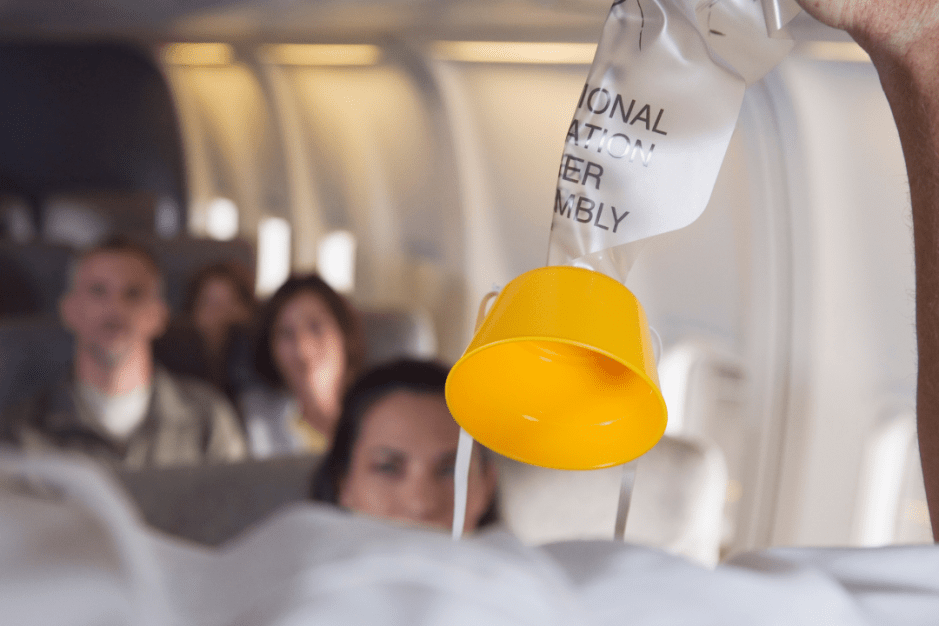
“Put on your own mask first” is flawed

“You must put on your own mask first before assisting others.”

This makes sense in an emergency flight situation, because if you try to help someone put on their oxygen mask before you have yours on, it is likely you will pass out very quickly before you can finish helping them, leading to a dire situation for you, and them.

We have imported this pre-flight safety element into a life philosophy. It gets used when talking about our mental health. Another one is ‘you can’t give from an empty cup’. Basically, look after yourself before you try to look after others.

It seems to fit, but it’s wrong.

These ideas assume that your mental health is not connected to the people around you, and if you are struggling with areas of life, all you need to do is to take a break from the world or isolate yourself from everyone else, recharge, feel better and then come back into the world to care for people.

There may be times when that is necessary, but the wellbeing of an individual is deeply linked to being in contact with and even caring for other people.

If you can spend time helping someone else and you can see the difference you are making, it will energise you. It is not a case of putting on your own mask first or filling your own cup up and then giving of yourself, but as you help someone else “put their mask on”, or “fill their cup”, your mask will be put on and cup will be filled up. As you care for others you will care for yourself. (Unless you don’t have generous boundaries).

The Only True “Two Types of People” Statement

“There are two types of people, those that believe there are two types of people and those that don’t.”

People are complex and cannot be sorted into two types of anything, let’s not oversimplify, except for the statement above.

Take vaccinations for example. There are those who are pro-vax and those that are anti-vax, right? Wrong.

It’s more like this:

100% Passionate Support                                                                 100% Passionate Against

Forget vaccination, let’s talk cheese. There are those people that like cheese and those people that don’t, right? Wrong.

It’s more like this:

100% Passionate Support                                                                 100% Passionate Against

And that’s just one small part of the person.

The world is a spectrum of beliefs, experiences, thoughts, and traditions. How I ended up having the same opinion as you is most likely a very different journey to how you ended up with that opinion. We think the same on that issue, we both like cheese, but we are not the same person. We don’t have an equal amount of commitment to it. We don’t have an equal amount of experience with it. We don’t have an equal amount of care for it. We are at different points on the spectrum of our love of cheese.

It is generous to see people as complex and more than a cheese lover or not.

Fade

I am amazed by the sheer amount of people that are alive in this moment. Over 7.9 billion people is impossible to imagine. It is extraordinary, and overwhelming and humbling.

Out of that 7.9 billion, how many people will know me? Dunbar’s number suggests that we don’t really have the capacity to have more than 150 meaningful relationships.

Out of that 150, how many will really do life with me? Jim Rohn said that you are the average of the 5 people that you spend the most time with.

So, not many.

How many will remember me?

Of the people who lived 100 years ago, (about 2 billion of them), I have heard of, maybe, a handful. A dozen at most, and probably the same names that you may know. The rest of them, well they might have influenced how I live but I don’t know their names or their story.

So, logic would suggest that in 100 years no one will remember me, and no one will remember you. (Sorry).

I will fade.

That’s okay.

However, what I do will have a lasting effect. Every act will create an impact.

Specifically, generous acts multiply. They grow over time as they encourage others to be generous and create ripple effects to people that you will never know in places that you will never travel to. Generosity will not fade. It will last forever.

Leave a legacy. Be generous.

How to Deal with Stupid People

I come across them regularly, on the road, in the supermarket, walking on the footpath. People who behave in such a way that I can only assume that they are stupid. Sometimes I call them ‘jokers’, other times I have more colourful names for them, but in my mind they are categorised as ‘stupid people’.

I am sure you would know some people like this. People who don’t seem to understand your priorities or seem to care about your sense of urgency. They could be just about anyone, and as it turns out they are usually anyone who is not me.

I think my eldest son was about 7 or 8 when I first heard him call someone a ‘joker’ from the back seat of the car. I am so glad that he didn’t use something more colourful. This was a rude shock – when you hear your own judgement parroted back to you it can be startling. And how long until that word gets used to describe me? Are other people using that word to describe me? Am I someone else’s ‘stupid person’?

It is the easiest thing in the world to judge people, to create a story in our mind about how they are just stupid for not seeing the world as I see it and behave in a way that I would behave. It is the easiest thing in the world to be completely self-centred.

What I have discovered is that everything that everyone does makes sense to them, even if it is just at a subconscious level. They may not even be able to articulate why they do something but at some level their behaviour aligns with their values, or their world view.

If you don’t understand why someone does something then your path to understanding is through curiosity, asking more questions and making less judgements. That is generosity in relationships.

If you have stupid people in your life, then perhaps you’re not asking the right questions.