“Kindness is costless but also priceless” Warren Buffett
True kindness does cost you something, but not necessarily money. Perhaps that’s just how Warren Buffet sees the world, through a zero-sum game of whether something costs you money or not.
Because I know that kindness costs time, energy, mental space, the opportunity to do something else and sometimes, yes, even money.
But the impact of a kind act is so much more valuable.
Warren is right about the money with this point, it is priceless.
You cannot calculate the dollar value of a genuine kind act from one person to another because it would fall short.
Some things are not able to be bought and therefore there is no space for kindness and generosity within the financial economy. For those that focus solely on dollars and cents, this makes no sense, or cents, so it isn’t something they get involved in.
In this, Warren Buffet is an anomaly. One of the richest men on the planet still has a philosophy of kindness.
He knows that some things are worth more than money.
When something bad happens to us it’s nice when we realise that we couldn’t do anything about it and we are just a victim to the situation.
Another statement in line with this thinking is that “Money is the root of all evil”.
If that is true, then it’s not my fault if I make bad decisions with money. Money is bad. Nothing good comes from it. Anyone who has money must be bad too.
But, that statement isn’t true. Not in the format that we might know it. You see, that’s only part of the statement. The full statement is ‘the love of money is the root of all kinds of evil’.
That’s not as fun because instead of being at the whim of a greater power, this would suggest that I have agency in the process. I can control the things that I give my attention and affection to. I can control what I focus on. I can certainly control whether or not I love an inanimate object like money. So, then it is my fault. When we love money, we do bad stuff. Bad stuff to ourselves and other people.
Money is not bad in and of itself. People who have money are not inherently bad or evil, although by their proximity to it they are at greater risk of falling in love with it and what it can bring them.
One key thing; there is enough money on the planet to lift everyone out of poverty. If we were all to love it a little less, then much evil would be overcome.
Not having enough creates a seriously damaging experience for people living in poverty.
Some people find a specific way to function and survive in it. It’s called the Scarcity Mindset – seeing things through a lens of lack and doing whatever you can just to survive. It can be helpful but if you spend too much time in that sort of environment, your brain will be wired for lack and poverty will kill you prematurely.
At the other end of the spectrum, having more than you can handle creates a seriously damaging experience, rewiring you brain for excess and it will kill you prematurely.
We don’t seem to have a safety mechanism for when we have too much. There isn’t a mindset that we can easily form to assist in survival. As Nassim Taleb suggests, “Abundance is harder for us to handle than scarcity.”
Most, if not all of us dream about being on one end of the spectrum. No one strives for poverty of course, but many strive for excess. Often those who strive for excess don’t realise that they already have it, such is the sinister nature of excess – it stops you from realising when you have enough.
One thing that can help is to have an Abundance Mindset which is not as easy to form as the Scarcity Mindset, because it takes intentional work (at least that is what I have found).
An Abundance Mindset comes from a belief that there is enough of everything for everyone, and it starts with gratitude for what you already have. Gratitude leads to generosity.
A Scarcity Mindset that creates an environment in which for me to win, everyone else has to lose, is toxic. An Abundance Mindset that comes from gratitude and encourages generosity is life giving. I know which one I’m aiming for.
There are so many reasons to give. So many positives. So many benefits for everyone involved.
Many of these are on the periphery of the actual act.
When it comes down to it, the main reason why you should give is the difference that it makes in the lives of those who benefit from your generosity.
No matter the motivations for giving, the different ways, or the different reasons, one thing that connects every generous act is the impact the giving has.
I saw it. The courage of a women who just lost her husband through the COVID pandemic, left to raise three children on her own, who took a loan to create a business and a sustainable income. Who found a way forward with her life after going through the depths of tragedy and poverty. The giving from people in Australia made this type of difference possible. Tara inspired me. So did her children.
So, I choose to give to an organisation that works internationally, that is accredited through the Australian Government, that reports back on the impact it is having. You may choose to do it differently, but the reason you give is the same as the reason I do. Something needs to change and I am in a position to help change it.
Generosity comes into existence through action. People give because they are responding to a situation that they cannot stand anymore. They simply must do something to right a particular wrong, or to create a better version of the current reality.
This imperative comes from a place deep within, and many people who give are not able to articulate exactly why they do. They just feel compelled to do so.
But it comes from values.
Someone places value on human life, and when they see something happening in the world, be it poverty, war, famine or other injustices, that rubs up against their value. Usually they see something that reflects an image of themself. It might be children, or women, or parents.
They then give as a response to their values being challenged.
This is an extremely healthy way to give. It comes from a place of purity. And it is usually the starting point of a giving journey, which begins with that almost visceral response and then eventually leads to a place where an individual has a well thought out philosophy of philanthropy with a portfolio of organisations they support for a number of reasons. But at the heart is the imperative that first prompted their generosity. That never leaves.
So many things are outside of our control. The world is a big place and things happen quickly. What can one person do to stem the tide of poverty, or racism, or sexism, or any other -ism you can think of?
Why bother, right?
If Frozen 2 has taught us anything, (aside from the fact that sequels can be better than the original and water has memory) it’s that sometimes all we can do is ‘the next right thing’. Sure, it’s an animated kids movie, but this is a healthy philosophy that I would love my kids to encapsulate as they grow up in this world. Heck, I would be proud to be able to say that this is how I live my life.
When faced with seemingly insurmountable challenges and overwhelming odds, (be they wind, fire, water or earth spirits…look, just watch the movie), you can still do something. The next thing. The next right thing. Over time, the amount of ‘right things’ you do adds up and begins to make a huge difference.
The challenge in these moments is to figure out what the next right thing is. Let me help you with this – I can guarantee that it has something to do with generosity.
Sometimes what may look great on the surface, or upon initial consideration, turns out to be a little less than we expected. I have met people who appear to be amazing, accomplished, friendly and incredibly successful at first glance, but as I spent time with them, I began to realise that they were not quite what they promoted. In fact, they have played fast and easy with the truth.
Generosity can be just like that. Someone may give you attention, gifts and surprises which are delightful. Over time though, something doesn’t appear right, and you may feel pressured into thinking, or acting or responding in a certain way because “you owe them”.
So, how do you know when someone is genuinely being generous?
In other words, how do I know if someone cares about me or just cares about themselves?
Here a few things to look out for:
If it comes with strings
If you are given a gift of any sort, but it requires something of you in return, that is not generosity. It is a transaction. Which might be okay if everyone in the transaction is fine with it, but don’t confuse it with someone be generous to you. If you are unsure, try saying no to the request that is made (either a verbal request or an unsaid expectation) and see what the response is. If they get upset because you are not giving them what they are owed, then that’s your answer.
If it keeps you in a place of vulnerability
Some gifts seem very generous, and may even be given in good faith, but the consequences of the gift keep the receiver in a place of vulnerability. The Nestle scandal in the 1970’s comes to mind – there was outrage when it came to light that they had provided free formula to new mother’s in hospital in developing countries, which seems incredibly generous. But after the mother’s left hospital they needed to purchase it. Of course, by this time the mother’s breast milk production had been interrupted due to the formula use and they had no other option but to find the money to pay for the formula. A ‘gift’ that seems generous but kept people in a place of vulnerability instead of empowering them.
If it hurts you
Sometimes receiving a gift can cause you damage. For example, if someone gave you one billion dollars.
“How could that hurt me?” you ask.
Large amounts of money can create a huge burden, damaging relationships and families, and build significant costs and taxes to manage.
“I’ll take my chances” you say, well it didn’t work out so well for these guys. A gift for someone who is not ready for it can create huge problems.
Most of the time when you receive a gift, it is lovely but there are times when it turns out not to be generosity at all. Generally, anytime a gift is given that creates a power imbalance, it’s most likely not a generous act.
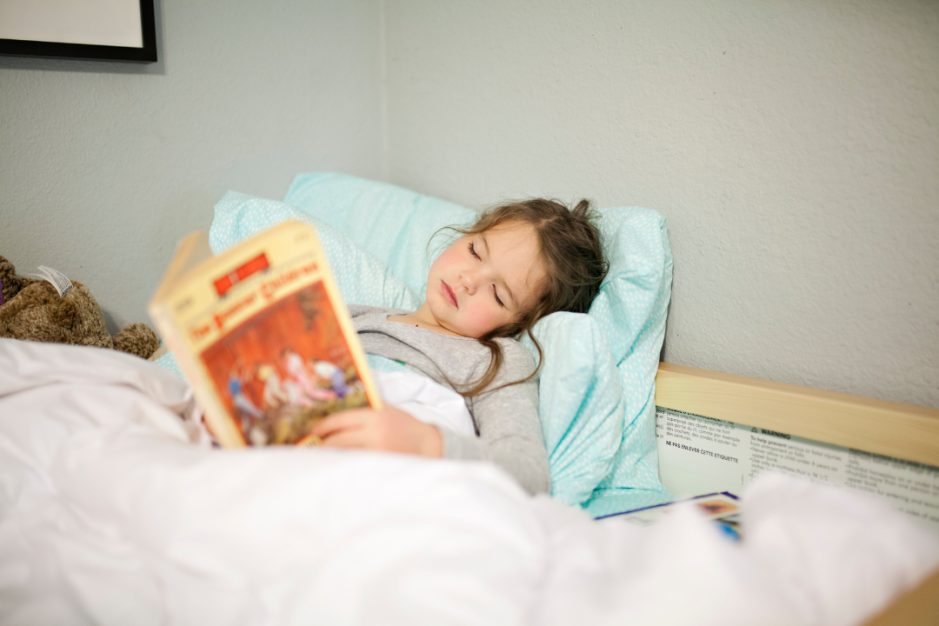
My kids sleep with, what seems to be, hundreds of toys in their bed. There are stuffed toys, toy cars, small animals, lego men and piles of books. I’m not even sure that any part of their body touches the mattress there is so much junk.
I honestly don’t know how it came to this – I am reasonably ordered in life. The bed is for sleeping. The toys and books go in the playroom. But, apparently, my children have a more fluid understanding of how things work in our home.
The books, whilst super annoying when they fall under the bed and cause a frantic search when it’s library day at school, I am more okay with because books are important. It is important to read to your child. I think every parent knows that, and there are studies that have found that young children whose parents read to them daily have better school experiences. There are other studies that have shown that homes which have books in them are more likely to have better educational outcomes, even if they aren’t read.
So, my kids, by sleeping on books, should end up being geniuses. That’s my working theory.
Education is important, and we all want the best for our kids.
Whenever I meet the women that Opportunity International Australia work with, their motivation for using a small loan to build a business and work their way out of poverty is so that they can give their children a better life. They, first and foremost, want their children to go to school and get an education, because they know that this will be a huge benefit for the kids in the future. Even if they haven’t been able to go to school themselves.
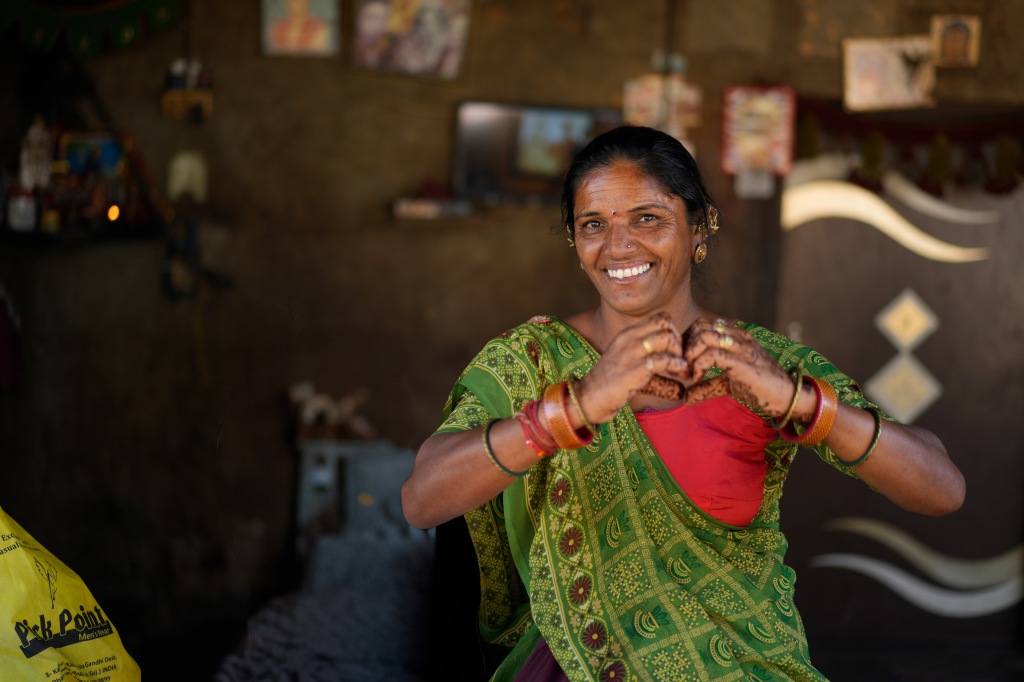
For women like Bhikhiben in India, who desperately wanted to go to school when she was younger, but had to make an impossible and devastating choice after her mother died. As the oldest of five siblings, she quit school to help raise them.
No child should have to choose between going to school or looking after their family. But that was the reality for Bhikhiben.
Even though she only has a few years of education, she has taken a small loan to build her own business to create an income which has allowed her kids can go to school, get enough food to eat, to pay the loan back as they work their way out of poverty.
Once the loan is repaid, it gets recycled on to the next mother, so she can do the same thing. With 98% off all loans repaid and recycled, that is a lot of families that are putting their kids in school.
Bhikhiben was robbed of her chance to get an education, but that has fuelled her desire to make sure her children get one. This is how generational change is created.
You can donate here to help women like Bhikhiben lift their families out of poverty.
Out of every person that was born when I was born, what are the chances that I was born in Australia?
In the year I was born (which you can guess at), there were 124,287,658 other babies born in the world. In Australia there were 223,034 other babies born in that same year.
That means that I had a 1 in 557 chance of being born in Australia.
At the same time there were approximately 65,000,000 children born in Asia, most of which, at that time, were born into poverty. So, going on the numbers, in the year that I was born, there was approximately a 1 in 2 chance of being born in Asia, most likely into poverty. That doesn’t take into account the African continent at all. The numbers get pretty intense at that point.
Suffice to say, the chances of me being born into a country that wasn’t experiencing debilitating poverty were slim at best. But here I am, lucky I guess.
So, what’s the point?
The concept of the ‘self-made man’ or ‘self-made woman’ start to lose meaning for me at this juncture. I find it a little amusing when people start talking about how they pulled themselves up by their own bootstraps to get to where they are, or that it was only through their hard work and skill that they have succeeded in life.
More and more I strongly doubt those assertions. Hard work is definitely necessary in life, but looking at the odds laid out above (and this is just location of birth), I think it is more to do with luck than anything else. Where you were born, your gender, your race, your family of origin, all of these have a huge effect on your life before you even get the chance to start working hard.
Christmas is upon us. It’s nearly here. It’s happening.
As you go about your preparation for this season and think about the people you will buy presents for, think about what they would really like. I’ve noted before that this is not my strong suit, but I am not the only one.
I recently found out that Australian’s will spend $921 million on presents for people this year that are unwanted. That’s right, almost one billion dollars on gifts that people will throw out. $35 for every man, woman and child will be chucked out. Creating 275,000 tonnes of landfill, about a kilogram for each person.
So, in order to save yourself some time and landfill, reach into your wallet or purse, grab $35 and throw it in the bin.
Or, buy something that will do some good, ensure that your money gets used, recycled and used again, and see to it that your gift is recyclable, by purchasing a Gift of Opportunity. These gifts, like chicks, or ducks, or seeds, or old tyres (yep you read that right), represent things that women living in poverty in India and Indonesia use to create their own business from a small loan. Through that business they make an income, put food on the table, send their kids to school, pay the loan back and work their way out of poverty. Your Christmas gift this year is you providing that loan on behalf of someone you care about and letting them know about it. It’s feel good, do good, save the planet gift giving.









 The Generosity Guy