When God doesn’t want you to give…

Often people will talk about giving money to something with a matter of urgency, stressing that now is the time to give. I certainly think that there is a right time to give money and a wrong time. I also think that there are times when God doesn’t want you to give. I am not talking about God telling us that there are specific organisations or causes that might not be a good place to give money to, I am talking about what is happening inside us when we part with our money.

So here are two reasons that God doesn’t want your money…

1. If you are trying to get something…

As I understand the definition of witchcraft, it is when a person invokes, or conjures a being to do their own bidding. If we follow that through to its natural progression, then the act of witchcraft is possibly not too far away from our own doors. You may think that’s a bit of a stretch but if we give of our money to God through the church or other organisations for the sole purpose of receiving a benefit then we are attempting to conjure something through our own efforts. Giving is a deeply spiritual event, it is an act of worship. Out of that worship good things come, not because we earnt them, or bought them, but because God is good and he chooses to bless us and the money given gets used for some amazing work.

Simon the Sorcerer faced this in Acts chapter 8. When he saw Peter and John laying hands on people, who then received the Holy Spirit as a result, he wanted to do that to. He offered the disciples money so that he could receive the ability to do what they were doing (vs 18.). Peter then tears strips off him, saying that “his heart was not right before God” (vs 21) and he was “full of bitterness and captive to sin” (vs 23).

Really, his desire was good, to be part of spreading the love and message of Jesus to people, but his motivation and understanding about God was all wrong. He was known for being a sorcerer and he received a great deal of attention as a result, but when he saw some new type of ‘sorcery’ that he didn’t recognise, he wanted to be part of it to maintain the profile. So he offered to pay for it. Peter was quick to point out that God doesn’t work that way; God is a God of grace whose love does not depend on our merit.

If you have been around a church for a while, then you would probably know the concepts of how God sees people. He looks at the heart, He cares about what is inside and not what is outside, He cares more about what a person is, rather than what a person does. These are all nice things to say but if we don’t actually believe them then we can find that we try to buy God off or at least attempt to shape His opinion with our money. God doesn’t want that.

2. If you feel like you have to…

God doesn’t want to pry your wallet or purse open. He’s not lying in wait to rob us of our hard earned cash.

The Apostle Paul wrote about this to the Corinthian church

Each of you should give what you have decided in your heart to give, not reluctantly or under compulsion, for God loves a cheerful giver. 2 Cor 9:7.

If you give money because it is the ‘right thing to do’, or you feel like you have to, then you need to ask yourself “Why?”, because it’s likely that you could be giving for the wrong motivation, and I don’t think God wants that for you. We are implored to give, but “not reluctantly or under compulsion”. If you are giving money, and hating it, stop. We’ve already talked about how God doesn’t need your money (previous post) and in this case I believe He doesn’t want it. Giving comes from the heart, if the heart is not in it then it’s not giving.

So how should we give?

Cheerfully

God loves it when we give. He loves it when we give cheerfully. If you are reluctant or feel obliged, God not only doesn’t need your money, He doesn’t want it!

The reason to give is simple. We give in response to what we have been given. We are blessed to be a blessing. We are generous because God is generous and we have been created in His image. The language we may use to explain that could be “I give because it is the right thing to do” or “I feel like I need to give back”, but the litmus test is the attitude, the cheerfulness.

Do we give because we are cheerful, or do we become cheerful because we give? I feel like it is the former, but if you are not cheerful and are thinking about giving, definitely try that and see what the result is.

Without Fear

We hear quite frequently that money is the root of all evil, but that’s simply not true. It is the love of money (1 Tim 6:10) that is the root of all evil. Money itself is just at thing that we can either use or be used by. The choice is ours. I don’t think there is an in-between. We master our money, or our money masters us. The way to tell is if we are willing to give it away…

Don’t get me wrong, being dedicated and detailed about your finances doesn’t make you someone who is being mastered by money, just like being ignorant about what and how you spend doesn’t make you someone who is a master over money. The way that we go about managing our finances is not how we judge this, but it is the heart that motivates the management. Don’t be afraid to be intentional about your money, we don’t need to be afraid of it is working for us.

All this being said, giving money is still a sacrificial act, even a painful one at times, but we brought nothing into this world and we can take nothing with us when we leave (1 Timothy 6:7). So, while we live, let’s do what we can with what we have been given.

God Doesn’t Need Your Money

I can’t remember his name, or even exactly where we were, but we were waiting for a ride somewhere in the Eastern suburbs of Melbourne when he said it. “God has His own economy.” I never saw that guy again after that day – we spent the entire day playing basketball against some inmates in one of the local prisons and the only thing I remember about him was what he said to me that morning. We were talking about how things were financially tight and I couldn’t see a way forward. There were expenses coming up and I didn’t know how we were going to meet them (I’m not sure how we got to that point in the conversation so quickly) and that’s when he said it. “God has His own economy.”

He went on to explain his understanding of God, how He is not restricted by the things that we are restricted by. He isn’t confined by a low pay packet, or by a pay cycle, or a shortfall. If God wants something to happen, He will find a way to finance it and he can work outside of our understanding and bring money from places we never knew about.

That one phrase from the unknown guy as we stood on the side of the road waiting, challenged the way that I thought about money and the way that I thought about God. Even though it can raise some curly questions, it doesn’t mean that it is not the truth.

I believe that God is all powerful, all knowing and all loving. That is something that I learned as a child and it is something that I have had to wrestle with time and time again as I have grown up and faced all sorts of different issues that come our way as adults. My understanding of what His power, wisdom and love look like have changed over the years, but I still believe those things about God.

It struck me a few years ago that there was an element of arrogance that motivated me to do certain things that I considered “works for God”. This ranged from being part of the local church to giving money to the church and other organisations. One part of the motivation came from a place of responding to God’s goodness and my “works” were an overflow of that. But the arrogant part of my motivation spoke in a soft voice in my head and said, “If you don’t do this for God then no one will and God won’t be able to fulfil His plan.”

Now, don’t get me wrong, I believe that we are all called to something special and that God has prepared some great things for us to do (Ephesians 2:10), but I realised that if I didn’t do the great things that God was calling me to, then God’s plan for the world was not going to fall apart. He wasn’t sitting in heaven watching earth on a TV, like we would watch a football game, shouting at the players as they make mistakes, seeing the game slip away and being helpless to do anything about it, as any spectator is. (Your TV yelling isn’t helping, so stop doing that, for everyone’s sake…)

This type of attitude is the deepest sort of arrogance because it suggests that God is only doing good things in the world wherever I am, or, at a stretch, perhaps He is doing good things with some other people that I think are good. But outside of that parameter He can do nothing. This suggests that He is solely reliant upon us to achieve something and if we have a bad day, then so does He. But God is not a spectator or coach watching the world and making suggestions on what might be a good strategy. He is so involved with His creation that nothing happens without Him being at the centre of it. What that means for us is that God does not require us to do good things in this world. He could feed the poor, negotiate world peace and heal all the sick in a moment. I absolutely believe that (which leads to more of those difficult questions).

The beauty in all of that is that whilst he doesn’t need us to do any of these things, He invites us to be part of it. He wants to use us. To be honest I don’t fully understand why, except that being part of what God is already doing on this planet has become my life’s purpose.

I didn’t wake up 15 years ago and discover poverty, nor did I discover poverty alleviation or the beauty and simplicity of microfinance. This has been happening throughout history and there is a special place in the heart of God for the poor (Leviticus 19:18, Matthew 19:21, Galatians 2:10 to name a few). We see throughout history that God has used His people, and quite often He uses people who, by their own admission, wouldn’t be considered “God followers”, to bring about justice in this world. That is actually a gift for us; to know that our involvement in any good work is not necessary but we get to be involved anyway. It is a humbling reality.

It’s not only humbling to be invited to participate in what God is doing, but it is also good for us. We receive the emotional benefits from giving back, and God knows that, so He wants to ensure that we have the opportunity to receive from our giving. His invitation to give and be involved is partly for our own benefit.

Mostly, though, it is about obedience. I have heard that you can tell a person’s priorities by how they spend their time. I have also heard that you can tell their priorities by how they spend their money. I think both are true and they are a real reflection of who we are and what we believe is important in life. God calls us to give to the poor, not because He needs us to, but He wants us to be part of what He is doing, to be obedient, and for us to receive the benefits of giving.

I feel that it can be dangerous for someone who works for a not-for-profit that relies upon donations to function to then say, ‘God doesn’t need your money.’ The fear is that there will be some who will take that as a reason not to give. But upon reflection, if someone responds like that, then they were looking for an excuse anyway and my writing is not for them. The aim of this post is to come to a place where we are open for God to show us what He would like us to give to. God doesn’t need your money…He chooses to use it and us at the same time.

Perhaps He is asking you now to invest your time, money or resources to help families living in poverty transform their lives?

Here are some questions that come up after thinking through the ramifications of God not needing our money…

  • If God has His own economy how can He stand by and watch people suffer and die because they don’t have enough?
  • What does that say about God?
  • What does that say about us?
  • Why was I born in a developed country and the majority of the world wasn’t?

Some of these I don’t have an answer for, some I am working through possible answers but I am keen to hear what you think…

4 Reasons Your Help Isn’t Helping


I recently heard a great question – Do you want to go help, or do you want the people to be helped?

That puts things into perspective – and it helps you discover the true motivations for a potential trip to a developing nation. If the trip is more about you than it is about the long term effects you will have, that’s okay. Be honest about that. But also be honest about the risk of damage to the people living in the poorer countries you wish to help.

Here are 4 reasons why the help you want to give to the poor in the developing world is causing more damage…


  1. It’s not sustainable…

The worst thing about owning a house is the amount of work required to maintain it, and, depending on how handy you are, it can mean organising the electrician, plumber and roof guy to come and fix things as they happen to deteriorate. This is expensive and time consuming – but the benefit is that if you look after your house, it will look after you and it will not only hold or increase its value over time, but you can live in it safely, without the fear of things falling down around your ears. The greatest threat to a home is poor craftsmanship and water. When it comes to ruining your home, the latter is significantly assisted by the former. So when thinking about travelling overseas to build a house or a school or any sort of building for another people group, the following questions need to be asked and answered…

  • Is it helping? (see 4th reason)
  • Will it last?
  • Who will maintain it?
  • Are they equipped to maintain it?
  • Is maintaining a building the best use of their time?
  • How many local jobs could be created if it was built by the local community?


Often what is created is a feel good experiment that doesn’t last. And when it falls into disrepair and needs to be rebuilt, people raise money, fly over and build it again.
Sustainability has become a bit of a catch phrase in development over the years, and for good reason. It is vital in any work that gets done. If we want to see long term change, it needs to be based on sustainability. If none of the locals are receiving training and education as part of the process (and I mean real training and education, from a qualified person, not someone who has watched a few videos on YouTube) then the alleviation of poverty has become solely reliant on those who travel from distant lands as they rescue the poor, powerless, helpless people. If they decide to stop coming, people stop receiving help. In the long run that leaves them worse off than they were before because now they are dependent upon others and have not been given the opportunity to come up with their own solutions.


  1. It creates a messiah complex

Everyone wants to be a superhero. Deep down, we like the idea that our life has a lasting impact on those around us and that if we can be the reason that some people are alive now and are living a better life than they were, then ‘my work here is done’. It does our ego good. We love feeling needed. I’ve said many times that we are shaped to do good things for other people, and it is a positive thing to be involved in good works; the Bible implores us as we read in James 1 verse 27,

“Religion that God our Father accepts as pure and faultless is this: to look after orphans and widows in their distress and to keep oneself from being polluted by the world.”

But if we end up thinking that we are the only person in the world who cares, and that through our efforts we alone can fix poverty, then we have become the Messiah to poor people around the world – in our own minds.

And it kind of looks like this – https://www.youtube.com/watch?v=5jx0ZjAXWwQ

Wealth does not automatically equate to wisdom. People don’t need to be rescued. They need to be given the chance to fulfil their potential. Just because we have the means to fund something or to visit a place, it doesn’t mean we should automatically do that.


  1. It is damaging to children

Children are the most vulnerable in any community and they are the ones that get hurt the most when we don’t think about what we’re doing. Even those who seek to help children might indeed be harming them and treating them as a commodity. For example, just taking photos of children we meet when we travel to poverty stricken areas can turn their struggle into a tourist attraction which, apart from being unethical and an invasion of privacy, can lead to kids staying away from school to try and earn a few dollars by “selling” their photo. Children are not a commodity. Take photos, but do it respectfully and ethically. Seek permission from a parent before you make them the focus of your photo shoot. The same should be said for randomly picking up and hugging kids too. Let’s face it, if you wouldn’t do it in Australia then you probably shouldn’t be doing it overseas.

It can also stunt the emotional development of children. It’s not healthy for children to have groups of people come for short periods of time and build ‘life-long’ friendships with them, only to have them disappear without a trace and never see them again.

Plus, when it comes to orphanage tourism, children are put at risk of being trafficked to “become” an orphan – in Cambodia the rate of orphans has doubled in recent years and 72% have at least one living parent. Friends International puts it simply, “Your donation to an orphanage doesn’t help orphans, it creates them.”


  1. It doesn’t provide what people actually need

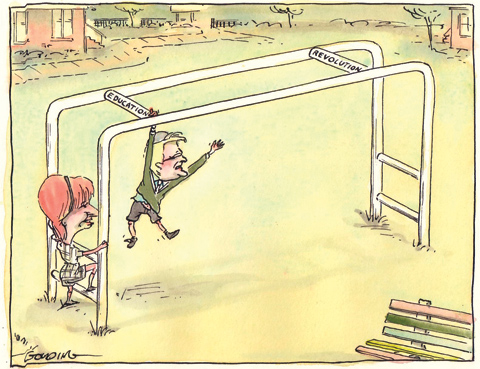
Rudd-Gillard-Education-Revolution

I cast my mind back to the Education Revolution from the Rudd government in Australia from 2007-2010. For one part of the program, the Federal Government put aside billions of dollars for schools across the country as a way to equip them with facilities required to ensure quality education levels for all Australian children. There was a catch though; there were restrictions on what the money could be used for, there was a time limit in which the schools had to apply for the grants and then another time limit by when the building needed to be started. Long story short, thousands of schools throughout Australian got brand new undercover multipurpose sporting facilities, usually the size of a small basketball court, which were not well thought out or even essential. But a decision was made at a national level about what was necessary for education. No one bothered to ask the schools, lest the needs of a primary school in Mandurah, Western Australia would be different to that of a secondary school in the inner suburbs of Sydney, New South Wales.

In the same way, when we think about what people living in developing countries need, isn’t it possible that what will benefit them the most is a little different from what we think they need, based on our experience in Australia?  The real question is, what do those who are living in poverty actually need? When we find the answer to this, and find out what is best for them then we look to find a way to initiate lasting change that brings people out of poverty and allows them to reach their full potential. More often than not, the only people who can answer these questions are the very people we are looking to help. And depending on who you talk to within the community, you may get different and sometimes conflicting answers. That is why it is best to communicate to all members within a community – older, younger, families, male, female to get an insight into the needs that they all have. After consultation with the community, come up with a plan which may include elements of sustainable access to clean drinking water (including sanitation and hygiene), better food production, healthcare, education and increasing social capital within the community. Building a school will not achieve all of that. Digging a well won’t do it. Nor will whacking a coat of paint on an orphanage. It may be part of the larger plan but why does it take white faces to do those things?

We think that a nice house is most important but perhaps the greatest need is a hand up – a small loan, an opportunity, some training which will assist in the journey out of poverty. If something has to be earned, if people need to work for it then it will do so much more than a simple charitable gift (although a generous gift is a great start!)

So, with all that being said, it’s important to note that I advocate for broad, extensive and systematic change within governments and communities around the world, to assist in alleviating poverty. I also advocate for helping the person right in front of you, and I believe that these two positions are not mutually exclusive.

But I want to build a house!

“Give a man a fish and he will eat for a day, teach him how to fish and he will eat for a lifetime.” Old, over-used Proverb

There is this story about a guy who is hiking through a forest and he comes across this beautiful and fast flowing river. As he stops to admire the scene and take in the moment, he spots something in the water bobbing up and down, struggling against the current. He sees this small helpless figure being thrown about by the strength of the water, going under and popping up to gasp for air before going under again. The hiker drops all his baggage and dives into the water. As he swims towards the figure, he discovers it is a small kitten and he reaches out to grab it just as it is about to go under for the last time. He pulls the kitten close to his chest and swims back to the shore, and lovingly places the gasping kitten safely on solid ground.

Extremely-cute-kitten_large

Whilst sitting in the joy of this rescue and lovingly looking at the thankful kitten in front of him, he spots more movement in the corner of his eye. He looks to see another kitten struggling, just like the one he rescued. So without thinking he dives back in to retrieve it. In a déjà vu type moment, just as the kitten is about to go under for the last time his hand reaches out and saves it. But he doesn’t get all the way back to the shore before he spots another kitten rushing past him, then another, and then another. Soon enough the hiker is spending all his time and energy rescuing poor, helpless kittens from drowning in this awful river. So much so, that he doesn’t notice that 50 meters upstream there is a guy throwing kittens into the river.

The desire to help is strong. That is a good thing. Often our response is, instead of giving money, to fly overseas and be drawn into offering physical help to fulfil practical needs of those who seem to be much worse off than we are. There is so much need and we want the help we give to be immediate and practical. Although, often immediate and practical responses are not entirely useful, and can create bigger problems in the long term.

But we have this need, this desire to do good. There is something about getting stuck in and making a difference with your own two hands. I have heard people say “I just want to travel to poor countries and build a house”, “I want to start an orphanage”, “I want to dig a well”, “I want to see poverty with my own eyes”. The heart behind these statements is good. I applaud that response – by all means, travel, see the devastation that poverty creates and let it change your life and the lives of those around you.

For many, though, it can become more about the experience than the benefit for those living in poverty. Think about it for a moment… We want to get our hands dirty and feel like we are making a difference. So we travel to developing countries, connect with some people and build a house or a school or visit an orphanage to hug some children, take some selfies with kids who have different coloured skin and beautiful smiles. But there is no shortage of man-power in poorer countries. Often they have huge populations, so why do we think that when we go and build a house, or paint a building, or dig a well, we are fixing poverty?

There has to be a better way. We need to change the way we think about poverty instead of always thinking of it in terms of “aid” – which is a response to an immediate need, usually after a natural or man-made disaster or some sort of epidemic which has caused widespread destruction. This usually brings about an appeal and will lead to supplies of blankets, food, medicine and other necessities being dropped into a country to assist in their time of greatest need. Often people want to go and help out to give out the blankets, to be on the ground. This is pulling kittens out of the river. We connect with that. We love the feeling of rescuing people. It makes us feel good. And so it should. But this is only one part in the spectrum of need, which is the most commonly known, but there is so much more to be done when it comes to development and aid. The other areas can include education, advocacy in seeking policy change at a governmental level and agricultural development.

Take the cat story. It’s true that we need to rescue the cats, and often this immediate need can be met by someone who has the means to travel and volunteer some time. But mostly, we need to train cats to swim so that they can rescue themselves. We also need to stop those who are throwing the cats in the river, train other cats about the dangers of being thrown in the river and train those future cat throwers as to why it is a bad idea to abuse cats.

But most importantly, we need to train cats to be trainers so they can help their own species. I know it sounds a little ridiculous and it’s not the perfect analogy. Yes, we need people to be on the ground and help at times of great devastation, but if we are going to create lasting change, mostly we need to assist those living in poverty and suffering other injustices to be educated and empowered so they can work their way out of poverty. We need to find ways of advocating for them and using our influence to provide a level playing field for all people lest we end up in the river rescuing cats and become overwhelmed by the sheer volume and eventually drown in cat fur. Enough of the cat story.

Here are the main causes of poverty:

The Poverty Cycle– being poor and not having enough food to eat, causes you to stay poor and not have enough food to eat.

Low Investment in Agriculture – high transport costs, scarce storage facilities and unreliable water supplies leads to less food being produced and shipped, and higher prices.

Climate Change & Weather Phenomenon – disasters on the increase leads to food production on the decrease. This always hits the developing world the hardest.

War & Displacement – it’s hard to grow food when you are fighting for your freedom or fleeing for your life.

Unstable Markets – price spikes can make buying food impossible for many families.

Food Wastage – we produce enough food to feed everyone, but one-third of all that we produce is wasted.

To be blunt, travelling overseas to practically help those in need is not going to fix the issue or even make the tiniest dent in it. It may assist the person right in front of you, although, for how long and how effective it will be is anyone’s guess (and the topic of the next post…stay tuned!).

The real change that comes as a result of a short-term trip is in the individual who does the travelling. They can be overwhelmed by the reality of poverty and it can change their life for the better, and as a result the lives of those living in poverty (if that internal change leads to action for the benefit of others). And that’s okay. Let’s call it for what it is. But let’s not damage those living in poverty in the process.

There are plenty of stories from people who have travelled on a mission trip to go and build a house or paint a building, only for it to be touched up and fixed by the locals after the travellers had left. It was more for the people who were visiting and what they would get out of it than it was for the people they were ‘helping’.

Then there is the story of a mission trip to help some people in an area to clear some land, but the travellers didn’t know how to do it as well as the local people, and it turned out that the locals just wanted some white faces in a photo in an attempt to get some funding from the government to help boost tourism. They were helping, but not in the way that they thought they were.

You may have heard the term ‘orphanage tourism’ where orphanages are set up in developing countries with kids (who may or may not be orphans in homes) who are kept in squalid conditions sometimes to guilt tourists who come to visit to give money. It’s a money-making scam that hurts the children we are trying to help.

These are just a few stories of what happens when we travel to the developing world on a short-term basis to rescue the poor. It’s still good to travel and see the positive changes that we are working towards, but perhaps we should recognise that often the money we spend on travel could be more effectively put to use by organisations who save kittens as their profession (sorry – no more cats I promise).

Winning the Lotto…

AH47R3 (1)

We take pride in making choices. They don’t have to be good choices or have positive outcomes, we just like the fact that we can decide for ourselves. It’s one of our favourite pastimes. The amount of times that I’ve thought “don’t tell me what to do, I will make my own decision thank you very much!” is embarrassing. We like to be in charge of our own destiny and we feel better when we are in control.

About the only decision we have zero control over is one incredibly significant aspect of life. We cannot control when or where we are born. I was born in Australia whether I liked it or not. There was nothing that I did that made this possible. The same can be said for my parents and their parents. Being born in Australia doesn’t make me great nor does it make me terrible. Tim Costello, the CEO of World Vision calls it the “Lottery of Latitude”. Many of us have dreams of one day winning the lottery and just kicking back and enjoying the rest of our life in easy street, but in the lottery of life, by being born in Australia, or ending up in Australia, we have already won – without even knowing we bought a ticket.

Living in Australia doesn’t give me exclusive rights to a comfortable life.

I’m digging deeper into the idea that ‘we should look after our own first before we help others’ when it comes to giving. To do a quick recap, I think that there can be an underlying desire within people to advocate for ‘our own’ in Australia, to ensure that we all have everything we need before we look to assist those overseas. I believe this response comes out of fear and ignorance. Fear that if we give to overseas programs we will turn our focus so much to overseas aid that our economy and society will fall over, ruining our way of life. And ignorance of how much money from Australia actually goes to overseas projects. We want to be in control of where and how our money gets spent. This is ‘our country’ and we’ll fix it before we look outside to others even though our economy is still moving forward and our giving is moving backwards.

(There are a number of arguments for and against assisting those in developing countries, you can find some here, and also in a recent article calling ‘Australia to invest in Foreign Aid as well as rockets’.)

It’s true, Australia has areas of urban poverty, homelessness and other social issues many worthy charities are addressing, but if you zoom out and take a global perspective, you will find poverty looks very different in Australia than overseas. Poverty in Australia largely occurs to pockets of individuals for personal reasons. It rarely has anything to do with their location. We are a developed nation with an abundance of food, drinkable tap water, affordable and functional public education and government healthcare, pensions and unemployment benefits for all citizens.

People who are born overseas in developing countries aren’t so lucky. For a variety of reasons (corruption, conflict, natural disasters, limited resources), they struggle to access nutritious food, clean drinking water, medicine or education. When hardships affect an individual they fall into the poverty cycle without any means of getting back on track, simply because of where they live. And as more people struggle to make ends meet, communities become run down, slums are created and lives are lost way too easily.

Living in Australia doesn’t give me exclusive rights to a comfortable life. It doesn’t mean that I am more deserving of having enough food to eat, or life-saving medicine, or clean drinking water, or access to education. It doesn’t mean that I have an entitlement to be wealthy, or to have spare time, or open spaces – these things happen to us without us realising. These are the things that set Australia apart from the majority of the rest of the world.

Wealth

The average full time income of an Australian is just under $1,500 a week, or $78,000 a year – that figure places the average Australian in the top 0.30% of the planet according to globalrichlist.com, or in other words 99.70% of people in the world are poorer than the average Australian. We are a wealthy nation. I encourage you to check out where you sit.

Recreation

‘Recreation’ is not a word that gets used a great deal in developing countries. Or extra-curricular or even curricular for that matter. The most frustrating thing that I hear my kids say is, “I’m bored”. It grates against me so much, because there are ample activities that they could possibly be doing. At some level though, I am glad that they have the ability to be bored (or think that they are bored). It means that they have down time, they can rest, relax, play sport, learn an instrument or watch T.V. They have the freedom to do that… We have the freedom to do that.

Outdoor Living

We can enjoy our beautiful landscape with little pollution and big open spaces. We can go camping or fishing or hiking. We can find places where we can feel like we are the only person on the planet (both an amazing and incredibly frightening feeling). The population of Australia just cracked 24 million people recently, which is miniscule on a global scale of 7.3 billion and we still have so much space available to us (not all of it inhabitable admittedly). Life is good here. Not perfect, but good.

International Backing

It’s not just me saying this, the United Nations agrees and ranks Australia at number 2 in the Human Development Index just behind Norway and in front of, well, everyone else in the world. This measurement is a summary of the average achievements in life expectancy, education and standards of living. You can’t fudge the numbers on this one, Australia is doing very well on a global scale and has been for a long time. But being born here doesn’t make that our birth rite.

Where you are born shouldn’t dictate how or if you live.

It shouldn’t be like that… but it is. That is the reality of the world that we live in and it’s not right.

Now, I don’t want you to feel guilty about that. Guilt has been used as a motivational tool for the longest of times, and whilst it is a valid human emotion, it is not helpful when looking to create change. If you have done something wrong, feel guilty, say sorry and make restitution. But people living in poverty don’t need your guilt, they need you to give them an opportunity to break the poverty cycle. Don’t feel guilty about having plenty of food, clean drinking water, medicine and education – they are human rights. We should celebrate that we have those things because they are good. We all should have those things and because we have them so easily available to us in Australia, I believe that they come with a responsibility to help out those who don’t have them at all, purely because of where they were born.

For people living in developing countries, it’s not that they are not working hard enough, or have done something wrong, or are just horrible people. Something that is completely out of their control has placed them where they are. They don’t deserve the life that they have, just like we’ve done nothing to deserve the life on offer for us in Australia. But together we can help them have an opportunity to reach their full potential. And that’s all that people want. Choice.

So whether you were born in Australia or you have had the opportunity to move here, or any other developed nation for that matter, don’t respond with guilt. But take the gift that you have been given with a sense of responsibility that spurs you on to benefit others.

What are you going to do with your lotto winnings?


Discussion

The difficulty that we can find in our world is that we often don’t have the chance to talk things through. Assumptions are so quickly made, battle lines drawn and people labelled and pushed to one side of the argument or the other. The thing that I have noticed is that there is never just two sides and it is only through genuine discussion that we begin to see the complexities of life. Very few things are black and white. There are very few ultimate truths, but we hold dearly to the ultimate truths that we find. Everything else is up for grabs.

4 Reasons Not to Give

Toad Photo

Fears can keep us alive. Of that much I am sure. For example, my (somewhat irrational) fear of snakes and spiders has kept me breathing up until this point and it is my intention that it will keep me alive for a while to come. This fear has caused me to freeze in my tracks, or jump unexpectedly, or to run screaming from a room or more specifically, skilfully keep my finger in the page of the book that I was reading whilst simultaneously and violently recoiling from and flicking a spider approaching from under my pillow (I do not know how I actually ended up going to sleep later that night…). Fears can keep us alive.

But, I have discovered, fears can also keep us from living. To this day, I have never touched a snake (although I did hold a toad recently…I can tick that off my list I guess. If you have never had the pleasure of holding a toad, you are not missing out on much). I hear they can be quite friendly and smooth. I know of people who keep them as pets, which is simply crazy to me, but I will never know what it is like to create a ‘person to pet’ relationship with a slithery creature. To be honest, I’m okay with that. I know that my fears keep me from getting involved in some parts of life which doesn’t bother me, but I find myself wondering what else my fears are keeping me from doing. What experiences am I missing out on that could bring great benefit to me and others around me?

I have always believed that fear is a great motivator but it is a terrible master, and if we let it, it can keep us from doing things that can challenge and stretch us. When people talk about giving there can be many reasons shared about why they choose not to give. I respect anyone who says ‘no’, I am a big fan of it (see previous post), but as long as we understand why we say ‘no’.

Here are some of the most common reasons I hear for people choosing not to give…


‘Their overheads are too high’

The question around how much money is spent on ‘admin’ in comparison to how much is spent on the intended ‘programs’ is an important question that everyone should ask, but only if we really want to hear and understand the answer. Any charity worth its salt will be able to give you a ready breakdown of where the money gets spent. More than that, they will be able to give you an annual report which chronicles how and why.

What it boils down to though, is that it costs money to make money. You need to spend money to attract and keep good people, to market your brand and educate the public about the issues before people will trust you enough to give you their money. The question we really need to ask is ‘how much spending am I comfortable with?’. There are a few organisations who claim that 100% of funds given goes to its programs – I honestly don’t even know how that happens, except for a generous benefactor or a whole lot of money previously spent. Other organisations range from 95% down to 75-80% – usually these are the acceptable ranges. People tend to raise their eyebrows at an organisation who spend 60% of their income on their programs and 40% on admin or other marketing practices, or TodayTonight gets a call if it is below 50%. But it depends on the organisation, what they are trying to do and how comfortable you feel with their work.


‘There are too many not-for-profit organisations’

The amount of not-for-profit organisations has increased significantly over the last 20 years. Currently there are 600,000 registered not-for-profit organisations in Australia and 7 new charities being registered every single day. It seems that every man and his dog has set up a charity for, well, every man and his dog.

Over time, as with businesses, some will finish up after they have achieved their goal or had a few years of raising funds and awareness, and others will stick around. Do we really need that many? Probably not. The spirit behind it is great but perhaps some could place their efforts behind existing organisations and add weight to what they are already doing.

The benefit for us is that we are spoiled for choice. Instead of seeing it as an overwhelming situation, we can find something that we truly connect with and we get to be picky about it. We don’t have to give $50 to the first charity that speaks to us.


‘We should look after our own first’

When talking about giving money to overseas projects, this conversation quickly turns into a ‘them’ and ‘us’ scenario. There can be an underlying desire within people to advocate for our own in Australia, ensure that we all have everything we need before we look to assist those overseas. This response comes out of fear and ignorance. Fear that if we give to overseas programs we will turn our focus so much to overseas aid that our economy and society will fall over, ruining our way of life. And ignorance of how much money from Australia actually goes to overseas projects.

Currently, the Australian government gives 32 cents in every $100 towards overseas aid, but due to consistent cuts, by 2017-18 it will be down to 21 cents. That is 0.21% of our Gross Domestic Product. We are set to become the least generous generation in Australian history. Our lifestyle will not cease to exist if we maintain or even increase our giving as a country. In fact, the cut in funding to Australia’s aid program not only discontinues much needed work in developing nations, but it also puts the jobs at risk of those who are working for the not-for-profit agencies in Australia. That’s not really ‘looking after our own’. When our government is leading by example and showing us how not to give, it is understandable that the Australian people might follow suit. But at what point can we as a country stop and consider that ‘our own’ are appropriately ‘looked after’? When everyone has a home to live in, enough food to eat, when no one is sick anymore, when nobody needs to rent, when we can all have an investment property… or two?  It’s an ambiguous term that creates a never ending loop of the ‘haves’ and the ‘have nots’ purely depending on the birthplace of the individual.

The truth is, foreign aid makes good political sense (I hate talking about it through this lens but some people view the world this way). Through it we help our ‘neighbours’ in the countries around us, and it turn, their development, health and wellbeing will assist us as a nation. They will be less of a security threat and a greater economic partner going forward. Everybody wins (especially the people who would have access to a sustainable food source and clean drinking water). We can receive benefits in a number of ways when we give to others, it’s not the reason we should do it, but it’s okay to accept that.

And who are ‘our own’ anyway? Who are we truly trying to ensure that we protect – the homeless, the sick, the elderly? We should absolutely be ‘looking after’ these people, but it does not have to come at the cost of helping those that were born outside of the boundary of Australia. Really, when we think about it, the concept of ‘our own’ stretches further than our national identity. It reaches to the very core of humanity beyond skin colour and language. We are all ‘our own’.

It needs to be said that most times I hear this comment, those who are saying it aren’t supporting ‘our own’ anyway, it’s just used as an excuse to say ‘no’.


‘We are not really making a difference’

This is my favourite, because as people, we have short memories. In relation to global poverty, we have come a long way…

In 1970, we are told that there were 60,000 children under the age of 5, around the world, who died every single day, due to basic illness, malnutrition and other easily curable diseases.

In 1990, the figure was closer to 33,000 a day.

In 2010, it was down to 22,000.

Today that number is just above 16,000 per day. It is still way too many, but it is a significant improvement. Especially when you take into consideration that the global population went from 3.6 billion people in 1970, to 5.3 billion in 1990 to 7.3 billion in 2015. The population growth over the last 45 years has skyrocketed but the number of children under the age of 5 who are dying every single day has plummeted.

We are making a difference. We are getting somewhere. We still have a way to go but we are in a much better place than we were – we just need to keep going.


There are many other reasons that people have for not giving.This is not an exhaustive list, but it is a starting point as we seek to bring the discussion around giving into the open. It is good to ask questions, to discover how organisations work and why, in order to educate our giving. Our fears or concerns should move us into a discussion that helps guide our giving and not used as an excuse to not give at all.


To find out more about how you can make a difference, visit www.opportunity.org.au

Why Give?

On the surface, we give in response to something that connects with us. A cause or an organisation that we believe in or want to invest in. Usually this connection happens because we have firsthand experience with the issue. We may have seen the effects of poverty in a developing country, or homelessness here in Australia, or someone we know may have suffered from a disease or some other life altering situation and we want to do something to help.
Sometimes we respond to, what we might consider to be, biblical commands. We look at the words of Jesus in Matthew 6:3-4,

“But when you give to the needy, do not let your left hand know what your right hand is doing, so that your giving may be in secret. Then your Father, who sees what is done in secret, will reward you.”
We can feel like there is an expectation to give. It’s not an ‘if’, but a ‘when’. Jesus assumes it is already happening in the lives of those listening to him and He gives instructions on how to do it so that we can be rewarded.
In Leviticus 19:10 the Bible talks about the concept of not harvesting all of your land or stripping your vineyard bare, but leaving the last part for the poor or the foreigner to glean something to eat.
Proverbs 28:27 implores us to be generous to the poor and if we do we will never go hungry.
There are just a few insights into what the Bible talks about when it comes to giving and looking after the poor.
On a humanistic level, many people who wouldn’t connect with the biblical reasons to give would still talk about it being the ‘right thing to do’. They have this perspective of thankfulness for what they have and recognition that someone or some ‘ones’ have helped them along in their journey and they wish to do the same for others.
We may be giving to others because God commands us and we desire to please Him, or because it’s the right thing to do and a good way to pay back some of what has been given to us, or to create some good karma, therefore making us a good person. These may be some of the reasons that we might give.
But there‘s a deeper level that than. I am convinced that there is something within our genetic make-up, part of our moral fibre, the way we have been created, that drives us to help out someone when they are in need. It’s a strong driving force that comes from within us. It’s part of who we are. Now, we get to choose whether we listen to that part of ourselves or not, and the more we choose not to listen, the more difficult it can become to respond over time (and potentially it can create a negative response to organisations asking for money).
For me, it can be summed up in recognising that God’s heart is for people – He cares for all people equally, regardless of who they are, where they are, or what they’ve done. He loves without agenda or obligation or fear. In John 3:16 we read, “For God SO loved the world, He GAVE…” And we are made in His image.
As humans, we all have the same moral fibre – but our experiences and upbringing often shape the things we care about and connect with – some might be interested in international aid, others in domestic homelessness, others may have a focus on health or even a specific people group somewhere in the world.
I care about people having the chance to reach their full potential, but I don’t have the capacity to reach all people around the world on my own. However, I do what I can with what I have, wherever I am.
I believe that’s what we’re called to do – give what we can and trust that it can, and will, make a difference.
Also, it feels good. It brings us joy. And that’s the gift for us.

What Gives?

cropped-img_9703.jpgSometimes giving can be difficult to talk about. I’m not referring to different types of giving like volunteering your time or donating food or other resources, I am talking specifically about money.

It’s awkward.

I have sat in church services, conferences and other meetings around Australia and when the conversation turns to giving money for one thing or another, there has been something within me which squirms. Sometimes I think that the internal squirming has actually manifested itself into physical squirming.

You see, the majority of the causes that get talked about and promoted, and even those that don’t, are great. So many people are doing amazing, commendable things but when confronted with them, I feel forced to make a split second decision of whether I should give them some money or not.

We’ve all walked through a shopping centre when suddenly we are confronted with a chirpy team of Personal Marketing Professionals (PMP’s) or what they are commonly called, ‘Chuggers’ (Charity Muggers). This is a tough one. On the one hand, I am just enjoying a wonderful day out at the shopping centre (if there is such a thing, mostly it is a time of survival as we try to navigate through the list of things that we need to get, and the things that we really should get, alongside the things that we don’t really need which become the only things that we actually get, bracketed by questionable coffee) and I don’t want to be interrupted and forced to think and care about something I just don’t have the headspace for.

On the other hand, can you blame them? Where else can you find hundreds and thousands of people just walking around looking to spend money? It should be like shooting fish in a barrel. But nobody says that anymore and I am sure that nobody has ever really done that, and so I question whether or not this method is effective at all (a topic for another time…).

So, again, there is awkwardness.

The ‘chuggers’ attempt to get my attention through what seems to be a ‘genuine’ concern for my wellbeing and questions around how I am going. Or a searching question about whether or not I dropped a certain item on the ground…no? Well now that I have stopped why don’t we have a deep conversation around saving the world one dollar at a time (I have seen that one in action…it’s about as effective as it sounds).

But I will not be tricked into a conversation. I will talk to you if I want to. As a result I have become quite adept at the walking, smiling, ‘no thank you’. Sometimes it has less smiling, sometimes it is more like a speed walk past the confrontation, or a run, but there is always a ‘no, thank you’. Or at the very least a ‘no’, or a look in my eyes that tells them that they shouldn’t dare contemplate engaging me in any sort of conversation. Then there can be times when I pretend to look the other way and not notice that there was someone there, blocking my path, calling out to me and waving in my face. It depends on the day.

Early on in my life I came across some wisdom that has helped me in decision making when it comes to money. It said, ‘if a decision is required immediately with no option to think about it, then the answer is no’.
I recoil at the language used around a ‘one time offer’, ‘you walk out this door and the deal goes with it’, or ‘you don’t want to miss this investment opportunity of a lifetime’. I guess that says a lot about me and my desire to not be swindled or talked in to something that I don’t really want to be part of, especially when it requires placing finances behind a decision.
I approach giving money to organisations with the same philosophy. For me, it’s an investment into an organisation so they can do something special with what I have given them.

So, as I sit listening to someone talk about giving, feeling awkward, I realise I feel that way because my immediate answer is no… and then I feel guilty it.
Guilty, because what kind of person says ‘no’ to organisations and people who are attempting to do wonderful things in this world. In my awkwardness and guilt I feel the eyes of all the other people around me. Their judgement of my questionable character overwhelms me.
At times, as a result of this feeling, I have given, in an attempt to appease the silent judgement of others. I hated that feeling. As a response to that hatred, I determined that I would only give based on when I decided to and not what I felt others would want me to do. To do that, I had to strip the whole thing back and look at why I wanted to give in the first place…and that’s where we go next.